Dental instruments are among the most valuable assets in any dental practice. From routine examinations to restorative, surgical, periodontal, and endodontic procedures, clinicians depend on these instruments every day to deliver safe, precise, and efficient patient care.
Unlike disposable items, most dental instruments are designed for repeated use. However, repeated cleaning, ultrasonic washing, sterilization, sharpening, and daily clinical use gradually cause wear over time. Even the highest-quality instruments will eventually lose their effectiveness and require replacement.
The challenge for many clinics is knowing How Long Do Dental Instruments Last Before Replacement. Replacing instruments too early increases operating costs, while waiting too long can compromise treatment quality, clinician efficiency, and patient safety.
Why Instrument Lifespan Matters
Dental instruments are more than everyday tools—they directly influence:
- Treatment precision
- Clinical efficiency
- Patient safety
- Infection prevention
- Staff productivity
- Long-term operating costs
A worn or damaged instrument can make procedures more difficult, increase appointment times, and reduce treatment accuracy.
Replacing instruments at the appropriate time helps maintain consistent clinical performance while protecting your investment.
Is There a Standard Replacement Schedule?
One of the most common questions clinic owners ask is whether dental instruments should be replaced after a specific number of years.
The answer is no.
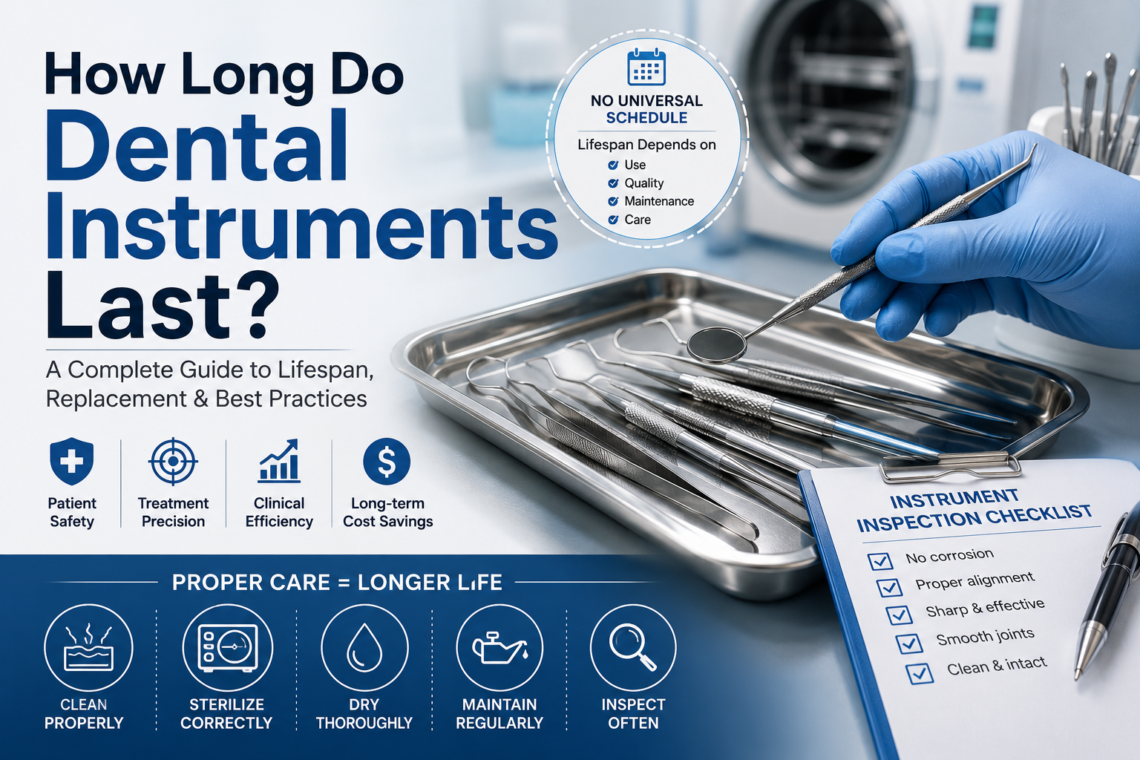
There is no universal replacement schedule because an instrument’s lifespan depends on several factors, including:
- Frequency of use
- Instrument quality
- Material composition
- Sterilization procedures
- Maintenance practices
- Clinical specialty
- Manufacturer recommendations
Instead of replacing instruments solely based on age, clinics should regularly inspect them for wear, corrosion, damage, and reduced performance.
What Determines How Long Do Dental Instruments Last Before Replacement?
Several factors influence instrument longevity.
1. Material Quality
Premium materials generally provide greater durability and corrosion resistance.
Examples include:
- Surgical-grade stainless steel
- Titanium alloys
- Tungsten carbide inserts
Higher-quality materials typically tolerate repeated sterilization better and maintain their cutting edges longer. Choosing the right material is one of the most important purchasing decisions. Learn how different materials compare in Stainless Steel vs Titanium Dental Instruments.
2. Frequency of Clinical Use
An explorer used dozens of times each day will naturally wear faster than a specialty surgical instrument used only occasionally.
Busy clinics often experience:
- Faster edge wear
- Increased sharpening frequency
- Higher replacement rates
- Greater maintenance demands
Usage patterns should always be considered when planning replacement schedules.
3. Cleaning and Sterilization
Every cleaning cycle contributes a small amount of wear.
Improper reprocessing can accelerate:
- Corrosion
- Surface damage
- Joint loosening
- Loss of sharpness
Following manufacturer instructions helps maximize instrument lifespan. Proper cleaning and sterilization are essential for both patient safety and instrument longevity. Read Best Practices for Infection Control in Dentistry to learn about recommended infection prevention protocols.
Common Causes of Premature Instrument Failure
Many instruments wear out earlier than expected because of avoidable mistakes.
Common causes include:
- Improper sterilization
- Poor cleaning practices
- Using the wrong instrument for a procedure
- Dropping instruments
- Delayed maintenance
- Excessive sharpening
- Exposure to corrosive chemicals
- Purchasing low-quality instruments
Most of these issues can be prevented through proper staff training and routine inspection. Many of these issues begin at the purchasing stage. Learn how to avoid expensive procurement errors in Common Mistakes Clinics Make When Buying Dental Instruments.
Average Lifespan of Common Dental Instruments
Not all dental instruments wear out at the same rate. Their lifespan depends on how frequently they are used, the quality of the materials, proper sterilization, and routine maintenance.
The following table provides general lifespan estimates for well-maintained, high-quality instruments.
| Instrument Type | Average Lifespan* |
| Mouth Mirrors | 5–10 years |
| Dental Explorers | 7–10 years |
| Cotton Pliers | 8–12 years |
| Extraction Forceps | 10–15+ years |
| Elevators | 10–15+ years |
| Periodontal Scalers | 3–7 years (depending on sharpening frequency) |
| Curettes | 3–7 years |
| Surgical Scissors | 5–10 years |
| Needle Holders | 8–12 years |
| Bone Rongeurs | 10–15 years |
| Dental Handpieces** | 5–10 years (with proper servicing) |
Which Instruments Wear Out the Fastest?
Some instruments naturally experience more wear because they:
- Contact hard tooth surfaces
- Require repeated sharpening
- Experience constant friction
- Are used during nearly every patient visit
Examples include:
- Scalers
- Curettes
- Explorers
- Composite placement instruments
- Finishing instruments
These should be inspected more frequently than specialty surgical instruments.
Which Instruments Usually Last the Longest?
Heavy-duty surgical instruments often have longer service lives because they:
- Are manufactured from stronger materials
- Require less frequent sharpening
- Are used less often
- Experience lower cumulative wear
Examples include:
- Extraction forceps
- Elevators
- Bone files
- Needle holders
- Surgical retractors
With proper maintenance, many of these instruments remain functional for well over a decade.
What Shortens Instrument Lifespan?
Even premium instruments can fail prematurely if they are not cared for properly.
Common causes include:
Improper Cleaning
Residual blood, cement, and debris can cause staining and corrosion if not removed promptly.
Incorrect Sterilization
Using inappropriate sterilization temperatures, harsh chemicals, or skipping drying procedures may damage instrument surfaces.
Poor Storage
Instruments stored while still damp are more susceptible to corrosion and staining.
Dropping Instruments
Accidental impacts may cause:
- Bent tips
- Misaligned jaws
- Loose joints
- Cracked carbide inserts
Many of these problems can be prevented through proper equipment care. Read Dental Handpiece Maintenance to learn how routine maintenance improves reliability and extends equipment lifespan.
Should You Sharpen or Replace?
Not every worn instrument needs immediate replacement.
Many hand instruments can be restored through professional sharpening.
Sharpen the Instrument If:
- Cutting edges have become dull.
- The instrument remains structurally sound.
- There is no corrosion.
- Joints function normally.
- Manufacturer recommendations support sharpening.
Replace the Instrument If:
- The tip is broken.
- Corrosion is visible.
- Joints are loose.
- Cracks appear in the metal.
- The instrument can no longer be sharpened effectively.
- Performance affects treatment quality.
Quality Materials Extend Instrument Life
Higher-quality instruments typically feature:
- Surgical-grade stainless steel
- Titanium alloys
- Tungsten carbide inserts
- Precision-machined joints
- Better corrosion resistance
Although premium instruments require a larger initial investment, they often reduce replacement frequency and lower the total cost of ownership. Understanding different instrument materials can help you make better purchasing decisions. Compare the strengths of each material in Stainless Steel vs Titanium Dental Instruments.
Invest in the Right Instruments From the Start
Instrument longevity begins with smart purchasing decisions.
When evaluating new instruments, consider:
- Material quality
- Manufacturer reputation
- Warranty coverage
- Availability of replacement parts
- Ergonomic design
- Sterilization compatibility
- Clinical requirements
Choosing reliable products from trusted manufacturers often results in fewer replacements and lower maintenance costs over time. A successful replacement strategy starts with selecting the right products. Our guide How to Choose Dental Equipment explains how clinics can evaluate equipment based on quality, durability, and long-term value.
Warning Signs That It’s Time to Replace Dental Instruments
Even with excellent maintenance, every reusable dental instrument eventually reaches the end of its service life. Continuing to use damaged or worn instruments can affect treatment quality, reduce efficiency, and compromise patient safety.
Here are the most common signs that replacement is necessary.
1. Visible Corrosion or Rust
Corrosion is one of the clearest indicators that an instrument should be removed from service.
Signs include:
- Rust spots
- Pitting
- Surface discoloration
- Rough metal surfaces
Corrosion weakens the instrument and can interfere with proper cleaning and sterilization.
2. Dull Cutting Edges
Scalers, curettes, chisels, and other cutting instruments gradually lose their sharpness.
Although sharpening can restore many instruments, replacement is necessary when:
- The blade becomes excessively thin.
- The original shape cannot be maintained.
- Sharpening no longer restores cutting efficiency.
3. Loose Hinges or Misaligned Joints
Instruments such as:
- Forceps
- Needle holders
- Surgical scissors
should operate smoothly without excessive movement.
Loose hinges can reduce precision and create safety concerns during clinical procedures.
4. Bent or Broken Tips
Bent explorers, damaged elevators, or fractured instrument tips should never be used on patients.
Even slight tip damage can reduce accuracy and increase the risk of tissue trauma.
5. Reduced Clinical Performance
Sometimes an instrument appears normal but no longer performs as expected.
Examples include:
- Scalers requiring excessive force
- Forceps slipping during extraction
- Needle holders failing to grip securely
- Scissors tearing instead of cutting
Performance problems often indicate internal wear that isn’t immediately visible.
How Proper Storage Protects Dental Instruments
Maintenance doesn’t end after sterilization.
Incorrect storage can shorten instrument life by exposing them to:
- Moisture
- Dust
- Mechanical damage
- Corrosive environments
Storage Best Practices
- Store instruments in a clean, dry area.
- Ensure instruments are completely dry before storage.
- Use protective cassettes or trays where appropriate.
- Avoid stacking heavy instruments on delicate ones.
- Rotate inventory to ensure even usage.
Good storage practices help preserve instrument quality between procedures.
Can Clinics Reduce Replacement Costs?
Yes.
Replacing instruments strategically rather than reactively can significantly reduce operating expenses.
Consider these cost-saving strategies:
- Invest in premium-quality instruments.
- Train staff on proper handling and cleaning.
- Establish routine inspection schedules.
- Replace only instruments that no longer meet performance standards.
- Keep maintenance records for high-value instruments.
- Purchase from suppliers offering warranties and after-sales support.
While premium instruments may have a higher upfront cost, they often provide better value through longer service life and fewer replacements. Reliable instruments play a critical role in restorative procedures. For example, durable diagnostic and restorative tools help dentists detect and treat cavities efficiently. Learn more in How Much Does a Dental Filling Cost Without Insurance?.
Why Instrument Quality Impacts Patient Care
Well-maintained, high-quality instruments contribute to:
- More accurate diagnoses
- Greater procedural precision
- Improved clinician confidence
- Better patient comfort
- Shorter treatment times
- Consistent clinical outcomes
Replacing worn instruments at the right time protects both patients and the reputation of your practice. Understanding the role of different clinical tools also helps clinics identify which instruments experience the most wear. Explore Common Dental Instruments and Uses to see how various instruments are used in everyday dentistry.
Frequently Asked Questions (FAQs)
1. How long do dental instruments typically last?
Most reusable dental instruments last between 5 and 15 years, although some specialty surgical instruments may remain in service even longer with proper care. Their lifespan depends on material quality, maintenance, sterilization practices, and usage frequency.
2. Should dental instruments be replaced after a certain number of years?
No. Instruments should be replaced based on their condition, functionality, and manufacturer recommendations, rather than age alone. Routine inspections are the best way to determine when replacement is necessary.
3. What are the first signs that an instrument should be replaced?
Common warning signs include:
- Corrosion or rust
- Cracks or fractures
- Bent or broken tips
- Loose hinges
- Dull cutting edges that cannot be restored
- Reduced clinical performance
4. Can dull instruments always be sharpened?
Not always. Sharpening is appropriate for many cutting instruments, but if repeated sharpening has significantly altered the instrument’s shape or it no longer performs effectively, replacement is usually the better option.
5. Which dental instruments usually wear out the fastest?
Frequently used instruments such as:
- Scalers
- Curettes
- Explorers
- Composite instruments
generally wear faster because they experience constant clinical use and repeated sharpening.
Conclusion
Dental instruments are among the hardest-working assets in any dental practice. Their performance directly affects clinical accuracy, efficiency, infection control, and the overall patient experience.
Rather than relying on a fixed replacement schedule, clinics should monitor each instrument’s condition through regular inspections and maintenance. Replacing worn or damaged instruments at the appropriate time helps maintain high standards of care while preventing unexpected equipment failures.
By investing in quality instruments, following recommended maintenance practices, and partnering with trusted suppliers, dental practices can extend instrument lifespan, reduce operating costs, and ensure consistent, high-quality treatment for every patient.
Call-to-Action
Extend the Life of Your Dental Instruments with Smart Maintenance
Quality dental instruments are a long-term investment. By choosing durable materials, following proper cleaning and sterilization protocols, performing regular inspections, and replacing instruments only when necessary, your clinic can maximize performance while minimizing replacement costs.
Whether you’re equipping a new practice or managing an established clinic, a proactive maintenance and replacement strategy helps ensure reliable instruments, efficient workflows, and exceptional patient care.