Selecting the right dental instruments is an important purchasing decision for every dental practice. Whether you are opening a new clinic, replacing worn instruments, or expanding a surgical setup, the material used to manufacture an instrument can influence its performance, durability, maintenance, ergonomics, and long-term value.
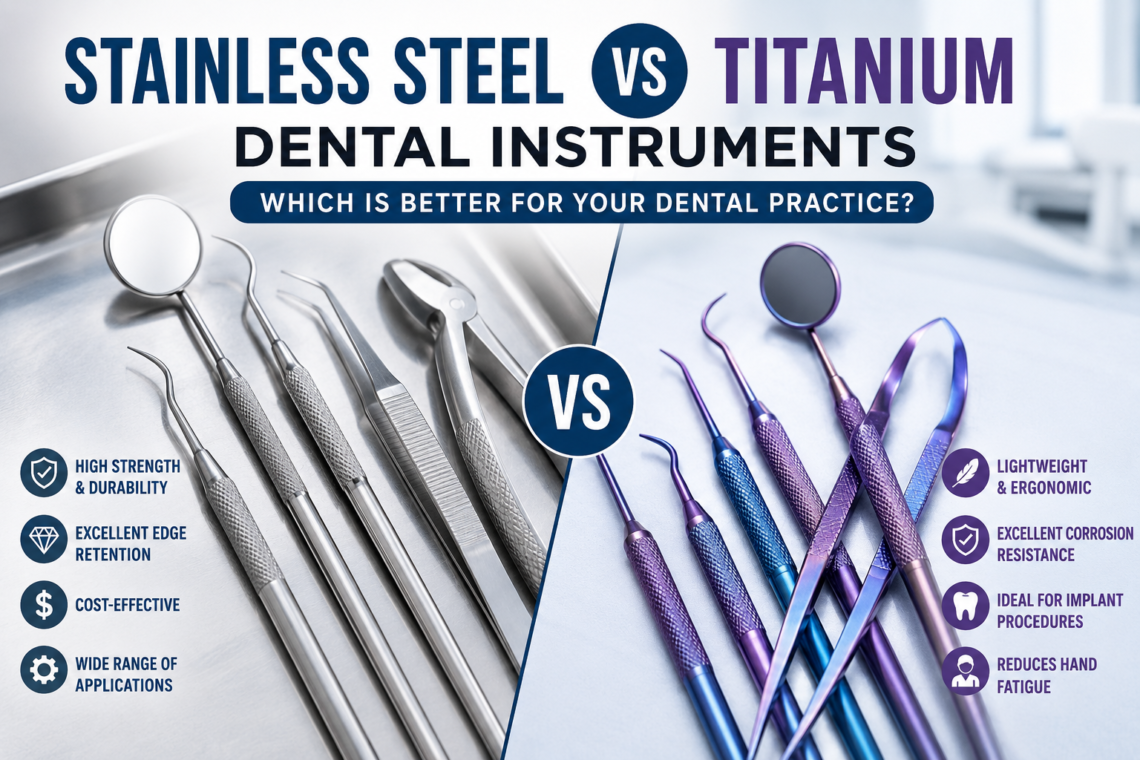
Among the materials commonly used for professional dental instruments, stainless steel & titanium Dental Instrument are two of the most important options. Stainless steel has remained a standard choice because of its strength, hardness, durability, and relatively affordable cost. Titanium, meanwhile, is recognized for its lightweight construction, excellent corrosion resistance, and usefulness in implant-related and microsurgical applications.
However, titanium is not automatically better simply because it is lighter or more expensive. The right choice depends on the instrument, procedure, clinical environment, and requirements of the dental practice. Cutting and extraction instruments may benefit from the hardness and edge retention of stainless steel, while titanium can be particularly useful for implant maintenance where protecting implant surfaces is important.
Why Does Dental Instrument Material Matter?
Dental instruments are exposed to demanding conditions every day. They may need to withstand:
- Repeated clinical use
- Mechanical stress
- Cleaning and disinfection
- Steam sterilization
- Moisture
- Chemicals
- Frequent handling and storage
The material can influence instrument durability, corrosion resistance, weight, tactile feel, maintenance requirements, and suitability for particular procedures. Properly manufactured stainless steel instruments can provide years of service when maintained correctly, while titanium provides valuable advantages in applications where low weight and corrosion resistance are priorities.
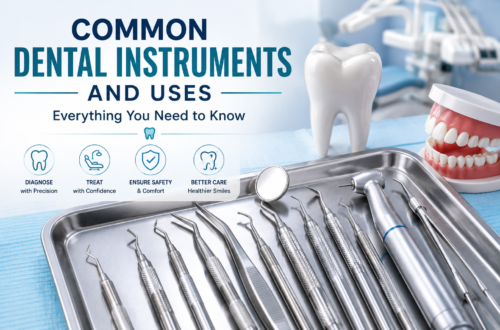
For a broader overview of dental instrument selection, see our guide to Common Dental Instruments and Their Uses.
What Are Stainless Steel Dental Instruments?
Stainless steel has been widely used for dental and surgical instruments for decades. High-quality surgical-grade stainless steel is designed to provide a combination of strength, hardness, corrosion resistance, and durability while supporting repeated sterilization.
Common stainless steel dental instruments include:
- Dental mirrors
- Explorers
- Probes
- Forceps
- Elevators
- Curettes
- Scalers
- Extraction instruments
- Surgical scissors
- Needle holders
Advantages of Stainless Steel
Stainless steel instruments offer several benefits:
- Excellent hardness
- Strong resistance to bending
- Good edge retention
- Long service life
- Cost-effectiveness
- Wide availability
- Suitability for demanding clinical procedures
These properties make stainless steel a practical choice for many general dental practices.
If you are comparing periodontal instruments, you can also explore our Scalers and Curettes: A Complete Buyer’s Guide.
What Are Titanium Dental Instruments?
Titanium is a lightweight metal known for excellent corrosion resistance and a strong strength-to-weight ratio. It is particularly associated with implant dentistry because specialized titanium instruments can be used in situations where minimizing the risk of scratching titanium implant components is important.
Titanium instruments may include:
- Implant scalers
- Implant curettes
- Implant maintenance instruments
- Microsurgical forceps
- Implant tweezers
- Bone grafting instruments
- Periodontal implant instruments
Advantages of Titanium
Titanium offers several characteristics that make it attractive for specialized applications:
- Lightweight construction
- Excellent corrosion resistance
- High strength relative to weight
- Good ergonomics
- Excellent biocompatibility
- Reduced hand fatigue during prolonged procedures
- Suitability for certain implant maintenance applications
The original comparison notes that titanium is substantially lighter than stainless steel, which can be beneficial during lengthy procedures.
Weight and Ergonomics
One of titanium’s most noticeable advantages is its lightweight construction.
A lighter instrument can be valuable during long procedures because it may:
- Reduce hand fatigue
- Improve comfort
- Reduce wrist strain
- Support controlled movements
- Improve ergonomics during extended procedures
Stainless Steel
Stainless steel is often well suited to:
- General dentistry
- Restorative procedures
- Routine examinations
- Extractions
- Everyday clinical work
Titanium
Titanium can be particularly useful for:
- Implant procedures
- Microsurgery
- Implant maintenance
- Certain periodontal procedures
- Lengthy surgical appointments
The choice therefore depends heavily on how frequently the practice performs procedures where lightweight instrumentation provides a meaningful ergonomic advantage.
Strength and Durability
Strength is one of the major reasons stainless steel remains widely used for dental instruments.
Stainless Steel
High-quality stainless steel can provide:
- High tensile strength
- Resistance to bending
- Good impact resistance
- Reliable performance
- Long service life
Titanium
Titanium provides:
- Excellent strength relative to its weight
- Good fatigue resistance
- Excellent corrosion resistance
- Useful flexibility in certain applications
However, titanium is generally softer than many surgical-grade stainless steel alloys. Consequently, stainless steel may be preferable for instruments that require significant force or a sharp, durable cutting edge.
For extraction instruments specifically, see Dental Extraction Forceps: How to Choose the Right Set.
Corrosion Resistance
Both stainless steel and titanium offer strong corrosion resistance, but their characteristics differ.
Stainless Steel
Stainless steel performs well when:
- Instruments are cleaned promptly
- Contamination is removed
- Instruments are properly dried
- Recommended sterilization procedures are followed
- Harsh or inappropriate chemicals are avoided
Titanium
Titanium is highly resistant to corrosion because it naturally forms a protective oxide layer on its surface.
This provides excellent resistance in demanding clinical environments involving:
- Moisture
- Repeated sterilization
- Regular handling
- Clinical chemicals
The protective oxide layer contributes to titanium’s strong corrosion resistance.
Edge Retention and Precision
For instruments designed to cut, scrape, or remove material, edge retention is an important consideration.
Where Stainless Steel Excels
Stainless steel is commonly preferred for instruments such as:
- Surgical scissors
- Bone cutters
- Curettes
- Scalers
- Elevators
- Extraction instruments
Its higher hardness can help cutting edges remain functional for longer periods, depending on the alloy, instrument design, use, and maintenance.
Where Titanium Excels
Titanium is particularly useful for selected instruments involving:
- Implant maintenance
- Soft-tissue handling
- Microsurgical procedures
- Implant-specific curettes
- Delicate implant-related work
In these applications, the goal may be controlled handling and protection of implant components rather than maximum cutting performance.
Sterilization Performance
Both stainless steel and titanium instruments can generally be processed using steam sterilization when the specific manufacturer’s instructions for use permit it.
Good instrument processing practices include:
- Cleaning instruments promptly after use
- Removing biological debris before sterilization
- Drying instruments thoroughly
- Inspecting instruments before reuse
- Using appropriate instrument cassettes or trays
- Following the manufacturer’s cleaning and sterilization instructions
Material selection alone does not guarantee long instrument life. Proper cleaning, handling, sterilization, and storage are equally important.
For more guidance, read our Dental Equipment Maintenance Checklist.
Choose Stainless Steel If You:
Stainless steel may be the better option if your practice:
- Performs general dentistry
- Performs frequent restorations
- Performs extractions
- Requires durable everyday instruments
- Needs excellent edge retention
- Wants cost-effective instrumentation
- Uses instruments heavily every day
Choose Titanium If You:
Titanium may be worth considering if your practice:
- Focuses heavily on implant dentistry
- Performs microsurgical procedures
- Performs lengthy periodontal procedures
- Prioritizes lightweight instrumentation
- Performs implant maintenance
- Wants to reduce instrument weight during extended procedures
Should Your Practice Use Both Materials?
For many dental practices, maintaining both stainless steel and titanium instruments can be a practical approach.
A practice might use:
Stainless steel instruments for:
- Routine examinations
- Restorative procedures
- Extractions
- General surgery
- Everyday clinical procedures
Titanium instruments for:
- Implant placement
- Implant maintenance
- Selected periodontal procedures
- Microsurgical applications
This approach allows clinicians to use each material where its characteristics provide the greatest benefit.
Cost Comparison
Initial purchase price is important, but it should not be the only factor considered when comparing dental instruments.
| Cost Factor | Stainless Steel | Titanium |
| Initial purchase | Usually lower | Usually higher |
| Maintenance | Moderate | Moderate |
| Sharpening | Depends on instrument and use | Depends on instrument and use |
| Replacement | Can be low with proper care | Can be low with proper care |
| Long-term value | Excellent for general use | Excellent for specialized use |
The source material emphasizes that total cost of ownership should include factors such as lifespan, clinical performance, maintenance, staff comfort, procedure type, productivity, manufacturer support, and warranty availability.
Common Maintenance Mistakes
Regardless of whether your instruments are stainless steel or titanium, poor maintenance can shorten their useful life.
Avoid:
- Leaving contaminated instruments uncleaned
- Using abrasive cleaners unnecessarily
- Using unsuitable metal brushes
- Overloading cleaning or sterilization equipment
- Failing to inspect instruments
- Storing instruments while wet
- Ignoring manufacturer instructions
Proper maintenance is essential for protecting your investment and maintaining reliable instrument performance.
For instruments that require more specialized care, see Dental Handpiece Maintenance: The Complete Guide.
Pros and Cons of Stainless Steel Dental Instruments
Pros
- Excellent durability
- High hardness
- Strong edge retention
- Lower purchase cost
- Wide availability
- Suitable for many general procedures
Cons
- Heavier than titanium
- May contribute to fatigue during prolonged procedures
- Requires appropriate cleaning and maintenance
Pros and Cons of Titanium Dental Instruments
Pros
- Lightweight
- Ergonomic
- Excellent corrosion resistance
- Highly biocompatible
- Useful for implant-related procedures
- Comfortable during lengthy procedures
Cons
- Higher initial investment
- Generally less suitable where maximum hardness is required
- Limited availability for certain instrument designs
These advantages and limitations mean that the intended application should always guide material selection.
Latest Trends in Dental Instrument Manufacturing
Dental instrument manufacturing continues to evolve as manufacturers focus on durability, ergonomics, precision, and production consistency.
Current developments include:
- Advanced stainless steel alloys
- Improved titanium alloy formulations
- Ergonomic handle designs
- Color-coded instrument systems
- Matte surface finishes
- Precision CNC manufacturing
- Improved quality-control processes
- Enhanced surface finishing
These developments can contribute to improved consistency, clinician comfort, and long-term instrument performance.
You can also learn more about the manufacturing process in The Journey of a Dental Instrument: From Raw Steel to Finished Tool.
Frequently Asked Questions
1. Which is better: stainless steel or titanium dental instruments?
Neither material is universally better. Stainless steel is generally well suited to general dentistry because of its strength, hardness, durability, and cost-effectiveness. Titanium is particularly valuable for selected implant and microsurgical applications because of its lightweight construction and corrosion resistance.
2. Why are titanium instruments used around dental implants?
Selected titanium instruments are used for implant maintenance because they can help reduce the risk of scratching or damaging titanium implant components during appropriate procedures.
3. Are stainless steel dental instruments corrosion-resistant?
Yes. High-quality surgical-grade stainless steel provides strong corrosion resistance when instruments are appropriately cleaned, sterilized, dried, and maintained according to manufacturer instructions.
4. Are titanium instruments stronger than stainless steel?
Titanium has an excellent strength-to-weight ratio, but many stainless steel alloys are harder and provide better edge retention. The appropriate material depends on the instrument’s intended function.
5. Which material lasts longer?
Both materials can provide many years of service when manufactured to appropriate standards and maintained correctly. Actual longevity depends on use, cleaning, sterilization, handling, and maintenance.
Conclusion
The comparison between Stainless Steel & Titanium Dental Instrument shows that both materials have an important role in modern dental practice.
Stainless steel remains an excellent choice for many everyday dental instruments because of its durability, hardness, edge retention, versatility, and cost-effectiveness. Titanium offers different advantages, particularly its lightweight construction, excellent corrosion resistance, and suitability for selected implant and microsurgical applications.
The best choice ultimately depends on the instrument, procedure, clinical specialty, ergonomics, maintenance requirements, and long-term purchasing objectives.
Rather than choosing one material for every application, many dental practices can benefit from maintaining a combination of stainless steel and titanium instruments. Using each material where its properties provide the greatest clinical advantage can create a balanced instrument inventory and improve long-term value.
Call to Action
Want to learn more about dental instruments, their materials, applications, maintenance, and manufacturing quality?
Visit Dentistry Supplier to explore informative guides and resources designed to help dental professionals, clinics, and instrument buyers better understand dental equipment and instrumentation.
Explore our educational resources to make more informed decisions about stainless steel and titanium dental instruments, instrument care, clinical applications, and dental equipment.