Wisdom tooth removal is a common dental procedure, but the recovery process can feel different for everyone. Some people feel much better within a few days, while others need more time—especially after the removal of impacted wisdom teeth.
Knowing what to expect can make recovery less stressful. While every patient’s experience is different, most people follow a general healing pattern involving initial bleeding, swelling, discomfort, gradual improvement, and continued healing of the extraction site.
This Wisdom Tooth Removal Recovery Timeline, day-by-day guide explains what typically happens after wisdom tooth removal, what foods you may be able to eat, how to care for the extraction site, and when it may be time to contact your dentist or oral surgeon.
How Long Does Wisdom Tooth Removal Recovery Take?
For many people, the most noticeable discomfort improves within the first several days to one week. Swelling commonly becomes most noticeable during the early recovery period and then gradually improves. Gum tissue continues healing over the following weeks, while deeper healing beneath the surface takes longer.
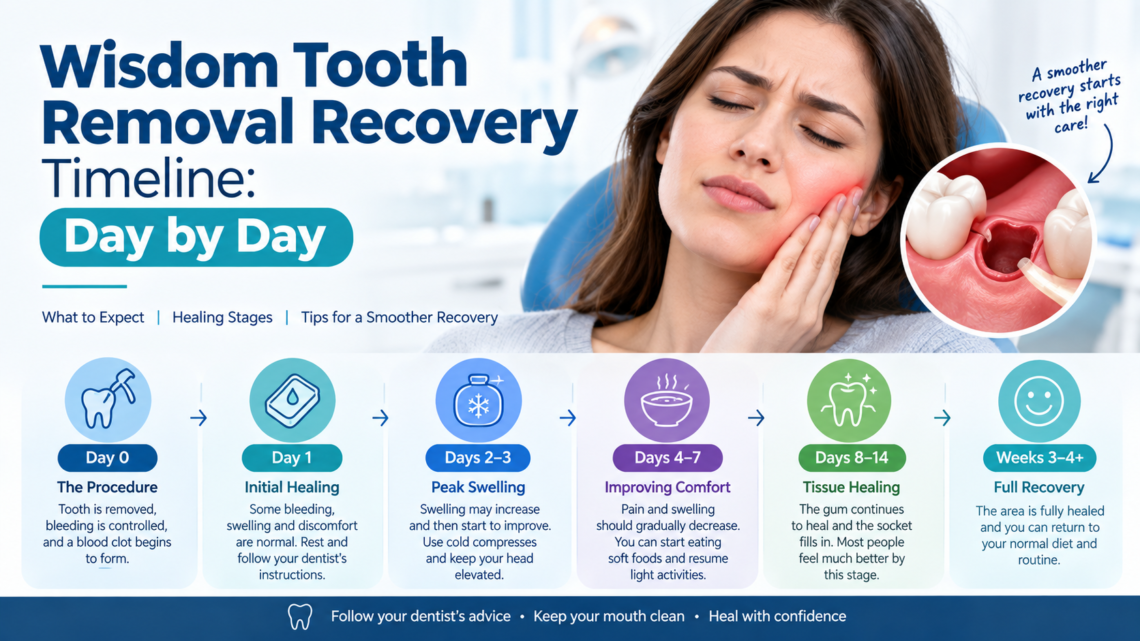
A typical recovery timeline may look like this:
- Day 0: Bleeding slows and a blood clot begins forming.
- Day 1: Initial healing begins, with soreness and swelling.
- Days 2–3: Swelling may reach its highest point.
- Days 4–7: Pain and swelling usually begin improving.
- Week 2: Most people feel much more comfortable.
- Weeks 3–4: Gum tissue continues closing and healing.
- Several months: Deeper bone healing continues.
A recent Dentistry Supplier guide on wisdom teeth removal and when it may be needed describes a similar recovery pattern, with the first week focused on swelling, discomfort, and protecting the extraction site.
Wisdom Tooth Removal Recovery Timeline: Day by Day
Day 0: The Day of Wisdom Tooth Removal
The first day is all about allowing the extraction site to begin healing.
Immediately after the procedure, you may experience:
- Mild bleeding or oozing
- Numbness from anesthesia
- Soreness
- Early swelling
- Jaw stiffness
- Difficulty opening your mouth fully
Your dentist or oral surgeon may place gauze over the extraction site to help control bleeding.
Why Is the Blood Clot Important?
After a tooth is removed, a blood clot forms inside the extraction socket. This clot plays an important role in protecting the underlying bone and supporting the early healing process.
During the first day, it is important to avoid activities that could disturb the clot.
What to Do on Day 0
Follow your dentist’s specific instructions, which may include:
- Resting as much as possible
- Using gauze as directed
- Taking prescribed or recommended medication correctly
- Applying cold packs if recommended
- Drinking enough fluids
- Eating soft foods when comfortable
What to Avoid
During the early stages of recovery, avoid:
- Drinking through a straw
- Forceful spitting
- Smoking or tobacco use
- Vigorous rinsing
- Intense exercise
- Touching the extraction site with your fingers
These activities may disturb the healing area and increase the risk of complications.
Day 1: Initial Healing Begins
By the day after wisdom tooth removal, bleeding should generally be reduced, although mild oozing may still occur.
You may experience:
- Soreness around the extraction site
- Swelling
- Jaw stiffness
- Mild discomfort when eating
- Tenderness around the cheeks or gums
Everyone recovers differently. Some patients may feel relatively comfortable, while others experience more noticeable discomfort.
What Can You Eat on Day 1?
Soft foods are usually the easiest option during early recovery.
Examples include:
- Yogurt
- Applesauce
- Mashed potatoes
- Scrambled eggs
- Soft soups
- Oatmeal
- Smooth purees
- Soft pasta
Avoid foods that are hard, crunchy, sharp, or likely to become trapped in the extraction area.
Days 2–3: Swelling May Reach Its Peak
For many patients, swelling becomes more noticeable during the second and third days after wisdom tooth removal.
This can be a normal part of the healing process.
You may notice:
- Puffy cheeks
- Facial swelling
- Jaw stiffness
- Continued soreness
- Mild bruising
According to Dentistry Supplier’s guide on wisdom tooth removal, swelling commonly peaks during the early recovery period before gradually improving.
How to Manage Discomfort
Follow the aftercare instructions provided by your dentist or oral surgeon.
Depending on your situation, your instructions may include:
- Resting
- Taking medication as directed
- Using cold packs during the recommended period
- Keeping your head elevated
- Eating soft foods
- Staying hydrated
Do not take medication beyond the recommended dose, and always follow your dental professional’s instructions.
Days 4–7: Recovery Usually Starts Feeling Easier
By the middle or end of the first week, many people begin noticing a clear improvement.
You may experience:
- Reduced swelling
- Less pain
- Improved jaw movement
- Greater comfort while eating
- Less need for pain medication
However, the extraction site is still healing.
Feeling better does not necessarily mean that the socket has completely healed, so continue following your aftercare instructions.
Can You Return to Work or School?
Many people are able to return to normal daily activities during this period.
However, this depends on:
- How difficult the extraction was
- Whether the wisdom tooth was impacted
- How many teeth were removed
- Your level of discomfort
- Your dentist’s recommendations
Strenuous physical activity may need to be postponed until your dentist confirms it is appropriate.
Week 2: Most People Feel Much Better
By the second week, many patients experience significant improvement.
Common changes include:
- Little or no swelling
- Reduced tenderness
- Easier jaw movement
- More comfortable eating
- Continued healing of the gums
Some patients may feel almost back to normal at this point.
However, more complicated procedures—particularly impacted wisdom tooth removal—can require additional healing time.
If stitches were placed, they may dissolve naturally or need to be removed, depending on the type used.
Weeks 3–4: The Gums Continue Healing
During the third and fourth weeks, the gum tissue continues closing and healing around the extraction sites.
You may feel completely normal during everyday activities, but healing is still taking place.
The extraction area may occasionally collect small food particles, particularly if the socket is still relatively deep.
Your dentist may provide specific instructions about cleaning the area or using an irrigation syringe.
Do not aggressively poke, scrape, or dig into the extraction site.
One to Three Months: Deeper Healing Continues
Although many people feel recovered well before this stage, deeper healing beneath the gum surface continues.
The extraction socket gradually changes as the body repairs the surrounding tissues and bone.
This is a normal part of the longer-term healing process.
What Affects Wisdom Tooth Recovery Time?
Recovery is not identical for every patient.
Several factors can influence how quickly you heal.
1. Whether the Wisdom Tooth Was Impacted
An impacted wisdom tooth may require a more complex surgical procedure.
Depending on its position, treatment may involve:
- An incision in the gums
- Bone removal
- Sectioning the tooth
- Sutures or stitches
More complex procedures may involve greater swelling and a longer recovery period.
2. The Number of Wisdom Teeth Removed
Removing one wisdom tooth can involve a different recovery experience than removing all four at once.
Multiple extraction sites may result in:
- More swelling
- More tenderness
- Greater difficulty chewing
- A greater need for rest
3. Your Age and Overall Health
Individual healing ability can vary.
Your age, general health, medications, smoking habits, and other personal factors may affect the recovery process.
Always provide your dentist or oral surgeon with accurate medical information before surgery.
4. How Well You Follow Aftercare Instructions
Aftercare plays an important role in recovery.
Following instructions about:
- Medication
- Oral hygiene
- Food
- Physical activity
- Smoking
- Cleaning the extraction site
can help support normal healing.
What Foods Should You Eat After Wisdom Tooth Removal?
Soft foods are generally easier to manage during the first few days.
Good options may include:
- Yogurt
- Mashed potatoes
- Scrambled eggs
- Applesauce
- Oatmeal
- Cottage cheese
- Soft pasta
- Blended soups
- Smooth vegetable purees
- Soft cooked vegetables
Stay hydrated and gradually introduce more foods as your comfort improves.
Foods to Avoid During Early Recovery
Certain foods may irritate the extraction site or become trapped inside the healing socket.
During early recovery, you may want to avoid:
- Chips
- Popcorn
- Nuts
- Seeds
- Hard crackers
- Crunchy foods
- Hard candy
- Very spicy foods
Follow your dentist’s advice about when you can safely return to your normal diet.
Wisdom Tooth Removal Aftercare Tips
Good aftercare can help make the recovery period more manageable.
Rest During the First Few Days
Give your body time to recover.
Avoid unnecessary physical activity during the early stages of healing.
Protect the Extraction Site
Avoid disturbing the healing area.
Do not touch the extraction socket unnecessarily or use objects to remove food particles.
Take Medication as Directed
Use prescription or over-the-counter medication only as directed by your dentist, oral surgeon, or healthcare professional.
Do not exceed recommended doses.
Maintain Good Oral Hygiene
Keeping your mouth clean remains important after wisdom tooth removal.
However, the extraction area should be treated carefully.
Follow your dentist’s instructions about:
- Brushing
- Rinsing
- Saltwater rinses
- Cleaning near the extraction site
For dental professionals interested in the broader infection-control side of oral care, Dentistry Supplier’s guide to dental instrument sterilization and autoclave guidelines explains how reusable instruments are cleaned, processed, and sterilized in a clinical workflow.
When Should You Contact Your Dentist or Oral Surgeon?
Contact your dental professional if you experience:
- Severe or worsening pain
- Pain that becomes significantly worse after initially improving
- Heavy or persistent bleeding
- Increasing swelling
- Fever
- Pus or unusual discharge
- Difficulty breathing or swallowing
- A persistent unpleasant taste or odor
- Signs of an allergic reaction to medication
- Numbness lasting longer than expected
If you are unsure whether a symptom is normal, contacting your dental professional is the safest option.
What Is Dry Socket?
Dry socket is a complication that can occur when the protective blood clot at the extraction site is lost or breaks down too early.
This may expose underlying bone and nerves and can cause significant pain.
Possible symptoms include:
- Severe pain several days after extraction
- Pain that radiates toward the ear or side of the face
- An unpleasant taste or smell
- An extraction site that appears unusually empty
Dentistry Supplier’s wisdom tooth removal guide also highlights dry socket as a possible complication and emphasizes protecting the blood clot during the early recovery period.
If you suspect dry socket, contact your dentist or oral surgeon.
Wisdom Tooth Removal and Dental Instruments
Wisdom tooth extraction may require a range of specialized dental and surgical instruments.
Depending on the procedure, clinicians may use:
- Dental elevators
- Extraction forceps
- Surgical retractors
- Periosteal instruments
- Surgical burs
- Scalpels
- Suction instruments
- Suturing instruments
Dental extraction forceps are designed to grasp and remove teeth, with different patterns and designs suited to different clinical situations.
For a detailed overview, read Dental Extraction Forceps: How to Choose the Right Set. The guide explains how instrument design, beak configuration, access, ergonomics, and sterilization requirements influence forceps selection.
Frequently Asked Questions
How long does wisdom tooth recovery take?
Most people experience the main recovery period during the first several days to one week. However, gum healing continues for several weeks, while deeper healing can take longer.
Recovery depends on the complexity of the extraction and individual factors.
When does swelling peak after wisdom tooth removal?
Swelling commonly becomes most noticeable during the first few days after surgery before gradually improving.
How long does pain last after wisdom tooth extraction?
Pain and soreness are usually most noticeable during the first few days and generally improve as healing progresses.
If pain becomes significantly worse after initially improving, contact your dentist or oral surgeon.
Can I brush my teeth after wisdom tooth removal?
Good oral hygiene remains important, but you should follow your dentist’s specific instructions about brushing near the extraction site.
Avoid directly disturbing the healing area.
When can I eat normal food after wisdom tooth removal?
You can usually begin returning to more normal foods gradually as your comfort improves.
Avoid hard, crunchy, or sharp foods until your dentist advises that it is safe to resume your regular diet.
Final Thoughts
Wisdom tooth removal recovery is a gradual process, and every patient heals at a slightly different pace.
The first few days are usually the most important for protecting the extraction site, managing swelling, and allowing the blood clot to remain undisturbed. By the end of the first week, many people begin feeling considerably better, while the gums and deeper tissues continue healing over the following weeks.
The best way to support a smoother recovery is to carefully follow your dentist’s or oral surgeon’s instructions, maintain appropriate oral hygiene, eat suitable foods, and seek professional advice if something does not seem right.
Learn More About Dentistry and Dental Instruments
Interested in learning more about the tools and procedures used in modern dentistry?
Explore Dentistry Supplier’s educational resources, including guides on common dental instruments and their uses, dental extraction forceps, dental instrument sterilization, and the manufacturing journey of dental instruments.
Whether you’re a dental professional, student, clinic owner, instrument buyer, or simply interested in oral health, Dentistry Supplier provides practical information about the instruments and processes behind modern dental care.


