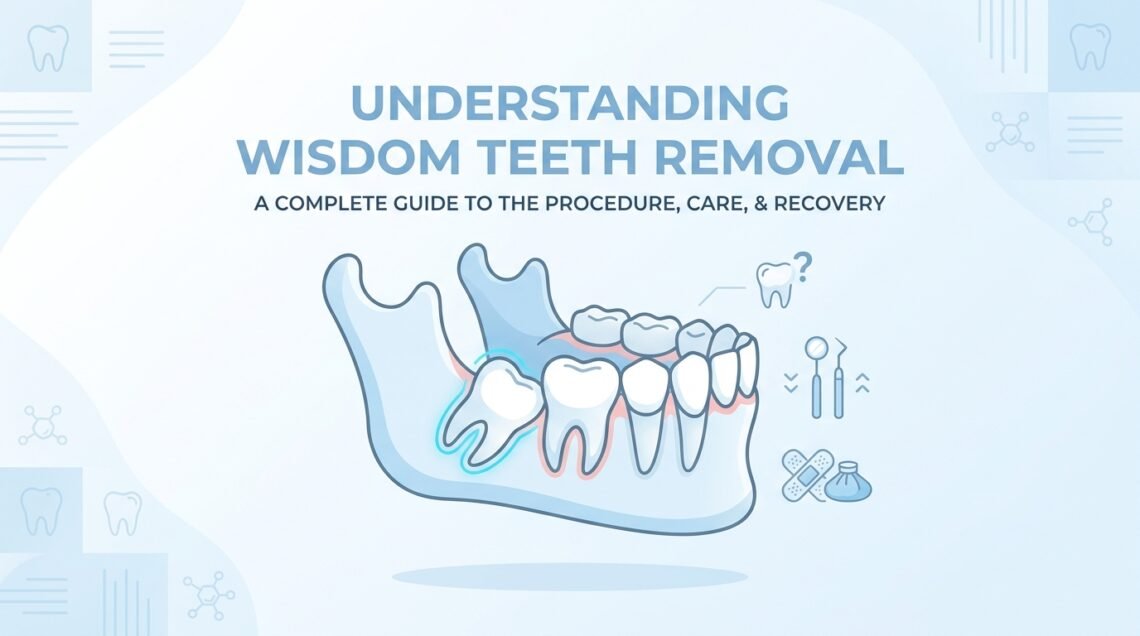
Wisdom teeth, or third molars, typically erupt between ages 17 and 25. Thousands of years ago, these extra grinding surfaces helped humans process coarse, fibrous diets. Modern diets are softer. Our jaws have grown smaller. The result is a mismatch—32 teeth trying to fit in space designed for 28.
Most wisdom teeth emerge at odd angles or get stuck entirely. An impacted wisdom tooth is one that cannot fully break through gum tissue, often blocked by bone or neighboring teeth. Impaction creates pockets where bacteria multiply, leading to infection, cyst formation, or damage to adjacent second molars. Even partially erupted wisdom teeth that look fine from the outside can harbor chronic low-grade infection invisible without X-rays.
Some wisdom teeth emerge straight and functional. These are the exceptions, not the rule, but they do exist. The challenge is distinguishing truly healthy third molars from ticking time bombs.
When Removal Is Clearly Necessary
Certain conditions make extraction non-negotiable. Do not delay if you experience any of the following.
Infection or abscess around a wisdom tooth causes swelling, pain, bad taste, and sometimes fever. These infections can spread into the jaw, neck, or—in rare cases—systemically. Antibiotics temporarily control infection, but the source remains until the tooth is removed.
Cysts or tumors developing around impacted wisdom teeth destroy surrounding bone. These are often asymptomatic in early stages, detected only on panoramic X-rays. Left untreated, they can compromise the entire jaw structure.
Damage to adjacent teeth occurs when wisdom teeth push forward, resorbing the roots of second molars. This damage is irreversible. By the time pain appears, the second molar may already need root canal or extraction.
Significant decay or gum disease on a wisdom tooth that cannot be properly cleaned or restored. These teeth sit so far back that even diligent brushing and flossing often fail to reach them.
Pain that recurs despite conservative treatment suggests structural problems—impaction, partial eruption, or pressure on nerves—that will not resolve without removal.
Orthodontic necessity arises when wisdom teeth threaten to undo years of alignment work or when their eruption would complicate planned treatment.
When Keeping Wisdom Teeth Makes Sense
Not every wisdom tooth is a problem. Retention is reasonable when specific conditions are met.
The tooth must be fully erupted with correct vertical alignment, matching the bite plane of opposing teeth. It must have healthy gum tissue surrounding it with no periodontal pockets deeper than three millimeters. You must be able to clean it effectively—meaning you can reach it with brush and floss without contortion. The tooth should show no decay on examination or X-ray, and there should be no cysts, tumors, or pathology visible on imaging.
Even when these criteria are met, retention requires commitment. Wisdom teeth need the same diligence as any other molar, plus extra attention because of their hard-to-reach position. Patients who struggle with consistent oral hygiene often find that keeping wisdom teeth becomes more trouble than it is worth.
Dr. Chan: “I have patients in their fifties and sixties who kept all four wisdom teeth and never had a problem. I also have patients who delayed removal in their twenties and ended up with destroyed second molars by thirty-five. The difference is usually whether the tooth was fully functional and accessible, or partially impacted and hiding disease.”
Age Matters: The Timing Question
Younger patients heal faster and face fewer complications. Bone is more flexible around ages 17 to 25, making extraction technically easier. Roots are less fully formed, reducing risk of nerve injury. Recovery typically spans three to five days rather than one to two weeks.
Waiting until your thirties or forties increases surgical complexity. Roots grow longer and may curve around the inferior alveolar nerve. Bone becomes denser and less forgiving. Healing slows. The risk of temporary or permanent nerve numbness rises, particularly for lower wisdom teeth.
However, age alone does not mandate extraction. A healthy 45-year-old with fully erupted, cleanable wisdom teeth and no pathology on X-ray faces no urgency. Conversely, a 19-year-old with impacted teeth pressing against second molars should not delay simply because recovery seems inconvenient.
The Procedure: What Actually Happens
Before Surgery
Your dentist or oral surgeon takes a panoramic X-ray or CBCT scan to assess tooth position, root anatomy, and proximity to nerves. They review medical history, medications, and anesthesia options. You will need someone to drive you home if receiving sedation.
During Surgery
The procedure typically takes 45 minutes to 90 minutes depending on complexity. After administering local anesthesia with or without IV sedation, the surgeon makes an incision in gum tissue if the tooth is impacted. They may remove bone blocking access, section the tooth into pieces for easier removal, then extract it. The site is cleaned, stitched if necessary, and gauze is placed to control bleeding.
Anesthesia Options
-
Local anesthesia only: Numbing injections. You remain fully awake. Suitable for simple extractions in cooperative patients. Cost: included in base price.
-
Nitrous oxide (laughing gas): Mild relaxation with local anesthesia. You stay conscious but relaxed. Cost: $50–$150.
-
IV sedation: Moderate to deep sedation. You may have little memory of the procedure. Cost: $200–$800.
-
General anesthesia: Fully unconscious. Reserved for complex cases or extreme anxiety. Cost: $800–$1,500, often in hospital settings.
Recovery: The Real Timeline
Days 1 to 3: Swelling peaks around 48 hours. Pain is manageable with prescribed or over-the-counter medication. Bleeding should taper to oozing within 24 hours. Stick to soft foods. Do not use straws—the suction can dislodge the blood clot and cause dry socket.
Days 4 to 7: Swelling subsides. Bruising may appear on the jaw or neck. Gradually introduce more solid foods as comfort allows. Continue saltwater rinses after meals. Stitches dissolve or are removed around day 7 if non-resorbable.
Week 2: Most patients resume normal activities. The socket is healing but not fully closed. Food can still become trapped—irrigate gently with a syringe if provided.
Weeks 3 to 4: Soft tissue heals completely. Bone fill continues beneath the surface for several months.
Dry socket—the most common complication—occurs when the blood clot dislodges, exposing bone and nerves. It causes severe pain starting 2 to 4 days after extraction, radiating to the ear. Smoking, straw use, and poor oral hygiene are the main risk factors. Treatment involves medicated packing in the socket; relief is usually immediate.
Cost Breakdown for 2026
Costs vary by complexity, provider, and location. Simple extractions cost far less than impacted surgical removals.
Simple extraction (fully erupted, no impaction): $100–$300 per tooth. These are straightforward forceps extractions performed by general dentists.
Surgical extraction (impacted, partial bony, or full bony impaction): $300–$800 per tooth. Requires incision, bone removal, and sectioning. Oral surgeons typically handle these.
Complex surgical extraction (deep impaction, nerve proximity, cyst involvement): $800–$1,500 per tooth. May require CBCT navigation, specialist referral, or hospital setting.
Full mouth removal (all four wisdom teeth): $1,000–$4,000 total. Many providers offer package pricing that reduces per-tooth cost.
Additional costs to factor:
-
Panoramic X-ray or CBCT: $100–$300
-
Sedation: $50–$1,500 depending on type
-
Prescription medications: $20–$80
-
Follow-up visits: usually included in surgical fee
Insurance coverage varies. Many dental plans cover 50–80% of extraction costs once the deductible is met, though annual maximums often limit total payout. Medical insurance rarely covers routine wisdom tooth removal unless hospitalization or general anesthesia is medically necessary.
Making Your Decision
Start with an honest conversation and a current X-ray. Ask your dentist:
-
Is this wisdom tooth fully erupted and functional, or partially impacted?
-
What does the X-ray show about root position and nerve proximity?
-
If I wait, what are the specific risks for my situation?
-
Am I able to keep this tooth clean based on its position?
-
What would you do if this were your tooth?
There is no universal right answer. Some patients benefit from early proactive removal. Others keep wisdom teeth for decades without consequence. The decision belongs to you, informed by clinical evidence specific to your mouth, not by blanket recommendations or fear.
Sources
-
American Association of Oral and Maxillofacial Surgeons. “Management of Third Molar Teeth: 2025 Clinical White Paper.” AAOMS Position Statement, 2025.
-
Chan A. “Long-Term Outcomes of Retained vs. Extracted Third Molars: A 10-Year Practice Review.” General Dentistry, 2025;73(4):312-318.
-
NICE Guidelines. “Guidance on the Extraction of Wisdom Teeth: Updated Evidence Review.” National Institute for Health and Care Excellence, 2024.
-
Friedman JW. “The Prophylactic Extraction of Third Molars: A Public Health Hazard.” American Journal of Public Health, 2024;114(6):891-897.
-
American Dental Association. “Third Molar Management: Evidence-Based Clinical Recommendations.” JADA, 2025;156(5):234-245.