Introduction
Choosing the right dental equipment is a critical decision that impacts the quality of patient care, clinic efficiency, and long-term profitability. Whether you’re opening a new dental practice or upgrading existing tools, investing in reliable and high-quality equipment helps improve workflow, enhance patient comfort, and reduce maintenance costs.
With countless brands, technologies, and price points available, selecting the best equipment can be overwhelming. A well-planned purchasing strategy ensures you choose products that meet your clinical needs, fit your budget, and support future practice growth.
In this dental equipment buying guide, you’ll learn the key factors to How to choose dental equipment, discover the essential dental equipment every clinic needs, avoid common buying mistakes, and understand how to choose a trusted dental equipment supplier. By the end of this guide, you’ll be equipped to make informed decisions that deliver long-term value for your practice.
Why Choosing the Right Dental Equipment Matters
Choosing the right dental equipment is more than a purchasing decision—it’s an investment in your practice’s success. High-quality equipment enhances clinical performance, improves patient experiences, and helps your team work more efficiently.
Improve Patient Care
Reliable equipment allows for more accurate diagnoses and precise treatments. Modern technologies, such as digital imaging and ergonomic dental chairs, also improve patient comfort and build trust in your practice.
Increase Practice Efficiency
Well-designed equipment streamlines daily workflows and reduces treatment times. Integrated systems, reliable handpieces, and efficient sterilization equipment help your team work productively while minimizing interruptions.
For equipment that requires regular care, see our guide to Dental Handpiece Maintenance: The Complete Guide for Long-Lasting Performance.
Reduce Long-Term Costs
Although premium equipment may require a higher initial investment, it often offers better durability and lower maintenance costs. Fewer repairs, reduced downtime, and a longer service life contribute to a better return on investment.
Support Future Growth
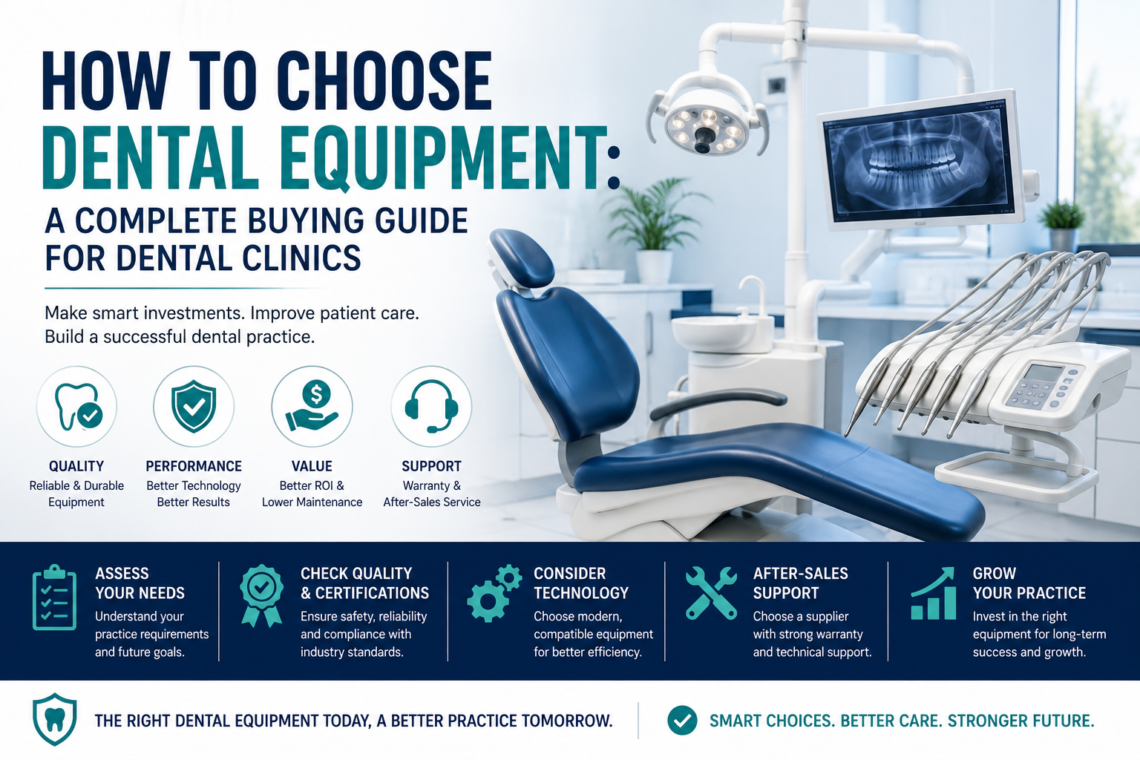
As your practice expands, your equipment should be able to grow with it. Choosing technology that supports upgrades and integrates with digital workflows makes it easier to add new services and improve operational efficiency over time.
Key Factors to Consider How to choose dental equipment
Selecting the right dental equipment requires more than comparing prices. Consider these essential factors to ensure your investment supports quality care and long-term practice growth.
1. Assess Your Practice Needs
Start by evaluating the services you provide, your patient volume, and future expansion plans. A general dental clinic, for example, has different equipment needs than an orthodontic or oral surgery practice.
2. Prioritize Quality and Durability
Choose equipment built from high-quality materials that can withstand daily use. Durable products reduce downtime, require fewer repairs, and provide better long-term value.
When selecting individual dental instruments, also consider material and durability. Our guide to Stainless Steel vs Titanium Dental Instruments explains important differences between these commonly used materials.
3. Consider Technology and Compatibility
Modern digital dental equipment should integrate with your existing systems, such as digital X-rays, intraoral scanners, and practice management software. Compatibility improves workflow and simplifies future upgrades.
4. Verify Safety Certifications
Ensure the equipment complies with recognized quality and safety standards, such as CE, FDA, or ISO certifications where applicable. Certified products offer greater reliability and regulatory compliance.
5. Evaluate Warranty and After-Sales Support
A strong warranty and responsive technical support can save time and money. Before purchasing, confirm the availability of spare parts, maintenance services, and local technical assistance.
6. Understand Maintenance Requirements
Ask about routine servicing, cleaning procedures, and replacement parts. Equipment that is easy to maintain typically has a longer lifespan and lower operating costs.
Proper maintenance is also essential for reusable dental instruments. Learn more in How Long Do Dental Instruments Last Before Replacement?.
7. Plan Your Budget Wisely
Focus on the total cost of ownership rather than the purchase price alone. Include installation, maintenance, training, and future upgrade costs when planning your budget.
Essential Dental Equipment Checklist
Every dental clinic requires reliable equipment to deliver efficient, safe, and high-quality patient care. While your requirements may vary based on your specialty, the following equipment forms the foundation of most modern practices.
| Equipment | Purpose | What to Look For |
| Dental Chair | Patient comfort and treatment support | Ergonomic design, adjustable positioning, durability |
| Delivery Unit | Holds essential instruments and controls | Easy access, organized layout, reliable performance |
| Operating Light | Improves visibility during procedures | Bright LED lighting, adjustable intensity, shadow-free illumination |
| Air Compressor | Powers dental instruments | Oil-free, quiet operation, energy efficiency |
| Suction System | Maintains a clear treatment area | Strong suction, easy maintenance, reliable filtration |
| Handpieces | Used for restorative and surgical procedures | Lightweight, high torque, low vibration |
| Ultrasonic Scaler | Removes plaque and calculus | Adjustable power, ergonomic design, easy sterilization |
| Digital X-ray System | Diagnostic imaging | High image quality, low radiation, digital integration |
| Intraoral Camera | Improves diagnosis and patient communication | High-resolution images, easy software integration |
| LED Curing Light | Cures composite restorations | High intensity, cordless design, long battery life |
| Autoclave | Sterilizes dental instruments | Fast cycles, reliable performance, compliance with safety standards |
When evaluating scalers and other periodontal equipment, see Scalers and Curettes: A Complete Buyer’s Guide for additional purchasing considerations.
For sterilization equipment and instrument-processing considerations, see Dental Instrument Sterilization: Autoclave Guidelines Explained.
Equipment Buying Checklist
Before purchasing any dental clinic equipment, make sure it:
- Meets your clinical needs
- Is made from high-quality materials
- Has recognized safety certifications
- Fits your available space
- Integrates with your existing systems
- Includes warranty and technical support
- Has readily available spare parts
- Is easy to maintain
- Supports future practice growth
Common Mistakes to Avoid When Choosing Dental Equipment
Choosing the right dental equipment requires careful planning. Avoiding these common mistakes can save money, reduce downtime, and improve the long-term performance of your practice.
1. Focusing Only on Price
Low-cost equipment may seem appealing, but it often leads to higher maintenance costs and a shorter lifespan. Consider the total cost of ownership instead of the purchase price alone.
For a more detailed look at purchasing mistakes, read Common Mistakes Clinics Make When Buying Dental Instruments.
2. Ignoring Your Practice’s Needs
Buying equipment without assessing your services, patient volume, or future goals can result in unnecessary expenses or missing essential tools.
3. Overlooking Compatibility
Ensure new equipment integrates with your existing digital systems, treatment units, and practice management software to avoid workflow disruptions.
4. Neglecting Warranty and Support
A reliable warranty and responsive after-sales service are essential. Confirm the availability of technical support, spare parts, and repair services before purchasing.
5. Skipping Product Demonstrations
Whenever possible, request a product demonstration or trial. Hands-on testing helps you evaluate usability, comfort, and performance before making a significant investment.
6. Underestimating Maintenance Costs
Routine servicing, calibration, and replacement parts add to the overall cost of ownership. Understanding these expenses helps you plan your budget more accurately.
How to Choose a Reliable Dental Equipment Supplier
Choosing a trusted dental equipment supplier is just as important as selecting the equipment itself. A reliable supplier offers quality products, expert guidance, and dependable after-sales support to keep your practice running smoothly.
Look for Industry Experience
Choose a supplier with a proven track record in the dental industry. Experienced suppliers understand clinical requirements and can recommend equipment that suits your practice.
Verify Product Quality
Ensure the supplier offers certified, high-quality equipment from reputable manufacturers. Quality products provide better performance, durability, and patient safety.
Evaluate Warranty and Technical Support
A dependable supplier should provide:
- Comprehensive warranty coverage
- Local technical support
- Installation assistance
- Maintenance services
- Readily available spare parts
Strong after-sales support helps minimize downtime and extends the lifespan of your equipment.
Check Customer Reviews
Read verified reviews and testimonials to understand the supplier’s reputation for product quality, delivery, and customer service. Positive feedback from other dental professionals is a good indicator of reliability.
Compare Pricing Transparently
Request a detailed quotation that includes equipment cost, installation, warranty, and any additional fees. Transparent pricing helps you compare suppliers and avoid unexpected expenses.
Frequently Asked Questions (FAQs)
1. How to choose dental equipment for my clinic?
Start by assessing your practice’s needs, patient volume, and budget. Then compare equipment based on quality, certifications, technology, warranty, maintenance requirements, and supplier support rather than price alone.
2. What is the most essential dental equipment for a new clinic?
A new dental clinic should have:
- Dental chair
- Delivery unit
- Operating light
- Air compressor
- Suction system
- Handpieces
- Autoclave
- Ultrasonic scaler
- Digital X-ray system
- Intraoral camera
These form the foundation of an efficient and modern practice.
3. Should I buy new or refurbished dental equipment?
New equipment offers the latest technology, full warranty, and manufacturer support. Refurbished equipment can be a cost-effective option if it comes from a reputable supplier with proper testing and warranty coverage.
4. Why is after-sales support important?
After-sales support ensures your equipment continues to operate efficiently through installation, maintenance, repairs, software updates, and access to spare parts. Reliable support minimizes downtime and protects your investment.
5. How can I reduce long-term dental equipment costs?
Choose durable, high-quality equipment, follow the recommended maintenance schedule, train your staff properly, and purchase from a supplier that offers reliable warranty and technical support.
Conclusion
Choosing the right dental equipment is a long-term investment that directly impacts patient care, clinic efficiency, and business growth. By evaluating your practice’s needs, prioritizing quality, checking certifications, comparing warranties, and selecting a trusted dental equipment supplier, you can make informed purchasing decisions with confidence.
Focus on long-term value rather than upfront cost, and invest in equipment that is reliable, easy to maintain, and compatible with future technologies. A thoughtful purchasing strategy will help you build a modern, efficient, and successful dental practice for years to come.
Call to Action
Ready to invest in the right dental equipment for your practice? Choosing high-quality, reliable equipment is the first step toward improving patient care and building a successful clinic. Work with a trusted dental equipment supplier that offers quality products and dependable support.
Whether you’re setting up a new dental clinic or upgrading your existing practice, take the time to compare your options and select equipment that meets your clinical needs and long-term goals. A smart investment today will support your practice’s growth for years to come.