Purchasing dental instruments is one of the most important investments a dental clinic makes. From routine examinations to complex restorative and surgical procedures, every instrument directly affects treatment quality, clinical efficiency, infection control, and patient satisfaction.
However, many clinics—especially new practices and rapidly expanding offices—make costly purchasing mistakes. Choosing instruments based solely on price, overlooking material quality, ignoring sterilization compatibility, or buying from unreliable suppliers can result in frequent replacements, inconsistent performance, increased maintenance costs, and even compromised patient care.
The right purchasing decisions don’t simply reduce expenses—they improve workflow, extend instrument lifespan, support infection prevention, and help clinicians deliver predictable, high-quality treatment.
In this guide, we’ll explore the most common mistakes clinics make when buying dental instruments, explain how to avoid them, and provide practical recommendations for selecting instruments that deliver long-term value.
Why Choosing the Right Dental Instruments Matters
Dental instruments are used every day in virtually every procedure.
Whether performing:
- Routine examinations
- Scaling and polishing
- Restorative dentistry
- Root canal treatment
- Oral surgery
- Prosthodontics
Clinicians depend on instruments that are:
- Precise
- Durable
- Comfortable
- Easy to sterilize
- Reliable under repeated use
Poor-quality instruments can reduce clinical efficiency, affect treatment accuracy, and increase replacement costs.
Why Clinics Make Costly Purchasing Mistakes
Many purchasing decisions are made under pressure.
Examples include:
- Opening a new clinic
- Expanding operatories
- Replacing worn instruments
- Managing limited budgets
When budgets are tight, clinics sometimes focus only on the initial purchase price instead of evaluating:
- Instrument lifespan
- Manufacturer reputation
- Maintenance requirements
- Warranty coverage
- Replacement availability
- Overall value
This often results in higher long-term costs. There are some mistakes:
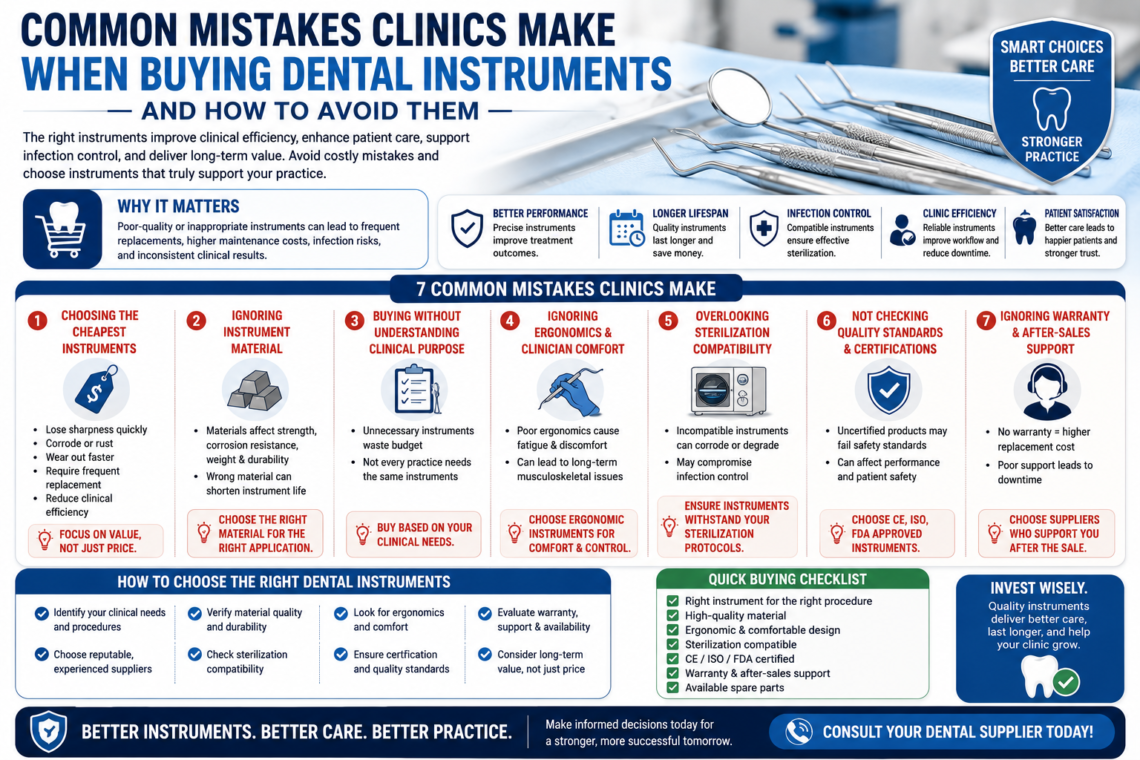
1 – Choosing the Cheapest Instruments
Price is important—but it shouldn’t be the only deciding factor.
Very inexpensive instruments may:
- Lose sharpness quickly
- Corrode after repeated sterilization
- Wear out faster
- Require frequent replacement
- Reduce treatment efficiency
Although premium instruments typically cost more upfront, they often provide better long-term value through improved durability and performance.
2 – Ignoring Instrument Material
Not all dental instruments are manufactured from the same materials.
Common options include:
- Stainless steel
- Titanium
- Tungsten carbide inserts
- High-performance alloys
Each material offers different advantages in terms of:
- Strength
- Corrosion resistance
- Weight
- Durability
- Maintenance requirements
Selecting the wrong material can reduce instrument lifespan and affect clinical performance. Understanding material differences is essential before making a purchase. Learn more in Stainless Steel vs Titanium Dental Instruments, where we compare durability, corrosion resistance, weight, and clinical applications.
3 – Buying Instruments Without Understanding Their Clinical Purpose
Some clinics purchase complete instrument sets without carefully considering whether each instrument matches the procedures they actually perform.
For example:
A general dental practice may not initially require the same range of surgical instruments as an oral surgery clinic.
Likewise, an orthodontic practice has different equipment requirements than an endodontic specialist.
Purchasing based on actual clinical needs helps avoid unnecessary spending while ensuring every instrument contributes to efficient patient care. If you’re unsure about the purpose of different instruments, our guide Common Dental Instruments and Uses explains the most frequently used dental instruments and their clinical applications.
4 – Ignoring Ergonomics and Clinician Comfort
Dental professionals spend hours each day performing precise procedures that require excellent control and repetitive hand movements. Choosing instruments without considering ergonomics can contribute to fatigue, discomfort, and even long-term musculoskeletal disorders.
Modern ergonomic instruments are designed to improve comfort while maintaining precision.
Look for Features Such As:
- Lightweight construction
- Balanced weight distribution
- Textured, non-slip handles
- Comfortable grip diameter
- Reduced hand strain during prolonged procedures
Why It Matters
Ergonomic instruments can help:
- Reduce clinician fatigue
- Improve precision
- Enhance productivity
- Increase comfort during lengthy treatments
- Lower the risk of repetitive strain injuries
5 – Overlooking Sterilization Compatibility
Every reusable dental instrument must withstand repeated cleaning, disinfection, and sterilization without compromising performance.
Unfortunately, some lower-quality instruments may:
- Corrode after repeated autoclave cycles
- Lose their finish
- Become dull more quickly
- Develop surface damage
- Shorten their service life
Before purchasing, verify that the instruments are compatible with your clinic’s sterilization protocols. Instrument quality is only one part of patient safety. Proper sterilization and infection prevention are equally important. Learn more in Best Practices for Infection Control in Dentistry.
6 – Buying from Unverified Suppliers
Not every supplier offers the same level of quality, support, or product consistency.
Choosing an unknown supplier based solely on a lower price may result in:
- Inconsistent product quality
- Limited warranty support
- Delayed deliveries
- Difficulty obtaining replacement parts
- Poor customer service
Evaluate Suppliers Based On:
- Industry reputation
- Years in business
- Customer reviews
- Product certifications
- Warranty policies
- Technical support
- Availability of replacement instruments
A trusted supplier becomes a long-term partner rather than simply a vendor.
7 – Ignoring Product Certifications
Dental instruments should comply with applicable quality and regulatory standards.
Depending on your market, look for relevant certifications such as:
- CE marking (where applicable)
- FDA registration or clearance (when required)
- ISO quality management standards
- Manufacturer quality assurance documentation
These certifications indicate that products have been manufactured according to recognized quality and safety requirements.
Did You Know?
Many reputable manufacturers also provide documentation on material composition, sterilization instructions, and recommended maintenance procedures, making it easier for clinics to manage instrument lifecycles.
8 – Forgetting About Maintenance Costs
The purchase price is only one part of an instrument’s total cost.
Also consider:
- Sharpening requirements
- Replacement parts
- Routine servicing
- Expected lifespan
- Downtime during repairs
A higher-quality instrument may cost more initially but require significantly less maintenance over time. Proper maintenance helps maximize the lifespan of clinical equipment. Read Dental Handpiece Maintenance to learn how preventive maintenance reduces downtime and repair costs.
9 – Buying Too Many or Too Few Instruments
One of the most common procurement mistakes is purchasing the wrong quantity of instruments.
Some clinics overbuy, tying up valuable capital in instruments that are rarely used. Others underbuy and experience workflow delays because instruments are constantly waiting to be sterilized between patients.
Buying Too Many Can Lead To:
- Unnecessary inventory costs
- Storage problems
- Instruments sitting unused for long periods
- Increased maintenance requirements
- Reduced cash flow
Buying Too Few Can Lead To:
- Appointment delays
- Sterilization bottlenecks
- Increased staff stress
- Lower clinical efficiency
- Faster instrument wear due to constant use
Best Practice
Evaluate:
- Daily patient volume
- Number of operatories
- Average procedures performed
- Sterilization turnaround time
Purchase enough instruments to support your workflow without creating unnecessary inventory.
10 – Failing to Standardize Instruments Across the Clinic
As clinics grow, instruments are sometimes purchased from different manufacturers without a consistent procurement strategy.
This creates problems such as:
- Different handling characteristics
- Inconsistent quality
- Difficult staff training
- Complicated inventory management
- More replacement parts to stock
Standardizing frequently used instruments helps create a smoother clinical workflow and simplifies purchasing.
11 – Not Considering Future Clinic Growth
Many clinics purchase only enough instruments for their current workload.
However, expanding practices often need:
- Additional operatories
- More clinicians
- Increased patient capacity
- Specialized procedures
Planning for future growth can prevent emergency purchases and inconsistent equipment selection later.
Consider questions such as:
- Will the clinic expand within the next two years?
- Are new services being introduced?
- Will additional dentists require duplicate instrument kits?
A scalable purchasing strategy saves time and money.
12 – Skipping Staff Feedback Before Purchasing
Dentists, hygienists, and dental assistants use instruments every day.
Ignoring their feedback can result in purchasing instruments that are uncomfortable, inefficient, or unsuitable for daily clinical work.
Before placing large orders:
- Request product samples when available.
- Ask clinicians to test instrument balance and grip.
- Gather feedback from hygienists and assistants.
- Evaluate performance during real procedures.
A collaborative purchasing process increases staff satisfaction and improves long-term productivity. Different dental specialties require different instrument sets. For example, endodontic procedures use specialized files and instruments that differ from extraction kits. Learn more about treatment differences in Root Canal vs Tooth Extraction.
How to Choose a Reliable Dental Instrument Supplier
Selecting the right supplier is just as important as choosing the right instrument.
Look for suppliers that offer:
- High-quality manufacturing
- Transparent product specifications
- Industry certifications
- Consistent inventory availability
- Competitive pricing
- Warranty support
- Responsive customer service
- Technical assistance when needed
Ask potential suppliers questions such as:
- How long have you been manufacturing dental instruments?
- What materials are used?
- Do you offer warranties?
- Can replacement parts be purchased?
- What quality-control processes are followed?
A dependable supplier helps reduce procurement risks and supports your clinic’s long-term success.
Why Preventive Maintenance Protects Your Investment
Even premium instruments require regular care.
Routine maintenance helps:
- Preserve sharpness
- Prevent corrosion
- Extend instrument lifespan
- Improve clinical performance
- Reduce replacement costs
Clinics should establish written maintenance schedules covering:
- Cleaning
- Inspection
- Lubrication (where applicable)
- Sterilization
- Replacement of worn instruments
Proper instrument care complements regular equipment servicing. Read Dental Handpiece Maintenance to learn how preventive maintenance reduces downtime and extends the lifespan of essential dental equipment.
Investing in Quality Improves Patient Experience
Patients may not recognize individual dental instruments, but they notice the results.
High-quality instruments contribute to:
- More precise treatment
- Shorter appointment times
- Greater clinician confidence
- Improved comfort
- Better clinical outcomes
Investing in durable, well-designed instruments ultimately benefits both the dental team and the patients they serve.
Frequently Asked Questions (FAQs)
1. What Common Mistakes Clinics Make When Buying Dental Instruments?
The most common mistake is purchasing instruments based only on price. While lower-cost instruments may reduce upfront expenses, they often wear out faster, require more frequent replacement, and may not perform as reliably as higher-quality options.
2. Why is instrument material important?
Material affects durability, corrosion resistance, weight, maintenance requirements, and overall lifespan. High-quality stainless steel and titanium instruments generally provide better long-term performance.
3. How can clinics evaluate a dental instrument supplier?
A reliable supplier should offer:
- Quality-certified products
- Product warranties
- Consistent inventory
- Technical support
- Transparent specifications
- Positive customer reputation
- Replacement parts availability
Building a long-term relationship with a trusted supplier helps ensure consistent product quality and dependable service.
4. Why are ergonomic instruments worth the investment?
Ergonomic instruments can reduce hand fatigue, improve precision, and increase clinician comfort during long procedures. They may also help lower the risk of repetitive strain injuries over time.
5. Should every clinic buy premium instruments?
Not necessarily. Frequently used instruments often justify a higher investment due to their daily use, while specialized instruments used occasionally may not require premium options. Clinics should match purchasing decisions to their clinical needs and budget.
Conclusion
Buying dental instruments is one of the most important purchasing decisions a clinic will make. High-quality instruments improve treatment accuracy, enhance clinician comfort, support infection control, and contribute to better patient outcomes.
Rather than focusing solely on the initial purchase price, clinics should consider the complete lifecycle of every instrument—from material quality and ergonomics to maintenance, sterilization compatibility, and supplier support. A well-planned procurement strategy reduces long-term costs while ensuring the dental team has dependable tools for delivering excellent care.
Whether you’re opening a new practice, expanding an existing clinic, or replacing aging equipment, taking the time to evaluate your options carefully can help you avoid costly mistakes and build a more efficient, successful practice.
Call to Action
Invest in Instruments That Support Long-Term Clinical Success
The right dental instruments are more than just tools—they’re an investment in your clinic’s reputation, efficiency, and patient care. Before making your next purchase, evaluate quality, durability, ergonomics, sterilization compatibility, and supplier reliability instead of focusing solely on price.