Introduction
Most people rarely think about saliva unless they experience a dry mouth. However, saliva is one of the most important components of a healthy mouth. It plays a critical role in protecting teeth, maintaining gum health, controlling harmful bacteria, and supporting digestion.
Every day, the salivary glands produce approximately one to two liters of saliva. This natural fluid works continuously to keep the mouth clean, moist, and balanced. Without adequate saliva production, the risk of tooth decay, gum disease, bad breath, and oral infections increases significantly.
Despite its importance, saliva is often overlooked in discussions about oral hygiene. Brushing and flossing receive most of the attention, but saliva serves as the mouth’s first line of defense against many dental problems.
In this article, we’ll explore the role of saliva in dental health, how it protects your teeth and gums, what happens when saliva production decreases, and how to maintain healthy saliva flow. Maintaining proper oral hygiene with the right brushing technique is equally important—learn more in Manual vs Electric Toothbrush: What’s Actually Better?.
What Is Saliva?
Saliva is a clear fluid produced by the salivary glands located throughout the mouth and throat. It consists primarily of water but also contains:
- Minerals
- Enzymes
- Proteins
- Electrolytes
- Antibacterial compounds
- Mucus
These components work together to support oral health and several essential bodily functions and role of saliva in dental health.
Saliva production occurs continuously throughout the day, although the amount varies depending on hydration levels, food intake, medications, and overall health.
Why Is Saliva Important for Dental Health?
Saliva performs numerous functions that help maintain a healthy oral environment.
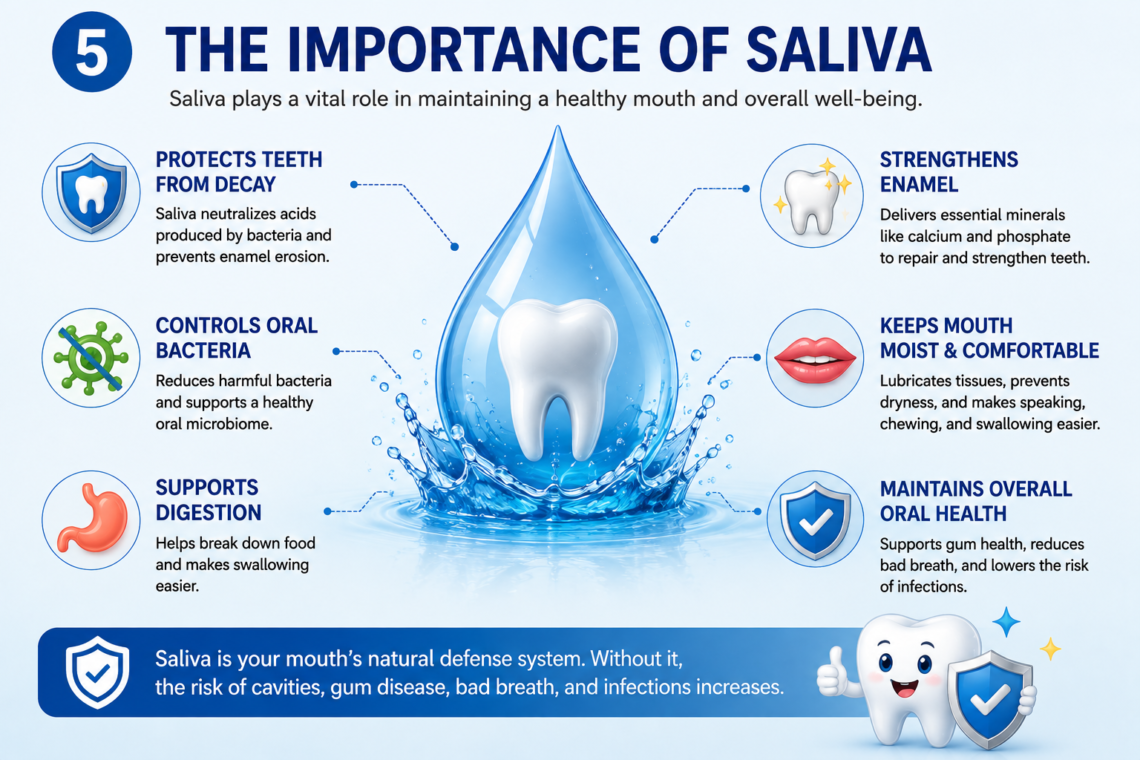
Protects Teeth from Tooth Decay
One of saliva’s most important roles is helping prevent cavities.
Throughout the day, bacteria in the mouth produce acids that attack tooth enamel. These acid attacks can gradually weaken the teeth and lead to decay.
Saliva helps by:
- Washing away food particles
- Diluting harmful acids
- Neutralizing bacterial byproducts
- Reducing plaque accumulation
This protective action lowers the risk of enamel erosion and cavity formation. If you already experience discomfort from weakened enamel, read Why Do My Teeth Hurt When I Drink Cold Water? to understand common causes of tooth sensitivity.
Supports Tooth Remineralization
Tooth enamel constantly loses and gains minerals through a process called demineralization and remineralization.
When acids remove minerals from enamel, saliva helps restore them by supplying essential minerals such as:
- Calcium
- Phosphate
- Fluoride (when available)
This natural repair process strengthens enamel and helps reverse early stages of tooth damage.
Maintains Healthy pH Levels
The mouth functions best when it maintains a balanced pH level.
After consuming sugary or acidic foods, oral bacteria produce acids that lower the pH inside the mouth.
Saliva acts as a natural buffer by neutralizing these acids and restoring a healthier environment. Maintaining proper pH levels helps protect teeth from erosion and decay.
Saliva’s Role in Controlling Oral Bacteria
A major role of saliva in dental health is maintaining a healthy balance of bacteria inside the mouth and reducing the growth of harmful microorganisms.
Natural Antibacterial Protection
Saliva contains antimicrobial compounds that help control harmful microorganisms.
These substances work to:
- Reduce bacterial growth
- Limit plaque formation
- Lower infection risk
- Support overall oral balance
This natural defense system helps prevent many common dental problems.
Reduces the Risk of Gum Disease
Gum disease develops when bacteria accumulate along the gum line and trigger inflammation.
By helping remove food debris and bacterial buildup, saliva contributes to healthier gums and may reduce the likelihood of developing gingivitis and periodontal disease. You can also learn about the early warning signs in Why Do My Gums Bleed When I Brush My Teeth?.
Saliva and Digestion
While saliva is essential for oral health, it also plays a crucial role in digestion.
Begins the Digestive Process
Digestion starts in the mouth.
Saliva contains enzymes that begin breaking down carbohydrates before food reaches the stomach.
This early stage of digestion helps the body process nutrients more efficiently.
Helps with Chewing and Swallowing
Saliva moistens food and forms it into a soft mass that can be swallowed comfortably.
Without adequate saliva, eating and swallowing become significantly more difficult.
What Happens When Saliva Production Decreases?
When the role of saliva in dental health is compromised because of reduced saliva production, the risk of cavities, gum disease, and oral discomfort increases significantly.
Increased Risk of Cavities
Without sufficient saliva:
- Acids remain on teeth longer
- Food particles accumulate
- Bacteria multiply more easily
As a result, cavity risk increases dramatically.
Higher Risk of Gum Disease
A dry mouth environment allows harmful bacteria to flourish, increasing the likelihood of gum inflammation and infection.
Persistent Bad Breath
Saliva helps cleanse the mouth naturally.
When saliva levels decrease, bacteria and food debris remain longer, often leading to chronic bad breath. Dry mouth is one of the most common reasons people wake up with bad breath. For more information, read Why Does My Mouth Feel Dry Every Morning?.
Difficulty Eating and Speaking
People with dry mouth frequently experience:
- Trouble swallowing
- Difficulty chewing
- Altered taste sensations
- Speech discomfort
These symptoms can significantly affect daily life. If chewing also causes jaw discomfort or stiffness, you may find our guide on TMJ Disorder: Symptoms, Causes, and When to See a Dentist helpful.
Common Causes of Dry Mouth
Several factors can reduce saliva production.
Medications
Hundreds of prescription and over-the-counter medications list dry mouth as a side effect.
Common examples include:
- Antihistamines
- Antidepressants
- Blood pressure medications
- Decongestants
Dehydration
Insufficient fluid intake can reduce saliva production and contribute to dry mouth symptoms.
Aging
While aging itself does not necessarily cause dry mouth, older adults often take medications that affect saliva production.
Medical Conditions
Certain health conditions can interfere with salivary gland function, resulting in chronic dry mouth.
How to Maintain Healthy Saliva Production
Supporting the role of saliva in dental health starts with healthy daily habits that encourage normal saliva production.
Stay Hydrated
Drinking enough water throughout the day is one of the simplest ways to encourage healthy saliva flow.
Limit Sugary Foods and Drinks
Excessive sugar consumption promotes bacterial growth and increases acid production in the mouth.
Chew Sugar-Free Gum
Chewing stimulates saliva production and may help relieve mild dry mouth symptoms.
Products containing xylitol may provide additional oral health benefits.
Avoid Tobacco Products
Smoking and tobacco use can reduce saliva production and increase the risk of oral disease.
Visit Your Dentist Regularly
Routine dental checkups can help identify dry mouth issues before they lead to more serious complications. Professional examinations also allow dentists to detect cavities, gum disease, and other oral health problems at an early stage, often reducing the need for more complex treatments discussed in How Much Does a Dental Filling Cost Without Insurance?. 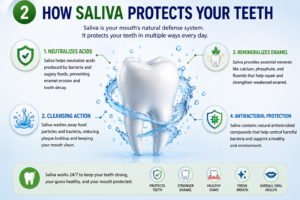
Signs You May Have a Saliva Deficiency
Common symptoms include:
- Constant dry mouth
- Sticky feeling inside the mouth
- Frequent thirst
- Difficulty swallowing
- Cracked lips
- Mouth sores
- Increased cavities
- Persistent bad breath
- Dry throat
If these symptoms persist, consult a dental professional for evaluation. Understanding the role of saliva in dental health enables people to take simple preventive steps that protect both their teeth and gums. If your symptoms are most noticeable after waking up, you may also want to read Why Does My Mouth Feel Dry Every Morning?.
Frequently Asked Questions (FAQs)
What is the main role of saliva in dental health?
Saliva protects teeth by neutralizing acids, washing away food particles, controlling bacteria, and supporting enamel remineralization.
Can low saliva cause cavities?
Yes. Reduced saliva production increases the risk of tooth decay because acids and bacteria remain on teeth longer.
Why does saliva help protect teeth?
Saliva contains minerals that strengthen enamel and compounds that help neutralize harmful acids produced by oral bacteria.
What causes dry mouth?
Common causes include medications, dehydration, certain medical conditions, tobacco use, and reduced salivary gland function.
How can I increase saliva production naturally?
Drinking water, chewing sugar-free gum, maintaining good hydration, and avoiding tobacco products can help stimulate saliva production.
Conclusion
The role of saliva in dental health extends far beyond simply keeping the mouth moist. Saliva serves as a powerful natural defense system that protects teeth, supports gum health, controls harmful bacteria, neutralizes acids, and promotes enamel repair.
Without adequate saliva production, the risk of cavities, gum disease, bad breath, and oral discomfort increases significantly. Understanding how saliva works and taking steps to support healthy saliva flow can make a meaningful difference in long-term oral health.
While brushing, flossing, and regular dental visits remain essential, saliva quietly performs many of the protective functions that keep your smile healthy every day.
CTA
Want to support the role of saliva in dental health? Focus on hydration, healthy oral hygiene habits, and regular dental checkups to maintain a strong, healthy smile? Focus on hydration, healthy oral hygiene habits, and regular dental checkups to support healthy saliva production and maintain a strong, healthy smile for years to come.