Introduction
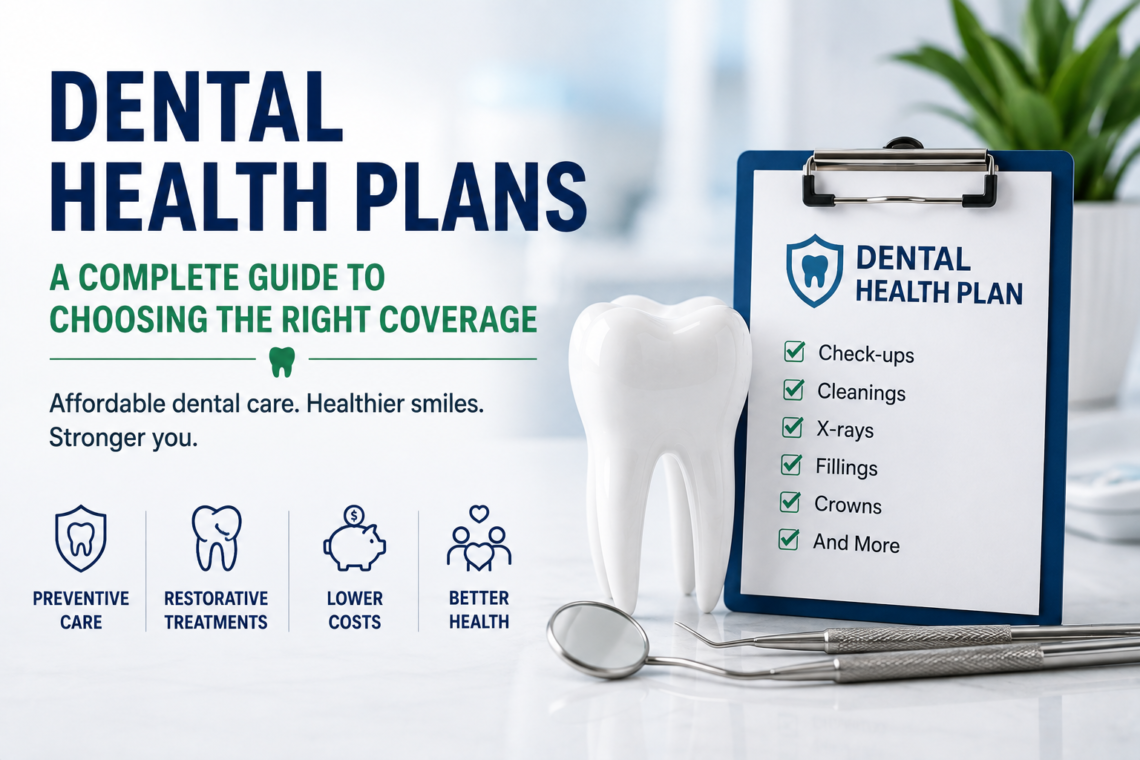
Oral health is an essential part of your overall well-being, yet the cost of dental care can be a significant concern for many individuals and families. From routine cleanings and dental exams to fillings, crowns, root canals, and emergency treatments, dental expenses can add up quickly without the right financial support. That’s why many people choose dental health plans to make quality dental care more affordable while encouraging regular preventive visits.
Dental health plans come in several forms, including traditional dental insurance and dental savings plans. Each option offers different levels of coverage, costs, and provider networks, so understanding how they work is essential before making a decision.
If you’re considering expensive procedures, you may also find our guide on Does Health Insurance Cover Dental Implants? helpful, as it explains what insurance typically covers for one of the most common major dental treatments.
What Are Dental Health Plans?
Dental health plans are programs designed to reduce the cost of dental care while encouraging preventive treatment. Depending on the type of plan you choose, it may fully cover preventive services, share the cost of restorative procedures, or provide discounted rates through a network of participating dental providers.
For example, if you’ve noticed symptoms like bleeding gums or sudden tooth sensitivity, addressing them during a routine dental examination can prevent more serious complications. Learn more about these common issues in our guides Why Do My Gums Bleed When I Brush My Teeth? and Why Do My Teeth Hurt When I Drink Cold Water?
Most dental health plans help cover or provide discounts for services such as:
- Routine dental examinations
- Professional teeth cleanings
- Digital dental X-rays
- Tooth-colored fillings
- Tooth extractions
- Root canal treatment
- Dental crowns
- Dental bridges
- Dentures
- Orthodontic treatment (available under some plans)
If your dentist recommends a dental crown as part of your treatment, you may also want to read our article How Long Do Dental Crowns Last?, which explains the lifespan of different crown materials and how proper care can maximize their durability.
Why Are Dental Health Plans Important?
Many dental problems develop gradually and often show few or no symptoms in their early stages. Cavities, gum disease, enamel erosion, and oral infections can progress silently until they require more extensive—and expensive—treatment. A dental health plan encourages routine preventive care, allowing dentists to detect and treat these issues before they become serious.
Regular dental checkups not only help protect your teeth but also contribute to your overall health. Research has shown that poor oral health is associated with conditions such as diabetes, cardiovascular disease, and certain respiratory infections. By making preventive care more affordable, dental health plans support both oral and general well-being.
Key Benefits of Dental Health Plans
A well-designed dental health plan offers several advantages beyond simply lowering treatment costs:
- Encourages preventive care: Regular exams and professional cleanings help identify dental problems before they become severe.
- Reduces out-of-pocket expenses: Insurance or discounted treatment fees make routine and restorative care more affordable.
- Supports long-term oral health: Consistent preventive care lowers the risk of tooth decay, gum disease, and tooth loss.
- Provides financial protection: Coverage helps reduce the impact of unexpected dental emergencies and major procedures.
- Improves access to quality care: Many plans provide access to a network of experienced dental professionals at negotiated rates.
- Promotes healthier habits: Individuals with dental coverage are generally more likely to schedule regular checkups and maintain better oral hygiene.
While professional dental care is essential, maintaining good oral hygiene at home also plays a major role in preventing dental disease. If you’re interested in evidence-based home care practices, read our guide Coconut Oil and Dental Health: Benefits, Risks, and What Science Says, which explores what current research says about oil pulling and oral health.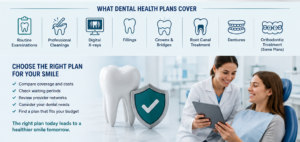
Types of Dental Health Plans
Choosing the right dental health plan starts with understanding the different options available.
1. Traditional Dental Insurance Plans
Traditional dental insurance is one of the most common types of dental health coverage. Members typically pay a monthly premium, and the insurance company shares the cost of covered dental treatments based on the terms of the policy.
Most plans divide coverage into three categories: preventive, basic, and major dental services.
Preventive Care
Preventive care focuses on maintaining healthy teeth and gums while identifying dental problems early.
These services commonly include:
- Routine dental examinations
- Professional teeth cleanings
- Digital dental X-rays
- Fluoride treatments
- Oral cancer screenings (in some plans)
Routine examinations can also help diagnose common problems such as gum disease or tooth sensitivity before they require expensive treatment. If you’ve experienced these symptoms, you may find our article Why Do My Gums Bleed When I Brush My Teeth?
Basic Dental Procedures
Basic restorative services treat common dental problems before they become more severe.
These treatments often include:
- Tooth-colored fillings
- Simple tooth extractions
- Scaling and root planing (gum disease treatment)
- Minor periodontal procedures
- Emergency dental care
Major Dental Procedures
Major restorative treatments are generally the most expensive services and usually involve higher out-of-pocket costs.
Examples include:
- Dental crowns
- Dental bridges
- Dentures
- Oral surgery
- Some implant-related procedures (depending on the plan)
Coverage for major procedures is often around 50%, and many insurance plans require a waiting period before these benefits become available.
2. Dental Savings Plans
Dental savings plans are not insurance policies. Instead, they are membership programs that provide discounted rates on dental services through a network of participating dentists.
Members pay an annual membership fee and receive reduced prices on most dental procedures without filing insurance claims.
Benefits of Dental Savings Plans
- No annual deductibles
- No annual maximum benefits
- No waiting periods for most services
- No claim paperwork
- Immediate discounts on eligible treatments
- Lower membership costs than many insurance plans
These plans are often a practical option for individuals who do not receive employer-sponsored dental insurance or those seeking affordable access to routine dental care.
However, unlike traditional insurance, dental savings plans do not pay a portion of your treatment costs—they simply reduce the price you pay.
3. Employer-Sponsored Dental Plans
Many employers offer dental insurance as part of their employee benefits package.
Because employers often contribute toward the monthly premium, these plans can be one of the most cost-effective ways to obtain dental coverage.
Employer-sponsored plans typically include:
- Preventive dental care
- Basic restorative procedures
- Partial coverage for major treatments
- Family coverage options
- Access to a network of preferred dental providers
The exact benefits vary depending on the employer and insurance carrier.
4. Government Dental Programs
Certain individuals may qualify for dental benefits through government healthcare programs.
Eligibility often depends on factors such as:
- Age
- Income level
- Disability status
- Veteran status
- Country or regional healthcare policies
Coverage varies significantly by program and location. Some programs focus primarily on preventive services, while others may also provide restorative or emergency dental care.
Patients should review their local program’s eligibility requirements and covered services before relying solely on government benefits.
Which Type of Dental Health Plan Is Right for You?
The best dental health plan depends on your individual circumstances.
- If you only need routine checkups and cleanings, a basic insurance plan or dental savings plan may be sufficient.
- If you anticipate major dental work, such as crowns, bridges, dentures, or implants, a comprehensive dental insurance policy often provides better long-term value despite higher monthly premiums.
- If your employer offers dental benefits, compare those plans with individual options before purchasing separate coverage.
- If you qualify for government assistance, review your available benefits carefully to understand any limitations.
Choosing the right plan isn’t just about finding the lowest premium—it’s about balancing monthly costs, treatment coverage, provider access, and your future oral healthcare needs.
Understanding Important Dental Insurance Terms
Below are the key terms every patient should know before enrolling in a dental health plan.
Premium
A premium is the fixed amount you pay to keep your dental health plan active. Depending on your provider, premiums are typically paid monthly, quarterly, or annually.
Generally, plans with higher premiums offer broader coverage, lower out-of-pocket costs, or access to additional benefits. On the other hand, lower-premium plans may have higher deductibles, reduced coverage percentages, or annual benefit limits.
Before choosing a plan, compare the premium with the benefits you’ll actually use rather than selecting the least expensive option.
Deductible
A deductible is the amount you must pay for covered dental services before your insurance company begins contributing toward treatment costs.
For example, if your plan has a $50 deductible, you’ll generally pay the first $50 of eligible dental expenses before insurance starts sharing the remaining cost.
Many dental insurance plans waive the deductible for preventive services such as routine exams and professional cleanings, encouraging patients to schedule regular checkups.
Co-payment (Co-pay)
A co-payment, often called a co-pay, is a fixed amount you pay for certain dental services while your insurance covers the remaining cost.
For example, you may pay a small co-pay for a routine dental visit, while your insurance pays the rest according to your policy.
Not every dental health plan uses co-payments, so it’s important to review your policy carefully.
Coinsurance
Coinsurance refers to the percentage of treatment costs shared between you and your insurance provider after you’ve met your deductible.
For example:
- Preventive care: Insurance may cover 100%
- Basic procedures: Insurance may cover 80%, while you pay 20%
- Major procedures: Insurance may cover 50%, leaving you responsible for the remaining balance
If your dentist recommends a dental crown, our guide How Long Do Dental Crowns Last? explains why crowns are commonly used and how long they typically last with proper care.
Annual Maximum
The annual maximum is the highest amount your dental insurance company will pay for covered services during a single policy year.
Once this limit is reached, you’ll usually be responsible for paying the remaining treatment costs until your benefits reset.
If you’re planning multiple procedures—such as crowns, bridges, or implant treatment—it’s worth checking your annual maximum before scheduling treatment.
Patients considering implants should also review our article Does Health Insurance Cover Dental Implants?, which explains how annual maximums and policy limitations can affect implant coverage.
Waiting Period
A waiting period is the amount of time you must remain enrolled in a dental health plan before certain services become eligible for coverage.
Many insurance providers impose waiting periods for major restorative treatments, including:
- Dental crowns
- Bridges
- Dentures
- Root canal treatment
- Dental implants (when covered)
Waiting periods often range from six to twelve months, although some plans offer immediate coverage for preventive care.
If you already know you’ll need major dental work, comparing waiting periods should be one of your top priorities when selecting a plan.
In-Network Dentist
An in-network dentist is a dental professional who has agreed to provide services at negotiated rates with your insurance company.
Visiting an in-network provider usually offers several advantages:
- Lower treatment costs
- Reduced out-of-pocket expenses
- Simplified claims processing
- Greater insurance coverage
Choosing an out-of-network dentist may still be possible, but you’ll often pay a larger portion of the treatment costs.
Before enrolling, verify that your preferred dentist participates in your plan’s provider network.
Preauthorization
Some insurance companies require preauthorization (also called prior authorization) before approving coverage for certain procedures.
Your dentist submits a proposed treatment plan to the insurance provider, which reviews the procedure and estimates how much will be covered.
Preauthorization is commonly requested for:
- Crowns
- Bridges
- Dentures
- Oral surgery
- Periodontal treatment
- Implant-related procedures
Obtaining preauthorization before treatment helps minimize unexpected costs and allows you to better plan your dental expenses.
Explanation of Benefits (EOB)
After receiving dental treatment, your insurance provider may send you an Explanation of Benefits (EOB).
An EOB is not a bill. Instead, it summarizes:
- The dental services performed
- The total treatment cost
- The amount paid by your insurance
- Any remaining balance you may owe
- Services that were not covered
Reviewing your EOB carefully can help you understand your benefits and identify any billing discrepancies.
Tips to Maximize Your Dental Health Plan
Enrolling in a dental health plan is only the first step. To get the greatest value from your coverage, it’s important to understand how your benefits work and use them strategically throughout the year. Many people pay for dental insurance but don’t take full advantage of the preventive services and benefits included in their plan.
The following tips can help you maximize your coverage while maintaining better long-term oral health.
-
Schedule Regular Preventive Checkups
-
Choose In-Network Dentists Whenever Possible
-
Review Your Annual Benefits
-
Address Dental Problems Early
-
Understand Your Coverage Before Treatment
-
Maintain Good Oral Hygiene at Home
Common Mistakes to Avoid
Even with a good dental health plan, certain mistakes can increase your dental expenses or reduce the value of your coverage.
Avoid these common errors:
Skipping Preventive Appointments
Missing routine cleanings and examinations allows minor dental problems to progress into more complex and costly conditions.
Choosing a Plan Based Only on Monthly Premium
A low monthly premium may seem attractive, but it could come with higher deductibles, limited coverage, longer waiting periods, or lower annual maximums.
Always compare the overall value of a plan—not just its monthly cost.
Ignoring Waiting Periods
Many insurance plans require members to wait several months before covering major procedures.
If you need treatment soon, choose a plan with shorter waiting periods or immediate coverage where available.
Delaying Necessary Treatment
Ignoring dental pain, bleeding gums, or sensitivity can allow problems to worsen, resulting in more complex procedures later.
Frequently Asked Questions (FAQs)
What is a dental health plan?
A dental health plan is a program that helps reduce the cost of dental care through either traditional insurance coverage or discounted treatment fees offered by dental savings plans.
Are dental savings plans better than dental insurance?
It depends on your individual needs. Dental savings plans provide immediate discounts without deductibles or annual maximums, while traditional dental insurance generally offers broader coverage for major restorative procedures.
Do dental health plans cover cosmetic dentistry?
Most standard dental health plans do not cover cosmetic procedures such as teeth whitening or veneers unless they are considered medically necessary.
Can I buy a dental health plan without employer benefits?
Yes. Many insurance providers offer individual and family dental plans that can be purchased directly, making coverage available even if your employer does not provide dental benefits.
Are dental implants covered by dental insurance?
Coverage varies by provider and policy. Some plans cover certain parts of implant treatment, while others exclude implants altogether. Learn more in our comprehensive guide Does Health Insurance Cover Dental Implants?
Conclusion
Dental health plans make quality oral healthcare more affordable by helping reduce the cost of preventive, restorative, and emergency dental treatments. Whether you choose traditional dental insurance or a dental savings plan, selecting the right coverage can provide financial protection while encouraging regular dental care.
Before enrolling, compare premiums, deductibles, annual maximums, waiting periods, provider networks, and covered services to find a plan that matches your oral health needs and budget. Remember that the best dental health plan isn’t always the least expensive—it’s the one that offers the greatest overall value based on your expected dental care.
Just as important as choosing the right plan is maintaining good oral hygiene and seeking preventive care. Routine dental checkups, healthy daily habits, and early treatment of dental problems can help you avoid costly procedures and protect your smile for years to come.
CTA
Ready to protect your smile? Compare dental health plans, review your coverage options carefully, and choose a plan that supports your oral health goals and budget. Regular dental care is one of the best investments you can make in your long-term health.