Introduction
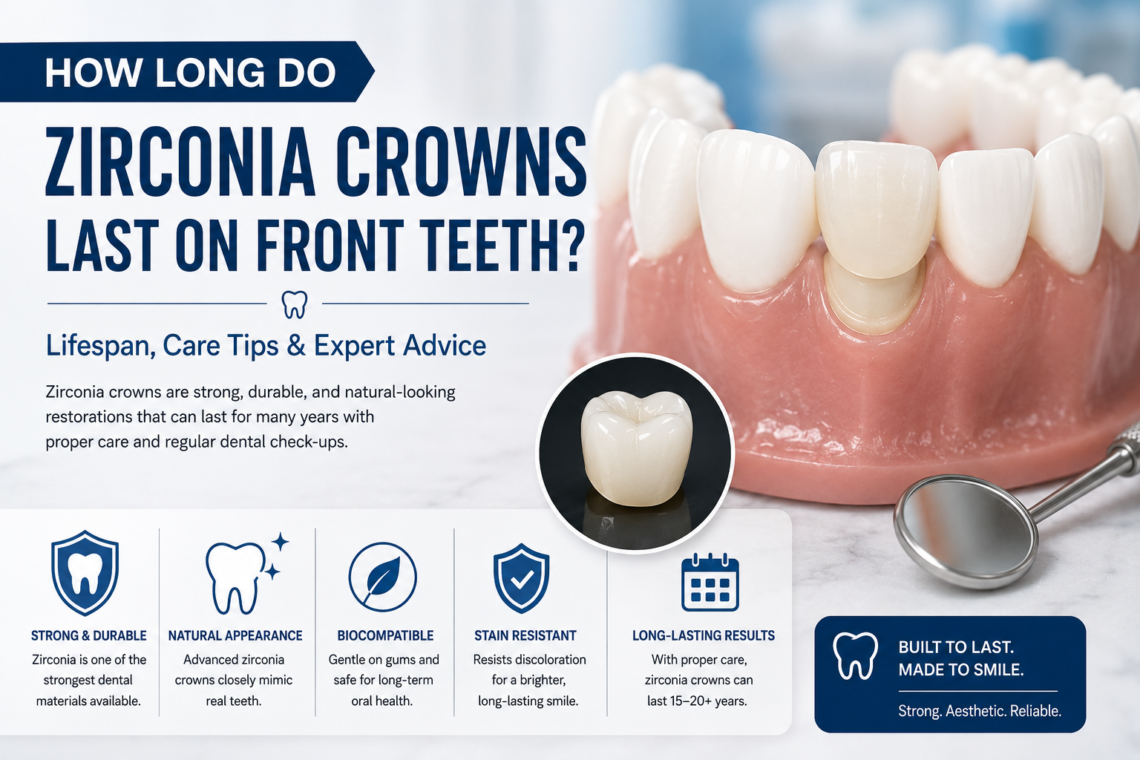
If you’re considering a zirconia crown for a front tooth, one of the first questions you’ll likely ask is: How long zirconia crowns last on front teeth? Since front teeth play a crucial role in your smile, speech, and confidence, choosing a restoration that combines durability with natural aesthetics is essential.
The good news is that zirconia crowns are among the strongest and most durable dental restorations available today. With proper care, they can provide excellent function and maintain their appearance for many years. However, their longevity depends on several factors, including oral hygiene, bite alignment, lifestyle habits, and the quality of the dental procedure.
In this comprehensive guide, you’ll learn how long zirconia crowns typically last, what affects their lifespan, how to care for them, when they may need replacement, and whether they’re a better option than porcelain crowns for front teeth. We’ll also share expert tips to help you maximize the life of your restoration and keep your smile looking its best.
If your teeth also hurt when drinking cold beverages, you may find our guide on Why Do My Teeth Hurt When I Drink Cold Water?
What Are Zirconia Crowns?
A zirconia crown is a tooth-shaped dental restoration made from zirconium dioxide, an advanced ceramic material known for its exceptional strength, durability, and biocompatibility. Dentists use zirconia crowns to restore damaged, weakened, or heavily decayed teeth while preserving their function and appearance.
Unlike traditional metal-based crowns, zirconia crowns are metal-free, making them an excellent option for patients seeking a natural-looking smile. Advances in dental materials have also improved zirconia’s translucency, allowing modern multilayer zirconia crowns to closely resemble the appearance of natural teeth—especially for visible front teeth.
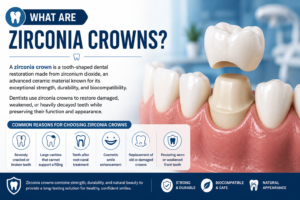
Common Reasons for Choosing Zirconia Crowns
- Severely cracked or broken teeth
- Large cavities that cannot support a filling
- Teeth after root canal treatment
- Cosmetic smile enhancement
- Replacement of old or damaged crowns
- Restoring worn or weakened front teeth
Why Zirconia Is a Popular Choice for Front Teeth
Although porcelain has traditionally been favored for visible teeth due to its lifelike appearance, improvements in zirconia technology have made it an increasingly popular option for front teeth as well.
Key Benefits of Zirconia Crowns
Exceptional Strength
Zirconia is one of the strongest materials used in modern dentistry. It can withstand everyday biting and chewing forces while resisting fractures better than many other ceramic materials.
Natural Appearance
Today’s multilayer zirconia crowns are designed with varying levels of translucency to mimic natural enamel, resulting in a more realistic appearance than earlier generations of zirconia.
Excellent Biocompatibility
Zirconia is gentle on surrounding gum tissue and is less likely to trigger allergic reactions, making it a suitable choice for many patients.
Superior Stain Resistance
Unlike natural teeth, zirconia crowns resist staining from coffee, tea, red wine, and many pigmented foods, helping maintain a bright smile over time.
Long-Term Durability
With proper care, zirconia crowns often remain functional for well over a decade, making them a reliable long-term investment.
How Long Zirconia Crowns Last on Front Teeth?
Clinical experience and long-term studies indicate that zirconia crowns are among the longest-lasting restorative options available.
Average Lifespan
| Patient Care Level | Expected Lifespan |
| Excellent oral hygiene | 20+ years |
| Good oral hygiene | 15–20 years |
| Average maintenance | 10–15 years |
| Poor oral hygiene or heavy grinding | Less than 10 years |
Many patients continue using their zirconia crowns well beyond 20 years, particularly when they maintain excellent oral hygiene, avoid damaging habits, and attend regular dental checkups.
However, it’s important to remember that while zirconia itself is highly durable, the supporting tooth, surrounding gums, and dental cement also influence the overall lifespan of the restoration.
Factors That Affect the Lifespan of Zirconia Crowns
Although zirconia is one of the strongest dental materials available, the longevity of a front tooth crown depends on more than just the material itself. Proper oral care, professional placement, and daily habits all play an important role in determining how long your crown will last.
Below are the most significant factors that influence the lifespan of zirconia crowns.
1. Oral Hygiene
The zirconia crown itself cannot develop cavities, but the natural tooth beneath it can. If plaque accumulates around the crown margins, bacteria may cause decay where the crown meets the tooth.
2. Teeth Grinding (Bruxism)
Grinding or clenching your teeth places excessive pressure on dental restorations.
3. Bite Alignment
An uneven bite can create excessive force on one area of the crown, increasing the risk of complications over time.
4. Quality of the Crown and Dental Materials
Not all zirconia crowns are manufactured to the same standard.
5. Dentist’s Experience
Even the highest-quality zirconia crown may fail prematurely if it is not properly designed or placed.
6. Diet and Lifestyle Habits
Certain habits can shorten the life of any dental crown.
How to Make Your Zirconia Crown Last Longer
Fortunately, caring for a zirconia crown is straightforward. A few simple habits can help maximize its lifespan.
Step-by-Step Care Routine
Step 1: Brush Properly
Use a soft-bristled toothbrush and brush for at least two minutes, paying extra attention to the gumline around the crown.
Step 2: Floss Daily
Carefully floss around the crown to remove plaque and food debris. Consider using floss designed for bridges and crowns if recommended by your dentist.
Step 3: Use Fluoride Products
Fluoride strengthens the remaining natural tooth structure beneath and around the crown, reducing the risk of decay.
Step 4: Attend Regular Dental Checkups
Professional cleanings allow your dentist to monitor:
- Crown integrity
- Gum health
- Bite alignment
- Signs of wear
- Early decay around the crown margins
Early detection often prevents more extensive treatment later.
Common Mistakes That Shorten Crown Lifespan
Many crown failures are related to avoidable habits rather than defects in the crown material.
Avoid These Common Mistakes
- Skipping routine dental checkups
- Ignoring bleeding gums
- Using teeth as tools
- Chewing ice regularly
- Smoking or using tobacco products
- Delaying treatment when the crown feels loose
- Ignoring nighttime teeth grinding
Addressing these habits early can significantly increase the lifespan of your zirconia crown.
Signs Your Zirconia Crown May Need Replacement
Although zirconia crowns are durable, they are not designed to last forever. Monitoring for warning signs can help you seek treatment before more serious problems develop.
Contact Your Dentist If You Notice:
- Persistent pain around the crowned tooth
- A loose or shifting crown
- Chipped or fractured crown edges
- Gum recession exposing the crown margin
- Difficulty biting comfortably
- Bad odor around the crown
- Recurrent decay beneath the crown
- Changes in bite alignment
Prompt evaluation may allow minor issues to be corrected before replacement becomes necessary.
Zirconia Crown vs Porcelain: Which Is Better for Front Teeth?
One of the most common questions patients ask is whether they should choose a zirconia crown or a porcelain crown for a front tooth. Both materials can restore a beautiful smile, but each has unique strengths that make it better suited for different situations.
The right choice depends on several factors, including your bite, cosmetic expectations, oral habits, and your dentist’s recommendation.
Appearance
Front teeth are the most visible part of your smile, making aesthetics an important consideration.
Traditionally, porcelain has been known for its superior translucency because it closely resembles natural tooth enamel. This is why it has long been the preferred material for cosmetic restorations.
However, advances in dental technology have significantly improved zirconia. Modern multilayer zirconia crowns now feature natural color gradients and enhanced translucency, allowing them to blend seamlessly with surrounding teeth in many cases.
For most patients, the difference in appearance between high-quality zirconia and porcelain is minimal when fabricated by an experienced dental laboratory.
Gum recession is often linked to early gum disease. If you notice bleeding while brushing or flossing, don’t ignore it. Our article Why Do My Gums Bleed When I Brush My Teeth?
Strength and Durability
This is where zirconia truly stands out.
Front teeth are used not only for smiling but also for biting into foods such as apples, sandwiches, and crusty bread. A restoration must withstand daily functional forces without compromising aesthetics.
Zirconia Advantages
- Exceptional fracture resistance
- High resistance to wear
- Less likely to chip
- Excellent long-term durability
- Ideal for patients who grind their teeth
Porcelain crowns, while beautiful, are generally more susceptible to chipping under excessive pressure.
Longevity
One of the biggest reasons patients choose zirconia is its impressive lifespan.
| Crown Type | Average Lifespan |
| Zirconia Crown | 15–20+ years |
| Porcelain Crown | 10–15 years |
With proper oral hygiene and routine dental care, either option can last for many years. However, zirconia typically offers greater longevity, especially for patients with heavy bite forces or bruxism.
Comfort and Biocompatibility
Both zirconia and porcelain are metal-free materials that are well tolerated by the body.
Benefits include:
- Excellent gum compatibility
- Reduced risk of allergic reactions
- Natural feel
- Comfortable chewing
- Healthy tissue response
Because zirconia has an exceptionally smooth surface, it can also help reduce plaque accumulation when properly polished.
Who Should Choose Zirconia?
A zirconia crown may be the better option if you:
- Frequently grind or clench your teeth
- Want maximum durability
- Have a strong bite
- Need a long-lasting restoration
- Prefer a stain-resistant material
- Want a metal-free crown
Who May Prefer Porcelain?
A porcelain crown may be recommended if you:
- Prioritize the highest level of translucency
- Have minimal bite pressure
- Are restoring a highly visible front tooth where aesthetics are the primary concern
- Have sufficient natural tooth structure and your dentist determines porcelain is appropriate
Your dentist will evaluate your smile, bite, and cosmetic goals before recommending the most suitable material.
Pros and Cons of Zirconia Crowns
Advantages
- Exceptional durability
- Long lifespan
- Highly resistant to fractures
- Metal-free and biocompatible
- Excellent stain resistance
- Natural appearance with modern multilayer zirconia
- Suitable for patients with teeth grinding
- Low maintenance
Disadvantages
- Can be more difficult to adjust after fabrication
- Aesthetic outcome depends on the quality of the laboratory and dentist
- May not always match the translucency of premium porcelain in highly demanding cosmetic cases
- Replacement can be more complex if significant damage occurs
Myths vs. Facts
| Myth | Fact |
| Zirconia crowns look fake. | Modern multilayer zirconia closely mimics natural teeth. |
| Zirconia crowns never need replacement. | Even durable crowns may eventually require replacement due to wear, changes in the supporting tooth, or gum health. |
| Zirconia crowns stain easily. | Zirconia is highly resistant to staining from coffee, tea, and other common foods and beverages. |
| Zirconia is only suitable for back teeth. | Advances in material technology have made zirconia a popular choice for front teeth as well. |
| Crowns require special cleaning products. | Daily brushing, flossing, and routine dental visits are usually sufficient to maintain them. |
Frequently Asked Questions (FAQs)
1. How long zirconia crowns last on front teeth?
Zirconia crowns on front teeth typically last 15–20 years, and many can last even longer with proper oral hygiene, regular dental checkups, and healthy lifestyle habits. The exact lifespan depends on factors such as bite force, teeth grinding, and the quality of the crown placement.
2. Can zirconia crowns last a lifetime?
While zirconia is exceptionally durable, no dental restoration is guaranteed to last a lifetime. However, with excellent care and routine professional maintenance, some zirconia crowns remain functional for 20 years or more.
3. Are zirconia crowns suitable for front teeth?
Yes. Modern multilayer zirconia crowns are specifically designed to provide both strength and a natural appearance, making them an excellent option for restoring front teeth in many patients.
4. Do zirconia crowns stain?
Zirconia crowns are highly resistant to stains from coffee, tea, red wine, and other pigmented foods. Maintaining good oral hygiene helps preserve both the crown and the surrounding natural teeth.
5. Can a zirconia crown chip or break?
Although zirconia is one of the strongest dental materials available, no crown is indestructible. Severe trauma, accidents, or excessive biting forces can damage a zirconia crown, but fractures are less common than with many other ceramic materials.
Conclusion
How long zirconia crowns last on front teeth? In most cases, you can expect a well-made zirconia crown to last 15–20 years, and often longer with consistent oral hygiene, regular dental visits, and healthy daily habits.
Beyond their impressive durability, zirconia crowns provide excellent aesthetics, stain resistance, and biocompatibility, making them a reliable choice for restoring front teeth. Their longevity depends not only on the strength of the material but also on the health of the underlying tooth, proper bite alignment, and ongoing preventive care.
If you’re considering a zirconia crown, discuss your goals with your dentist. Together, you can choose the restoration that best suits your oral health, lifestyle, and cosmetic expectations.
Call to Action
Looking for long-lasting, high-quality dental restoration solutions? Explore our educational resources to learn more about dental crowns, restorative materials, and oral health best practices.