Dental Handpiece Maintenance: The Complete Guide for Long-Lasting Performance
Dental handpieces are among the most frequently used pieces of equipment in a dental practice. From cavity preparation and crown preparation to polishing and endodontic procedures, high-speed and low-speed handpieces perform demanding tasks every day.
Because these precision instruments operate at high rotational speeds, inadequate care can result in reduced cutting efficiency, overheating, unusual vibration, bearing damage, poor water spray, costly repairs, and unnecessary downtime.
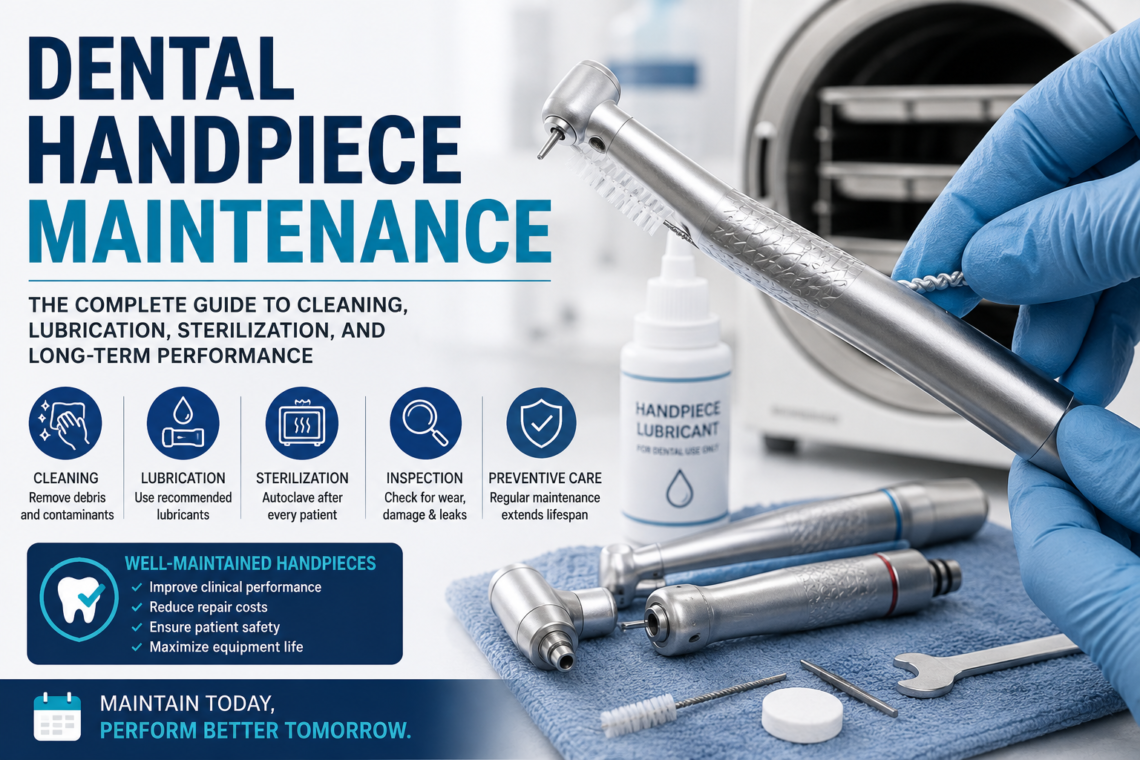
Effective dental handpiece maintenance is therefore much more than wiping the outside of the instrument. A proper maintenance routine includes immediate cleaning, inspection, manufacturer-recommended lubrication, appropriate packaging, heat sterilization, preventive servicing, and timely repair when problems appear.
Handpiece maintenance should also be part of a broader equipment-management system. Understanding the different instruments used in dentistry can help your team establish a more organized clinical workflow. Our guide to Common Dental Instruments and Uses provides additional information about essential dental instruments.
Why Is Dental Handpiece Maintenance Important?
A dental handpiece is a precision device containing components such as turbines, bearings, seals, chucks, gears, air channels, and water channels. These components must work together accurately during treatment.
Poor maintenance can gradually affect performance and may eventually cause mechanical failure.
Regular dental handpiece maintenance can help:
- Extend equipment lifespan
- Maintain cutting efficiency
- Reduce unnecessary repairs
- Minimize unexpected downtime
- Support infection-control procedures
- Protect internal components
- Maintain consistent water and air flow
- Improve operational reliability
- Reduce premature replacement costs
- Support manufacturer maintenance requirements
Maintenance is particularly important when handpieces are used repeatedly throughout the day.
A good preventive-maintenance program allows dental teams to identify problems before a handpiece completely stops working.
Common Causes of Dental Handpiece Failure
Many handpiece problems are associated with inadequate maintenance or improper handling.
Common causes include:
- Delayed cleaning
- Insufficient lubrication when lubrication is required
- Using an unsuitable lubricant
- Improper sterilization
- Excessive operating pressure
- Blocked water spray
- Worn dental burs
- Damaged chuck mechanisms
- Bearing wear
- Dropping the handpiece
- Ignoring unusual sounds
- Ignoring vibration
- Lack of scheduled servicing
Not every failure can be prevented, but consistent preventive care can reduce avoidable problems.
When selecting replacement equipment, reliability and service support should also be considered. If you’re planning to purchase new clinical equipment, review How to Choose Dental Equipment before making a major investment.
Annual Professional Handpiece Service
Daily cleaning and sterilization cannot replace professional servicing.
Depending on the manufacturer and usage pattern, professional service may include:
- Bearing inspection
- Turbine inspection
- Chuck evaluation
- Seal replacement
- Pressure testing
- Internal inspection
- Performance testing
- Replacement of worn components
- Functional testing
Professional servicing can identify wear that isn’t visible during routine cleaning.
It can also help dental practices avoid unexpected breakdowns during busy clinical schedules.
Signs Your Dental Handpiece Needs Repair
Routine dental handpiece maintenance can reduce problems, but it cannot eliminate normal wear.
Arrange professional inspection if you notice:
- Persistent vibration
- Loud or unusual noise
- Reduced speed
- Overheating
- Weak water spray
- Inconsistent water flow
- Difficulty retaining a bur
- Air leakage
- Damaged housing
- Repeated performance problems
- Sudden changes in cutting efficiency
Don’t continue using a problematic handpiece simply because it still rotates.
A small mechanical problem can potentially become more expensive if ignored.
Common Dental Handpiece Problems and Possible Causes
| Problem | Possible Cause |
| Excessive vibration | Bearing or turbine wear, damage, or bur-related problem |
| Overheating | Poor lubrication where required, blocked spray, wear, or operating issue |
| Weak water spray | Blocked water channel or nozzle |
| Reduced speed | Air-pressure issue, turbine wear, or mechanical problem |
| Bur slipping | Chuck wear or improper bur insertion |
| Unusual noise | Bearing, turbine, or mechanical wear |
| Air leakage | Damaged seal, O-ring, coupling, or connection |
| Poor cutting performance | Worn bur, reduced speed, or handpiece wear |
These symptoms can have multiple causes, so diagnosis should be based on the manufacturer’s troubleshooting procedures and, when necessary, professional service.
High-Speed vs. Low-Speed Handpiece Maintenance
High-speed and low-speed handpieces perform different clinical functions and may have different maintenance requirements.
High-Speed Handpieces
High-speed handpieces are commonly used for procedures requiring rapid cutting.
Maintenance should focus on:
- Turbine condition
- Bur retention
- Water spray
- Air pressure
- Lubrication requirements
- Sterilization
- Bearing performance
Because of their high rotational speed, small mechanical problems can become noticeable quickly.
Low-Speed Handpieces
Low-speed systems may be used for procedures such as polishing, finishing, and other applications.
Depending on the system, they may include:
- Motors
- Straight attachments
- Contra-angle attachments
Follow the maintenance instructions for each component rather than assuming that all attachments should be processed identically.
Dental Bur Care and Its Effect on Handpiece Performance
The condition of the bur can influence handpiece performance.
Using damaged, worn, or inappropriate burs can contribute to:
- Poor cutting
- Increased vibration
- Greater operator pressure
- Reduced efficiency
- Unnecessary stress on the handpiece
Use burs that are compatible with the handpiece and procedure.
Inspect burs before use and replace them when they are worn or damaged.
Common Myths About Dental Handpiece Maintenance
| Myth | Fact |
| Wiping the outside is enough. | Reusable handpieces require appropriate cleaning and sterilization according to manufacturer instructions. |
| Every handpiece uses the same lubricant. | Lubrication requirements vary by model. |
| A noisy handpiece can be used until it stops. | Unusual noise can indicate developing mechanical problems. |
| More lubricant is always better. | Excess lubricant can create processing or performance problems. Follow manufacturer instructions. |
| Sterilization is unnecessary if the handpiece looks clean. | Visual cleanliness does not mean the instrument has been sterilized. |
| Maintenance is only needed when equipment breaks. | Preventive maintenance helps identify wear before complete failure. |
How to Extend the Life of a Dental Handpiece
Proper maintenance is only one part of equipment longevity.
You can also improve handpiece service life by:
Use the Correct Bur
Always use compatible burs that are appropriate for the handpiece.
Avoid Excessive Pressure
Allow the handpiece and bur to perform the cutting function rather than forcing the instrument.
Maintain Correct Air and Water Supply
Follow manufacturer specifications for operating conditions.
Process After Every Patient
Don’t allow contaminated handpieces to remain untreated for long periods.
Follow Manufacturer Instructions
The manufacturer’s instructions should guide cleaning, lubrication, sterilization, and servicing.
Train the Dental Team
Even the best equipment can be damaged by incorrect handling.
Maintain Records
Documenting service and maintenance can help identify recurring problems.
When Should You Replace a Dental Handpiece?
Even well-maintained handpieces eventually reach the end of their useful service life.
Consider replacement when you experience:
- Frequent repairs
- Repeated bearing failures
- Persistent overheating
- Excessive vibration
- Poor cutting performance
- Damaged chuck mechanism
- Cracked housing
- Unreliable performance
- Lack of replacement parts
- Manufacturer support limitations
- Repair costs approaching replacement cost
The decision should consider both clinical reliability and the total cost of ownership.
A handpiece that repeatedly requires expensive repairs may no longer be economical to maintain.
Dental Handpiece Maintenance Checklist
Use the following checklist to create a consistent maintenance routine.
After Every Patient
- Remove bur
- Clean exterior
- Process internal channels as directed
- Inspect for visible damage
- Lubricate if required
- Package correctly
- Heat sterilize according to manufacturer instructions
Weekly
- Inspect O-rings
- Check couplings
- Inspect water spray
- Check bur retention
- Examine fiber-optic components
- Review operating performance
Monthly
- Review maintenance records
- Check air pressure
- Check water pressure
- Assess turbine performance
- Inspect bearings for abnormal noise
- Review sterilization procedures
Periodically
- Schedule professional servicing
- Replace worn components
- Evaluate repair history
- Review replacement needs
- Check manufacturer maintenance requirements
How Proper Handpiece Maintenance Supports Infection Control
Dental handpieces can become contaminated during clinical procedures, making proper reprocessing essential.
A strong infection-control workflow should integrate:
- Appropriate cleaning
- Correct sterilization
- Proper packaging
- Monitoring
- Safe storage
- Staff training
- Manufacturer instructions
Handpiece maintenance should therefore never be separated from your clinic’s overall infection-control program.
For a broader infection-control strategy, read Best Practices for Infection Control in Dentistry.
How to Train Staff in Dental Handpiece Maintenance
A written protocol is useful, but staff training is equally important.
Your team should understand:
- When cleaning begins.
- How the specific handpiece should be processed.
- Which lubricant is approved.
- How the handpiece should be packaged.
- Which sterilization cycle is validated.
- What warning signs require inspection.
- Where maintenance records are documented.
- Who is responsible for professional servicing.
Training should be repeated whenever new handpiece models or processing equipment are introduced.
Frequently Asked Questions
Why is dental handpiece maintenance important?
Dental handpiece maintenance helps preserve performance, reduce avoidable failures, extend equipment life, support infection control, and minimize unexpected downtime.
How often should dental handpieces be cleaned?
Reusable handpieces should be cleaned after every patient and reprocessed according to the manufacturer’s validated instructions before being used again.
Do all dental handpieces need lubrication?
No. Lubrication requirements differ between models. Follow the manufacturer’s instructions for the specific handpiece.
How often should dental handpieces be sterilized?
Heat-sterilizable dental handpieces should be sterilized after each patient using the validated process specified by the manufacturer.
What causes a dental handpiece to overheat?
Possible causes include inadequate lubrication where required, worn bearings, blocked water spray, excessive operating pressure, or mechanical wear.
Conclusion
Proper dental handpiece maintenance is essential for maintaining reliable performance, protecting equipment investments, supporting infection control, and reducing unnecessary downtime.
Effective care begins immediately after every procedure. Cleaning, inspection, manufacturer-approved lubrication when required, appropriate packaging, and validated heat sterilization should form the foundation of the reprocessing workflow.
Long-term maintenance also requires periodic inspection, professional servicing, accurate record keeping, and prompt attention to unusual vibration, noise, overheating, reduced speed, or poor water spray.
For a broader approach to protecting your clinical equipment, combine your handpiece routine with Common Dental Instruments and Uses and a comprehensive Dental Equipment Maintenance Checklist.
Call to Action
Reliable dental equipment starts with proper selection and continues with consistent maintenance.
Whether you need high-speed handpieces, low-speed handpieces, dental instruments, replacement components, or other dental equipment, choosing dependable products and following the correct maintenance procedures can help support long-term clinical performance.
Explore Detistry Supplier to discover dental equipment and instruments for professional dental applications.