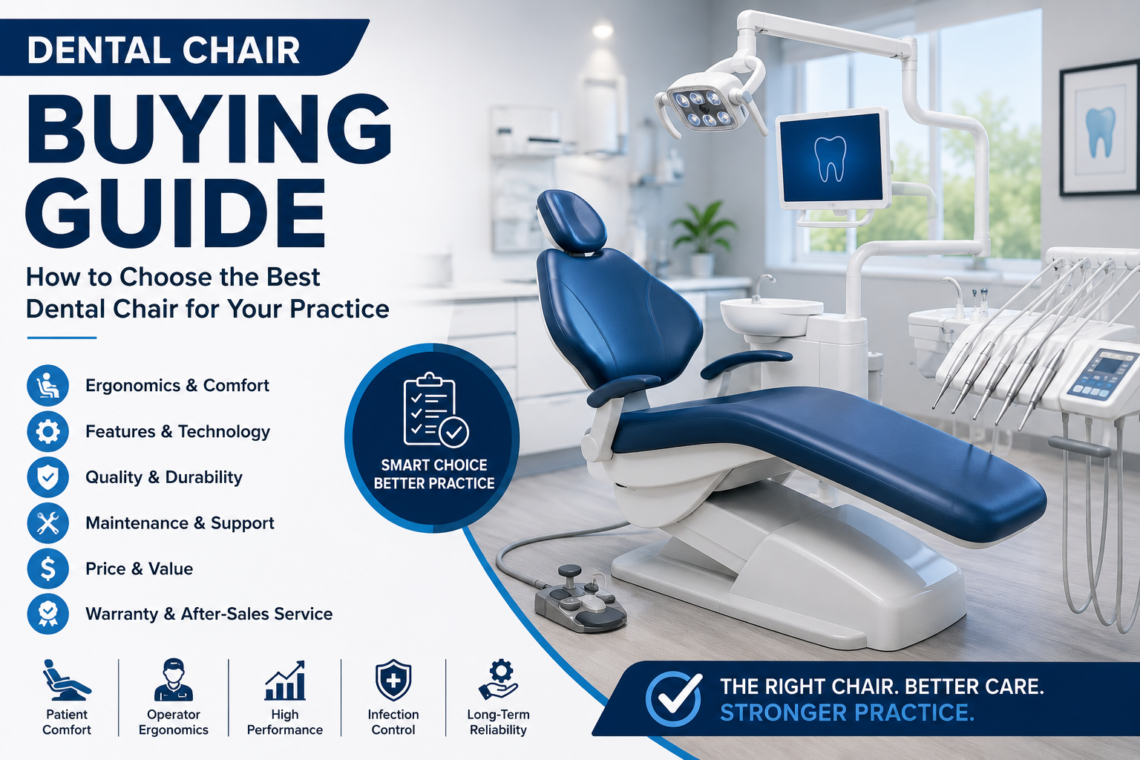
A dental chair is much more than a place for patients to sit—it’s the centerpiece of every dental operation. From routine examinations to complex restorative and surgical procedures, nearly every treatment depends on the chair’s comfort, stability, and functionality. Choosing the right dental chair can improve clinical efficiency, enhance patient satisfaction, reduce operator fatigue, and provide long-term value for your practice.
However, selecting the right chair isn’t always straightforward. With countless models offering different delivery systems, drive mechanisms, ergonomic designs, and integrated technologies, comparing options can quickly become overwhelming. Recent Dental chair buying guide recommend starting with your clinical workflow and delivery system rather than focusing only on brand names or cosmetic features. Ergonomics, serviceability, and total cost of ownership often have a greater long-term impact than the initial purchase price.
Why Choosing the Right Dental Chair Matters
The dental chair affects nearly every aspect of clinical care. It influences:
- Patient comfort during short and lengthy procedures
- Dentist posture and musculoskeletal health
- Assistant accessibility
- Treatment efficiency
- Infection control workflow
- Practice image and patient perception
- Equipment maintenance costs
- Long-term return on investment
A poorly chosen chair can lead to clinician fatigue, workflow inefficiencies, higher maintenance costs, and lower patient satisfaction. In contrast, an ergonomically designed chair with reliable components and dependable service support can improve productivity and provide years of dependable performance.
Types of Dental Chairs and Key Factors to Consider Before Buying
Selecting the right dental chair starts with understanding the different types available and evaluating how each one fits your clinical workflow. A chair that works well for a high-volume general practice may not be the best option for an orthodontic clinic or an oral surgery practice.
Rather than focusing only on appearance or price, consider performance, ergonomics, reliability, patient comfort, and long-term operating costs.
Types of Dental Chairs
Modern dental chairs are available in several configurations, each offering unique advantages.
Electric Dental Chairs
Electric dental chairs use electric motors to control movement and positioning.
Advantages
- Smooth and precise movement
- Quiet operation
- Programmable chair positions
- Improved ergonomics
- Better patient comfort
- Easy positioning during lengthy procedures
Best For
- General dentistry
- Cosmetic dentistry
- Implant clinics
- High-volume practices
Hydraulic Dental Chairs
Hydraulic chairs use a hydraulic system to adjust chair movements.
Advantages
- Strong lifting capacity
- Durable construction
- Reliable performance
- Lower purchase cost in many cases
Considerations
- May require more maintenance over time
- Can be noisier than electric models
- Fewer programmable features on some units
Best For
- Small clinics
- Budget-conscious practices
- Practices with moderate patient volume
Understand the Dental Delivery System
The delivery system determines how instruments, hoses, and controls are positioned around the patient and dental team.
Over-the-Patient Delivery
Instruments are positioned above the patient.
Advantages
- Easy access
- Popular design
- Suitable for general dentistry
- Efficient instrument transfer
Rear Delivery System
The instruments are located behind the patient.
Advantages
- Cleaner appearance
- More patient-friendly
- Less visual clutter
- Better for four-handed dentistry
Side Delivery System
The delivery unit is positioned beside the chair.
Advantages
- Flexible instrument positioning
- Good accessibility
- Suitable for left- or right-handed configurations on many models
For practices planning their complete operatory setup, understanding common dental instruments and their uses can also help when deciding how much instrument storage and delivery capacity is required.
Ergonomics for the Dental Team
Dentists and dental assistants spend long hours treating patients, making ergonomics a critical consideration.
Look for features such as:
- Adjustable headrest
- Thin backrest for improved leg positioning
- Comfortable armrests
- Foot controls
- Programmable chair positions
- Easy-to-reach instrument trays
- Adjustable operating light
Good ergonomics help reduce neck, shoulder, and back strain while improving efficiency during procedures.
Patient Comfort Features
Patient comfort contributes to a positive treatment experience, particularly during lengthy procedures.
Important Comfort Features
✔ Soft, high-density upholstery
✔ Adjustable lumbar support
✔ Double-articulating headrest
✔ Smooth and quiet chair movement
✔ Easy patient entry and exit
✔ Stable chair base
✔ Comfortable armrests
A comfortable patient is more likely to remain relaxed throughout treatment, improving both the patient experience and clinical efficiency.
Budget Planning
A dental chair is one of the largest investments in a dental operatory. Establishing a realistic budget helps you balance quality, features, and long-term value.
Initial Costs May Include
- Dental chair
- Delivery unit
- Operating light
- Installation
- Shipping
- Staff training
- Accessories
- Optional upgrades
Ongoing Costs
- Preventive maintenance
- Replacement parts
- Upholstery repairs
- Service visits
- Software updates (for integrated digital systems)
- Extended warranty (if purchased)
Consider the Total Cost of Ownership (TCO)
Instead of choosing the lowest-priced chair, evaluate the Total Cost of Ownership (TCO).
TCO includes:
- Purchase price
- Installation
- Maintenance
- Repairs
- Energy consumption
- Replacement parts
- Downtime costs
- Expected lifespan
- Resale value
For broader planning, see Dental Equipment Maintenance Checklist to help organize routine equipment care and reduce avoidable downtime.
New vs. Refurbished Dental Chairs
Choosing between a new and refurbished dental chair depends on your budget, practice goals, and risk tolerance.
| Feature | New Chair | Refurbished Chair |
| Purchase Price | Higher | Lower |
| Technology | Latest features | May be older |
| Warranty | Comprehensive | Often limited |
| Expected Lifespan | Longer | Depends on refurbishment quality |
| Maintenance | Lower initially | May require more frequent servicing |
Buy a New Chair If:
- You’re opening a new practice.
- You want the latest technology and ergonomic features.
- Long-term reliability is your priority.
- You value comprehensive warranty and manufacturer support.
Consider a Refurbished Chair If:
- You’re working within a limited budget.
- The chair has been professionally refurbished.
- A warranty and service support are included.
- Replacement parts are readily available.
Evaluate Build Quality and Materials
A high-quality dental chair should be designed to withstand years of daily clinical use while maintaining patient comfort and reliable performance.
Features to Look For
✔ Heavy-duty steel or aluminum frame
✔ Corrosion-resistant components
✔ High-density molded upholstery
✔ Durable powder-coated finish
✔ Smooth and quiet motors
✔ High-quality hydraulic or electric drive system
✔ Reinforced armrests
✔ Stable chair base
✔ Easy-to-clean surfaces
Better materials generally result in lower maintenance costs and a longer service life.
Warranty and After-Sales Support
Warranty coverage is one of the most important factors in a dental chair purchase.
Questions to Ask to get Dental chair buying guide
- What is the warranty period?
- What components are covered?
- Are labor costs included?
- How quickly can service technicians respond?
- Are replacement parts readily available?
- Is technical support available remotely?
- Are maintenance packages offered?
A longer warranty can reduce long-term ownership costs and provide peace of mind.
Choosing the Right Dental Chair Supplier
Your supplier is just as important as the chair itself. A reliable supplier provides installation, training, technical support, spare parts, and ongoing service.
What to Look For
✔ Strong industry reputation
✔ Positive customer reviews
✔ Product demonstrations
✔ Installation assistance
✔ Operator training
✔ Local or regional service support
✔ Readily available spare parts
✔ Transparent warranty terms
✔ Responsive customer service
Maintenance Requirements
Even the best dental chair requires regular preventive maintenance.
Routine Maintenance Includes
- Cleaning and disinfecting surfaces
- Inspecting upholstery for damage
- Checking electrical or hydraulic systems
- Testing chair movement
- Lubricating moving components where applicable
- Inspecting suction and delivery systems
- Verifying operating light performance
- Scheduling professional servicing
A chair that is easy to maintain can reduce downtime and operating expenses over its lifespan.
If your practice also relies heavily on handpieces, review Dental Handpiece Maintenance: The Complete Guide for Long-Lasting Performance for additional equipment-care guidance.
Infection Control Considerations
Modern dental chairs should support effective infection prevention and simplify operatory cleaning.
Look for Features Such As
- Seamless upholstery with minimal crevices
- Smooth, non-porous surfaces
- Easy-to-remove components for cleaning
- Hands-free foot controls
- Integrated waterline management (if applicable)
- Surfaces compatible with commonly used disinfectants
These features can make routine cleaning faster while helping maintain a safe treatment environment.
For additional guidance on maintaining dental equipment and instruments, see Manual vs. Ultrasonic Scalers: Which Should You Buy? when evaluating scaling equipment that will be integrated into your operatory workflow.
Smart Features and Digital Integration
Many premium dental chairs now include advanced technologies that improve workflow and patient care.
Examples
- Programmable treatment positions
- Touchscreen control panels
- Integrated patient communication systems
- Digital imaging compatibility
- Intraoral camera integration
- Electronic chart integration (where supported)
- LED operating lights with adjustable intensity
- Wireless foot controls (on select models)
While not every practice requires these features, they can improve efficiency and prepare your clinic for future technological advancements.
When planning an equipment package, diagnostic tools are also important. Dental Probes and Explorers: Types and Uses Explained can help you evaluate the basic diagnostic instruments that should complement your operatory setup.
Latest Trends in Dental Chairs
The dental equipment market continues to evolve with innovations focused on comfort, efficiency, and sustainability.
Current Trends
- Improved ergonomic designs to reduce clinician fatigue
- Touchless or simplified control interfaces
- Energy-efficient LED lighting
- Quieter electric drive systems
- Modular designs for easier upgrades
- Enhanced patient comfort through improved cushioning and headrests
- Greater integration with digital dentistry workflows
Practices planning long-term investments should consider whether a chair can adapt to future technology and changing clinical needs.
Pros and Cons of Investing in a Quality Dental Chair
| Pros | Cons |
| Improves patient comfort and satisfaction | Higher upfront investment |
| Enhances dentist and assistant ergonomics | Installation may require operatory modifications |
| Increases treatment efficiency | Premium models include advanced features that may exceed some clinics’ needs |
| Reduces long-term maintenance costs | Staff may require training to use advanced functions |
| Supports future technology integration | Routine preventive maintenance is still essential |
| Offers better durability and reliability | Replacement parts for premium models may be more expensive |
| Can improve the professional appearance of the clinic | Delivery time may be longer for customized configurations |
Myths vs. Facts About Buying a Dental Chair
| Myth | Fact |
| The most expensive chair is always the best choice. | The best chair is the one that matches your clinical needs, workflow, and budget. |
| All dental chairs offer the same functionality. | Models vary significantly in ergonomics, delivery systems, integrated technology, and maintenance requirements. |
| A warranty isn’t very important. | Comprehensive warranty coverage and reliable service support can significantly reduce long-term ownership costs. |
| Refurbished chairs are always a poor investment. | A professionally refurbished chair from a reputable supplier can be a practical option when backed by inspection, servicing, and warranty. |
| You only need to compare prices. | You should also compare build quality, certifications, service support, spare parts availability, and total cost of ownership. |
Frequently Asked Questions (FAQs)
1. What should I look for when buying a dental chair?
Focus on ergonomics, patient comfort, build quality, delivery system, operating light, warranty, maintenance requirements, and the supplier’s service support.
2. Is an electric dental chair better than a hydraulic one?
Both have advantages. Electric chairs typically offer smoother movement and programmable positions, while hydraulic chairs are often valued for durability and may have a lower initial cost. The best choice depends on your clinical workflow, budget, and preferences.
3. How long does a dental chair typically last?
With proper preventive maintenance and responsible use, a quality dental chair can remain in service for many years. Actual lifespan depends on usage, maintenance, and manufacturer recommendations.
4. Should I buy a new or refurbished dental chair?
New chairs provide the latest technology and full warranty coverage. Professionally refurbished chairs can be a cost-effective alternative if they are thoroughly inspected and supported with service and warranty.
5. Why is ergonomics important in a dental chair?
Good ergonomics improve clinician posture, reduce fatigue, support efficient instrument access, and enhance patient comfort during treatment.
Conclusion
Selecting the right dental chair is about much more than comparing prices or choosing a recognizable brand. The ideal chair should support your clinical workflow, provide exceptional comfort for patients and the dental team, integrate seamlessly with your equipment, and deliver reliable performance over many years.
By using this Dental Chair Buying Guide, evaluating features carefully, comparing suppliers, and considering the total cost of ownership, you can make an informed purchasing decision that benefits your practice today and supports future growth. Investing in quality equipment backed by dependable service and preventive maintenance is one of the best ways to improve efficiency, patient satisfaction, and long-term value.
Call to Action
Planning to upgrade your dental operatory or open a new clinic?
Whether you’re looking for an entry-level solution or a premium operatory system, our team can help you compare options and choose the right equipment for your budget and clinical goals.
Contact us today to request a quote, receive expert guidance, or discover the ideal dental chair for your practice.