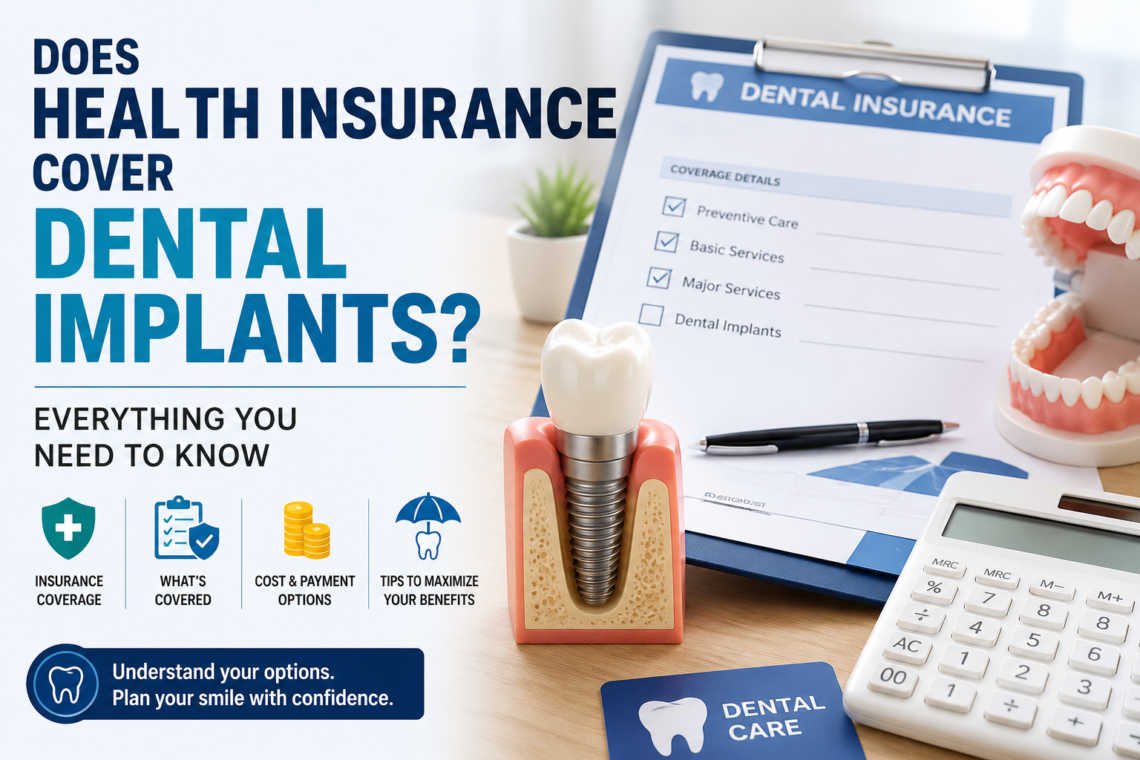
Dental implants are a popular long-term option for replacing missing teeth, but their cost can make insurance coverage an important consideration. If you’re researching Does health insurance cover dental implants, the short answer is: sometimes, but usually not in full.
Whether implants are covered depends on the specific insurance policy, the reason for treatment, the type of insurance you have, and which part of the implant procedure is being billed.
Some health insurance policies may contribute when an implant-related procedure is considered medically necessary. Dental insurance may also provide benefits for certain components of treatment, although exclusions, annual maximums, waiting periods, deductibles, and other restrictions can apply.
Understanding your coverage before treatment can help you avoid unexpected bills and make a more informed decision about replacing a missing tooth.
Are Dental Implants Covered by Insurance?
The answer depends heavily on the policy.
Traditional health insurance generally focuses on medical treatment rather than routine dental care. As a result, the implant itself may not automatically qualify for coverage.
However, certain situations can be different. If tooth or jaw damage is associated with an accident, trauma, reconstructive surgery, or another medically necessary condition, a health plan may potentially contribute toward some treatment costs.
Dental insurance is different. Some dental plans may provide partial benefits toward implant-related procedures, while others may exclude implants completely.
Your policy documents are therefore more important than a general statement about whether insurance covers implants.
Health Insurance vs. Dental Insurance for Implants
Understanding the difference between health and dental insurance is essential when planning implant treatment.
Health Insurance |
Dental Insurance |
| Primarily covers medical treatment | Primarily covers dental treatment |
| Dental implants are often excluded | Some plans may offer implant benefits |
| May contribute when treatment is medically necessary | Coverage depends on the individual policy |
| Policy-specific exclusions may apply | Annual maximums and waiting periods may apply |
| Medical documentation may be required | Pre-authorization may be required |
The uploaded source similarly emphasizes that health insurance generally does not cover implants as routine dental treatment, while dental insurance may provide partial benefits depending on the plan.
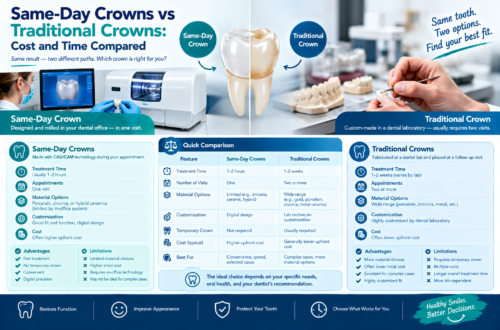
If you’re comparing dental plans before treatment, you may also find our guide to Dental Health Plans: A Complete Guide to Choosing the Right Coverage useful.
When Might Health Insurance Cover Dental Implants?
Although routine implant treatment is frequently excluded from health insurance, there can be circumstances in which medical coverage becomes relevant.
Examples may include:
Facial Trauma
If teeth are lost because of a serious accident or facial injury, some medical policies may consider certain reconstructive procedures medically necessary.
Jaw Reconstruction
Treatment associated with reconstruction following removal of tumors or other major medical procedures may receive different consideration from routine tooth replacement.
Congenital Conditions
Some congenital conditions affecting tooth or jaw development may involve medically necessary treatment.
Other Medical Circumstances
Coverage may depend on the specific diagnosis, policy language, treatment plan, and documentation submitted by the healthcare provider.
Even when medical insurance contributes, it may cover only the medical portion of treatment rather than the complete implant restoration.
What Factors Affect Dental Implant Insurance Coverage?
If you’re asking does health insurance cover dental implants, don’t look only for the word “implant” in your policy. Several other factors can determine what your insurer will actually pay.
1. Medical Necessity
Medical necessity can be an important factor.
An insurer may evaluate whether treatment is necessary because of trauma, disease, reconstruction, or another qualifying medical condition rather than being performed primarily for cosmetic reasons.
2. Your Insurance Plan
Coverage varies between policies.
Some dental plans may provide benefits for implants, while others may cover only related procedures such as:
- Tooth extraction
- Diagnostic imaging
- Crowns
- Certain restorative procedures
Always check the actual benefits and exclusions in your plan.
3. Annual Maximums
Many dental insurance policies have an annual maximum.
For example, if your plan has an annual benefit limit, insurance may pay covered expenses only until that maximum is reached. Any eligible expenses beyond the limit may become your responsibility.
This can be particularly important for implants because treatment may involve several appointments and procedures.
4. Deductibles and Coinsurance
Your policy may require you to pay a deductible before benefits begin.
After that, the insurer may pay a percentage of an eligible procedure while you pay the remaining portion.
Therefore, even when implant-related treatment is covered, you may still have significant out-of-pocket expenses.
5. Waiting Periods
Some dental insurance plans impose waiting periods before certain major procedures become eligible for benefits.
If you’re considering purchasing a dental plan specifically because you need an implant, check the waiting-period rules before enrolling.
6. Pre-Authorization
Your insurer may require pre-authorization or a pre-treatment estimate.
This gives the insurance company an opportunity to review:
- Diagnosis
- Proposed treatment
- Procedure codes
- Expected costs
- Medical documentation
- Coverage limitations
The uploaded article recommends obtaining this information before treatment to better understand expected benefits and out-of-pocket costs.
Which Parts of Dental Implant Treatment May Be Covered?
Dental implant treatment isn’t always billed as one single procedure.
A treatment plan may include several components:
- Consultation
- Diagnostic imaging
- Tooth extraction
- Bone grafting when necessary
- Implant placement
- Abutment
- Dental crown
- Follow-up appointments
Insurance may treat each component differently.
For example, a policy might contribute toward an extraction or diagnostic service while excluding the implant itself.
Coverage can therefore depend on both what procedure is performed and why it is necessary.
Why Dental Implant Costs Can Vary
The total cost of replacing a missing tooth can vary considerably.
Factors include:
- Number of missing teeth
- Type of implant
- Need for extraction
- Need for bone grafting
- Type of restoration
- Laboratory costs
- Diagnostic imaging
- Dentist’s fees
- Geographic location
- Complexity of the case
- Insurance benefits
This is why asking only for the “price of a dental implant” may not provide an accurate picture of the complete treatment cost.
A detailed treatment estimate is more useful because it separates the different stages of care.
How to Pay for Dental Implants When Insurance Doesn’t Cover Them
If your insurance provides limited or no implant coverage, you still have several options to explore.
1. Use Available Dental Benefits
Review your dental plan carefully.
If related procedures such as examinations, imaging, extractions, or crowns are covered, those benefits may reduce the overall amount you pay.
2. Consider HSA or FSA Funds
Depending on your location, account type, and applicable tax rules, eligible dental expenses may potentially be paid using funds from a Health Savings Account or Flexible Spending Account.
Check your account provider’s eligibility rules before using these funds.
The original article also identifies HSA and FSA accounts as potential ways to manage eligible dental expenses.
3. Ask About Payment Plans
Some dental practices provide financing or installment options.
Instead of paying the entire treatment cost at once, eligible patients may be able to spread payments over an agreed period.
Always review interest rates, fees, and repayment conditions before choosing financing.
4. Compare Treatment Estimates
If appropriate, obtain detailed estimates from more than one qualified dental provider.
Don’t compare prices alone. Consider:
- Dentist experience
- Treatment planning
- Implant system
- Materials
- Laboratory quality
- Diagnostic technology
- Follow-up care
The least expensive option isn’t necessarily the best long-term value.
Common Mistakes to Avoid
Assuming Every Dental Plan Covers Implants
Dental insurance policies differ significantly. Implant exclusions are possible even when a plan covers other restorative treatments.
Ignoring Annual Maximums
A policy may provide benefits but still leave you with substantial expenses if your treatment exceeds the annual maximum.
Forgetting About Waiting Periods
Buying insurance immediately before treatment doesn’t necessarily mean the procedure will be covered.
Starting Treatment Without Checking Benefits
Avoid assuming that a dentist’s estimate represents your final insurance responsibility.
Confirm benefits before treatment whenever possible.
Choosing an Out-of-Network Provider Without Checking
If your plan uses a provider network, going outside that network may increase your expenses.
Why Diagnostic Imaging Matters Before Implant Treatment
Dental imaging may be part of the implant-planning process.
Depending on the case, your dentist may use conventional dental X-rays or three-dimensional imaging to evaluate:
- Available bone
- Tooth roots
- Anatomical structures
- Sinus location
- Nerve position
- Existing pathology
You can learn more about dental imaging in Dental X-Rays: Types, Safety, and How Often You Need Them.
The type and extent of imaging should be determined by the clinical situation rather than performed unnecessarily.
Dental Crowns and Implant Restorations
A dental implant typically functions as the foundation for a restoration rather than replacing the visible tooth by itself.
An implant-supported restoration may include an abutment and crown.
Because crowns can have their own insurance benefits or exclusions, it’s important to ask your insurer about each component separately.
For patients researching different crown materials, How Long Zirconia Crowns Last on Front Teeth? Lifespan, Care & Expert Tips provides additional information about zirconia crowns and their expected longevity.
Dental Implant Insurance Checklist
Before starting treatment, make sure you can answer the following:
Insurance
- Does my policy cover implants?
- Are implant-related procedures covered?
- Are crowns covered?
- Is bone grafting covered?
- Is extraction covered?
- Is there a waiting period?
- What is my annual maximum?
- What deductible applies?
- Is pre-authorization required?
Dentist
- Is the dentist in-network?
- Have I received a written treatment plan?
- Have I received a cost estimate?
- Have insurance benefits been verified?
Financial Planning
- What will insurance potentially pay?
- What is my estimated out-of-pocket cost?
- Can I use eligible HSA/FSA funds?
- Are financing options available?
- Are there alternative treatment options?
Frequently Asked Questions
Does health insurance cover dental implants?
In many cases, health insurance does not cover routine dental implants. However, coverage may be possible when implant-related treatment forms part of medically necessary care, depending on the policy and circumstances.
Does dental insurance cover dental implants?
Some dental insurance plans may provide partial coverage for implants or related procedures. Benefits vary according to the individual policy, exclusions, annual maximums, deductibles, and waiting periods.
Are dental implants considered medically necessary?
They can be considered medically necessary in certain circumstances, but this determination depends on the patient’s condition, treatment plan, and insurer’s policy requirements.
Can insurance cover a dental implant after an accident?
Potentially. If tooth loss results from a covered accident or facial trauma, medical insurance may treat some related treatment differently from routine tooth replacement. Coverage depends on the policy.
Can I use an HSA or FSA for dental implants?
Eligible dental expenses may be payable using HSA or FSA funds depending on the applicable rules and your account. Confirm eligibility with your account provider before making a payment.
Conclusion
So, does health insurance cover dental implants? In most situations, you should not assume that health insurance will pay for the complete implant treatment.
Routine dental implants are often treated differently from medically necessary reconstructive procedures. Dental insurance may provide partial benefits in some cases, but coverage can be limited by annual maximums, deductibles, waiting periods, exclusions, network restrictions, and pre-authorization requirements.
The best approach is to understand your insurance before beginning treatment.
Ask your insurer exactly which procedures are covered, request a pre-treatment estimate when appropriate, and ask your dental office for a detailed treatment plan. This can help you understand the potential financial responsibility before committing to treatment.
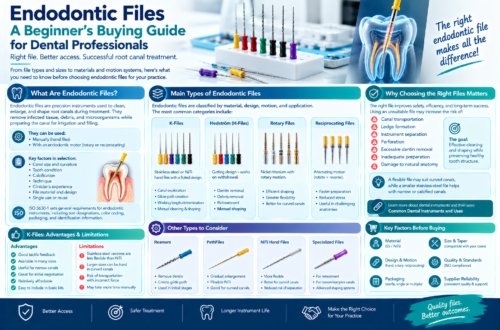
If you’re researching your broader oral-care options, you can also explore Common Dental Instruments and Uses: A Complete Guide for Patients, Students, and Dental Professionals for additional dental information.
CTA
Considering dental implants and unsure how to plan for the treatment cost?
Review your insurance benefits, discuss your options with a qualified dental professional, and get a detailed treatment estimate before proceeding. Understanding your coverage and available payment options can make the process easier to plan and help you make a confident decision about replacing missing teeth.
Explore more dental guides and professional dental resources at Detistry Supplier.