Local anesthesia vs sedation dentistry is a common question for patients preparing for dental procedures. Both methods can make dental treatment more comfortable, but they work in different ways and serve different purposes.
Local anesthesia temporarily numbs a specific area of the mouth so you do not feel pain during treatment. Sedation dentistry, on the other hand, uses medication to help you feel calmer, less anxious, or more relaxed. Depending on the type, sedation may also make you drowsy or less aware of the procedure.
Understanding the difference can help you and your dentist choose the safest and most appropriate option for your treatment, anxiety level, medical history, and personal needs.
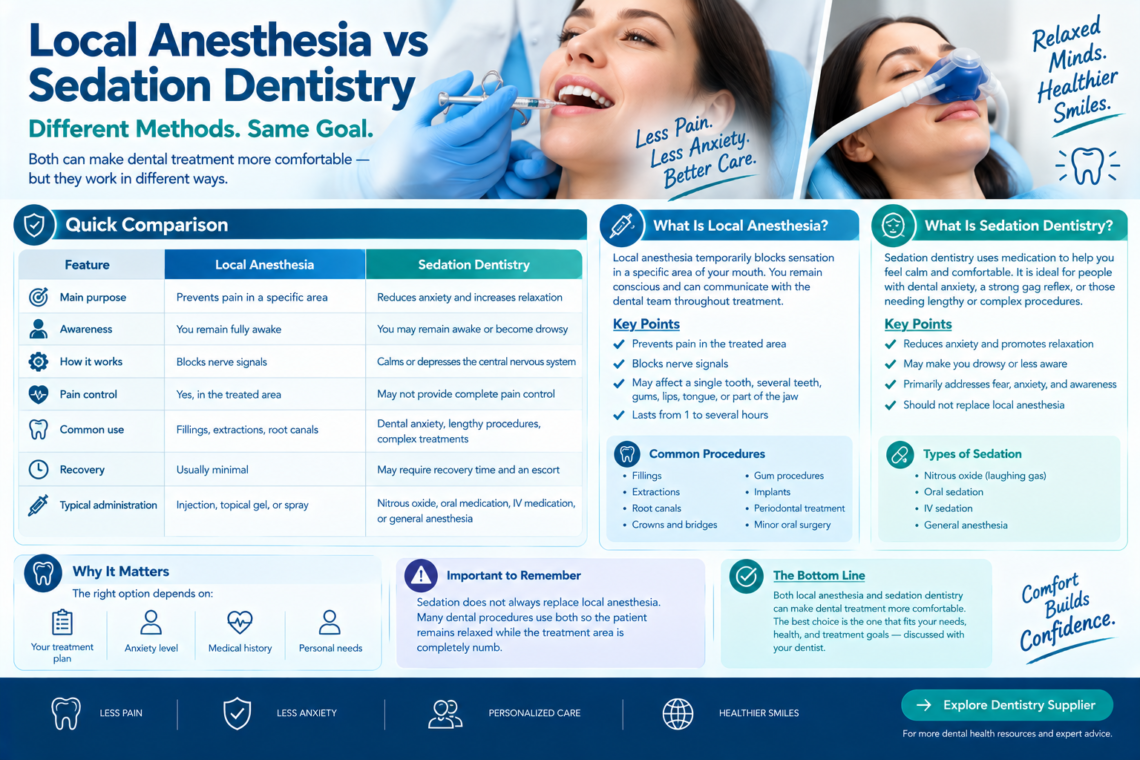
Quick Comparison: Local Anesthesia vs Sedation Dentistry
| Feature | Local Anesthesia | Sedation Dentistry |
| Main purpose | Prevents pain in a specific area | Reduces anxiety and increases relaxation |
| Awareness | You remain fully awake | You may remain awake or become drowsy |
| How it works | Blocks nerve signals | Calms or depresses the central nervous system |
| Pain control | Yes, in the treated area | May not provide complete pain control |
| Common use | Fillings, extractions, and root canals | Dental anxiety, lengthy procedures, and complex treatments |
| Recovery | Usually minimal | May require recovery time and an escort |
| Typical administration | Injection, topical gel, or spray | Nitrous oxide, oral medication, IV medication, or general anesthesia |
Important: Sedation does not always replace local anesthesia. Many dental procedures use both so the patient remains relaxed while the treatment area is completely numb.
What Is Local Anesthesia in Dentistry?
Local anesthesia is medication used to temporarily block sensation in a particular area of the mouth. It prevents nerves from transmitting pain signals to the brain while the dentist performs a procedure.
You remain conscious and can communicate with the dental team throughout treatment.
How Local Anesthesia Works
A dentist may first apply a topical anesthetic gel to reduce the sensation of the injection. The local anesthetic is then injected near the nerves supplying the tooth, gum, or surrounding tissue.
Depending on the medication and treatment area, numbness may affect:
- A single tooth
- Several teeth
- The gums
- The lips
- The tongue
- Part of the jaw
The numbness may last from one to several hours, depending on the anesthetic used, the injection site, the dose, and the patient’s metabolism.
Common Dental Procedures Using Local Anesthesia
Local anesthesia is commonly used for:
- Dental fillings
- Tooth extractions
- Root canal treatment
- Dental crown preparation
- Gum procedures
- Dental implant surgery
- Periodontal treatment
- Biopsies
- Minor oral surgery
- Deep cleaning in sensitive areas
If you are comparing treatments that may require anesthesia, you can also read this guide to Root Canal vs Tooth Extraction to understand how dentists evaluate different treatment options.
What Is Sedation Dentistry?
Sedation dentistry involves using medication to help patients feel calm and comfortable during dental treatment. It is particularly useful for people who experience dental anxiety, have a strong gag reflex, struggle to remain still, or need lengthy or complex procedures.
Sedation exists on a spectrum. Some forms help you relax while remaining fully conscious, while others can make you very drowsy.
Sedation primarily addresses fear, anxiety, and awareness. It should not automatically be considered a substitute for local anesthesia.
Types of Sedation Used in Dentistry
1. Nitrous Oxide Sedation
Nitrous oxide, often called “laughing gas,” is one of the mildest and most commonly used forms of dental sedation.
The patient breathes a mixture of nitrous oxide and oxygen through a small mask placed over the nose.
Benefits of nitrous oxide include:
- Rapid onset
- Reduced anxiety
- Relaxation during treatment
- Continued consciousness
- Ability to respond to the dentist
- Relatively quick recovery
- Usually no prolonged drowsiness after the gas is stopped
Nitrous oxide does not reliably numb the tooth or gum. Local anesthesia may still be required for procedures that could cause pain.
2. Oral Sedation
Oral sedation uses prescribed medication taken by mouth before or during a dental appointment. The medication may help reduce anxiety and make the patient feel sleepy or relaxed.
Depending on the medication and dose, the patient may:
- Remain awake but relaxed
- Feel drowsy
- Have limited memory of the procedure
- Respond more slowly
- Need assistance after treatment
Because oral sedatives can impair coordination and judgment, patients generally need someone to drive them home. They should not drive, operate machinery, or make important decisions until the medication has fully worn off and their dentist or healthcare professional provides appropriate guidance.
3. Intravenous Sedation
Intravenous, or IV, sedation delivers medication through a vein. It works quickly and allows the qualified provider to adjust the level of sedation during treatment.
IV sedation may be considered for:
- Significant dental anxiety
- Longer procedures
- Multiple treatments in one appointment
- Certain oral surgery procedures
- Patients who have difficulty tolerating dental treatment
Patients may remain responsive, but they can become deeply relaxed and may remember little about the procedure.
IV sedation requires careful monitoring of vital signs, breathing, oxygen levels, and responsiveness. It should only be administered by appropriately trained and qualified professionals in a setting equipped for the level of sedation being provided.
4. General Anesthesia
General anesthesia is different from ordinary dental sedation. It produces a controlled state of unconsciousness, meaning the patient is not awake or responsive in the usual way.
It may be used in selected cases, such as:
- Extensive oral or maxillofacial surgery
- Certain special-needs cases
- Patients who cannot safely tolerate treatment while conscious
- Complex procedures requiring complete unconsciousness
General anesthesia involves greater risks and more extensive preparation than mild or moderate sedation. It requires appropriate medical assessment, qualified anesthesia personnel, continuous monitoring, and recovery care.
The Main Difference Between Local Anesthesia and Sedation
The simplest way to understand the difference is:
Local anesthesia controls pain. Sedation controls anxiety, awareness, and relaxation.
Local anesthesia affects sensation in a specific part of the body. Sedation affects the central nervous system and changes how relaxed, alert, or aware you feel.
For example, a patient undergoing a tooth extraction may receive:
- Nitrous oxide to reduce fear and anxiety.
- Local anesthesia to numb the tooth and surrounding tissue.
- Additional monitoring and aftercare based on the sedation method.
This combination can address both major concerns: pain and anxiety.
Does Sedation Dentistry Prevent Pain?
Sedation may make a procedure feel easier, but it does not always provide complete pain control.
Some forms of sedation can reduce the perception of discomfort, but they are not necessarily sufficient for procedures involving drilling, cutting, extraction, or tissue manipulation. Dentists commonly use local anesthesia alongside sedation when pain is expected.
Patients should tell the dentist if they feel pain during treatment. Sedation should never be used to ignore inadequate anesthesia or to prevent a patient from communicating discomfort.
Local Anesthesia vs Sedation: Which Is Safer?
Both local anesthesia and sedation can be safe when properly selected and administered. However, their risks and monitoring requirements differ.
Local Anesthesia Safety
Local anesthetics are widely used in dentistry. Potential side effects or complications may include:
- Temporary soreness at the injection site
- Prolonged numbness
- Accidental biting of the cheek, lip, or tongue
- Temporary heart palpitations or nervousness
- Dizziness
- Rare allergic or toxic reactions
- Rare nerve-related complications
The dentist considers the patient’s age, weight, medical history, medications, allergies, and the total dose before administering local anesthesia.
Sedation Safety
Sedation risks depend on the medication, dose, method, depth of sedation, and the patient’s health. Possible effects may include:
- Drowsiness
- Dizziness
- Nausea
- Headache
- Reduced coordination
- Temporary memory loss
- Changes in breathing or blood pressure
- Unexpectedly deeper sedation than intended
- Allergic or medication-related reactions
Sedation can be more complicated for patients with certain medical conditions, breathing disorders, obstructive sleep apnea, obesity, cardiovascular disease, respiratory disease, or a history of adverse reactions to sedatives.
A proper pre-treatment assessment is essential. The dental team should review:
- Current medications
- Allergies
- Medical conditions
- Previous anesthesia or sedation reactions
- Pregnancy status when relevant
- Sleep-related breathing conditions
- Food and drink restrictions
- Whether an escort is required
Patients should also tell their dentist about jaw discomfort, clenching, or grinding. Conditions such as bruxism and temporomandibular disorders can affect treatment comfort and should be assessed before certain procedures. You can learn more in the guide to Why Does My Jaw Lock Slightly After Waking Up?.
When Might Local Anesthesia Be Enough?
Local anesthesia may be sufficient when:
- The procedure is relatively short
- The patient has little or manageable anxiety
- The treatment is limited to one area
- The patient can comfortably remain still
- There is no significant gag-reflex concern
- The procedure does not require altered awareness
Examples may include routine fillings, minor dental restorations, uncomplicated extractions, and many routine periodontal procedures.
Even if local anesthesia is sufficient medically, patients with severe dental anxiety may still benefit from an additional relaxation method.
When Might Sedation Be Recommended?
A dentist may consider sedation when a patient:
- Experiences severe dental fear or anxiety
- Has avoided dental care for a long time
- Has a strong gag reflex
- Finds it difficult to remain still
- Has difficulty tolerating dental instruments or sounds
- Needs extensive or lengthy treatment
- Requires multiple procedures
- Has sensory sensitivities
- Has difficulty cooperating comfortably while fully alert
Sedation is not automatically appropriate for everyone. The dentist must determine whether the benefits outweigh the risks and whether the practice has the appropriate equipment, staff, and emergency preparedness.
For patients preparing for a surgical procedure, understanding the instruments and treatment process may also be helpful. Dentistry Supplier’s guide to Common Dental Instruments and Their Uses explains how different instruments support examination, restorative, and surgical procedures.
Can You Receive Local Anesthesia and Sedation Together?
Yes. Local anesthesia and sedation are frequently used together.
For example, during dental implant placement, a patient may receive:
- Topical anesthetic before the injection
- Local anesthesia to numb the surgical site
- Nitrous oxide, oral sedation, or IV sedation to reduce anxiety
- Monitoring appropriate to the sedation level
This combination allows the dentist to manage pain locally while helping the patient remain calm.
The exact combination depends on:
- The procedure
- The patient’s anxiety level
- Medical history
- Expected treatment duration
- Age and body weight
- Medication interactions
- Provider qualifications
- Available monitoring equipment
What Should You Expect During Local Anesthesia?
During a procedure using local anesthesia, you may experience:
- A topical gel applied to the gum.
- A brief pinch or pressure from the injection.
- Warmth, tingling, or swelling in the area.
- Numbness in the tooth, gum, lip, tongue, or cheek.
- Pressure or movement during treatment without sharp pain.
- Gradual return of sensation after the procedure.
It is important to avoid chewing until normal sensation returns. Numb lips and cheeks can be accidentally bitten, especially in children.
What Should You Expect During Sedation Dentistry?
Your experience depends on the type of sedation used.
With nitrous oxide:
- You breathe through a nasal mask.
- You may feel calm, light, warm, or slightly detached.
- You remain awake and can communicate.
- The gas is stopped at the end of treatment.
- Recovery is usually rapid.
With oral sedation:
- You take medication according to the dentist’s instructions.
- You may feel sleepy or relaxed.
- Your reflexes and coordination may be affected.
- You may need an adult escort.
- You should follow all driving and activity restrictions.
With IV sedation:
- Medication is delivered through a vein.
- Relaxation occurs quickly.
- The provider adjusts the dose as needed.
- Your vital signs are monitored.
- You may have little memory of the procedure.
- You need recovery time and transportation home.
Your dentist should explain the planned level of sedation, expected sensations, monitoring process, fasting instructions, and recovery requirements before treatment.
Recovery After Local Anesthesia and Sedation
Recovery from local anesthesia
Local anesthesia usually wears off gradually. During this period:
- Avoid chewing on the numb side.
- Avoid hot foods and drinks if you cannot feel the temperature normally.
- Be careful not to bite your lip, tongue, or cheek.
- Follow your dentist’s post-treatment instructions.
- Contact your dental provider if numbness lasts much longer than expected or is accompanied by concerning symptoms.
Recovery from sedation
Recovery depends on the medication and depth of sedation. After oral or IV sedation, you may need:
- A responsible adult to take you home
- Rest for the remainder of the day
- Avoidance of driving
- Avoidance of alcohol and unapproved medications
- Avoidance of work, strenuous activity, or important decisions
- Close adherence to written aftercare instructions
Nitrous oxide often has a shorter recovery period, but patients should still follow the dental team’s instructions.
If you experience unexpected pain, swelling, bleeding, or other concerning symptoms after treatment, contact your dental provider promptly.
Questions to Ask Your Dentist Before Treatment
Before choosing local anesthesia, sedation, or a combination, ask:
- What type of anesthesia or sedation do I need?
- Will I remain awake during the procedure?
- Will local anesthesia also be used?
- How will my breathing and vital signs be monitored?
- What are the risks for my medical history?
- Should I stop taking any medication?
- Can I eat and drink before the appointment?
- Do I need someone to drive me home?
- How long will recovery take?
- What symptoms should prompt me to seek help?
- What happens if I become anxious or feel pain during treatment?
A clear discussion helps you make an informed decision and reduces uncertainty before the appointment.
Common Misconceptions About Local Anesthesia and Sedation
Myth 1: Sedation completely eliminates pain
Sedation primarily reduces anxiety and awareness. Local anesthesia is often still necessary for pain control.
Myth 2: Local anesthesia makes you unconscious
Local anesthesia does not normally affect consciousness. You remain awake and able to communicate.
Myth 3: All sedation is the same
Nitrous oxide, oral sedation, IV sedation, and general anesthesia have different effects, risks, monitoring needs, and recovery times.
Myth 4: Sedation is suitable for every patient
Sedation must be selected based on the patient’s health, medications, procedure, age, anxiety level, and the provider’s qualifications.
Myth 5: You can drive after every type of sedation
Some sedatives impair coordination, judgment, and reaction time. Driving restrictions depend on the medication and the provider’s instructions.
Frequently Asked Questions
Is local anesthesia better than sedation dentistry?
Neither is universally better because they serve different purposes. Local anesthesia is used to prevent pain in a specific area, while sedation helps reduce anxiety and increase relaxation. Many procedures use both.
Can I request sedation for a routine dental filling?
You may ask your dentist about sedation, especially if you have significant dental anxiety. However, the dentist will determine whether it is appropriate based on the procedure, your health, and available options.
Does nitrous oxide numb the teeth?
No. Nitrous oxide helps reduce anxiety and create relaxation, but it does not reliably numb the treatment area. Local anesthesia may still be needed.
How long does dental sedation last?
The duration depends on the type of sedation, medication, dose, and procedure. Nitrous oxide usually wears off quickly, while oral and IV sedation may cause drowsiness or impaired coordination for several hours.
Will I remember the procedure after sedation?
It depends on the type and depth of sedation. With nitrous oxide, patients generally remain aware. Oral or IV sedation may cause partial or limited memory, but memory effects vary.
Can children receive dental sedation?
Children may receive certain forms of dental sedation when clinically appropriate. The dentist must consider the child’s age, weight, health, procedure, ability to cooperate, and the provider’s training and monitoring capabilities.
Is sedation dentistry safe for people with medical conditions?
Sedation may be safe for some patients with medical conditions, but the risks must be assessed individually. Always provide a complete medical history and medication list before treatment.
Conclusion
The difference between local anesthesia vs sedation dentistry is mainly their purpose. Local anesthesia numbs a specific treatment area to prevent pain, while sedation helps reduce anxiety, fear, and awareness.
Local anesthesia is often enough for routine dental procedures. Sedation may be useful for patients with dental anxiety, strong gag reflexes, sensory sensitivities, or lengthy and complex treatments. In many cases, dentists combine sedation with local anesthesia to provide both comfort and effective pain control.
The best option depends on the procedure, your medical history, anxiety level, and the qualifications and facilities of the dental provider. Discuss your concerns openly with your dentist so you can choose a safe and comfortable treatment plan.
CTA
Understanding dental procedures, anesthesia, and patient comfort can help you make better-informed oral healthcare decisions. For more practical information about dental treatments, instruments, equipment, and preventive care, explore the educational resources available at Dentistry Supplier.