Have you noticed that your mouth feels sticky, your saliva seems unusually thick, or you need to sip water constantly after starting a medication? If so, your medicine may be contributing to a condition called xerostomia, commonly known as dry mouth.
Dry mouth from medications is a frequent side effect of many prescription and over-the-counter drugs. Although it may initially seem like a minor inconvenience, ongoing dry mouth can affect speaking, eating, swallowing, sleep, and overall oral health. Saliva protects teeth and gums by washing away food particles, neutralizing acids, lubricating oral tissues, and helping control harmful bacteria.
The good news is that medication-related dry mouth can often be managed. The right approach may include reviewing your medication with a healthcare professional, increasing moisture, stimulating saliva, adjusting your oral-care routine, and protecting your teeth from cavities and gum disease.
What Is Dry Mouth?
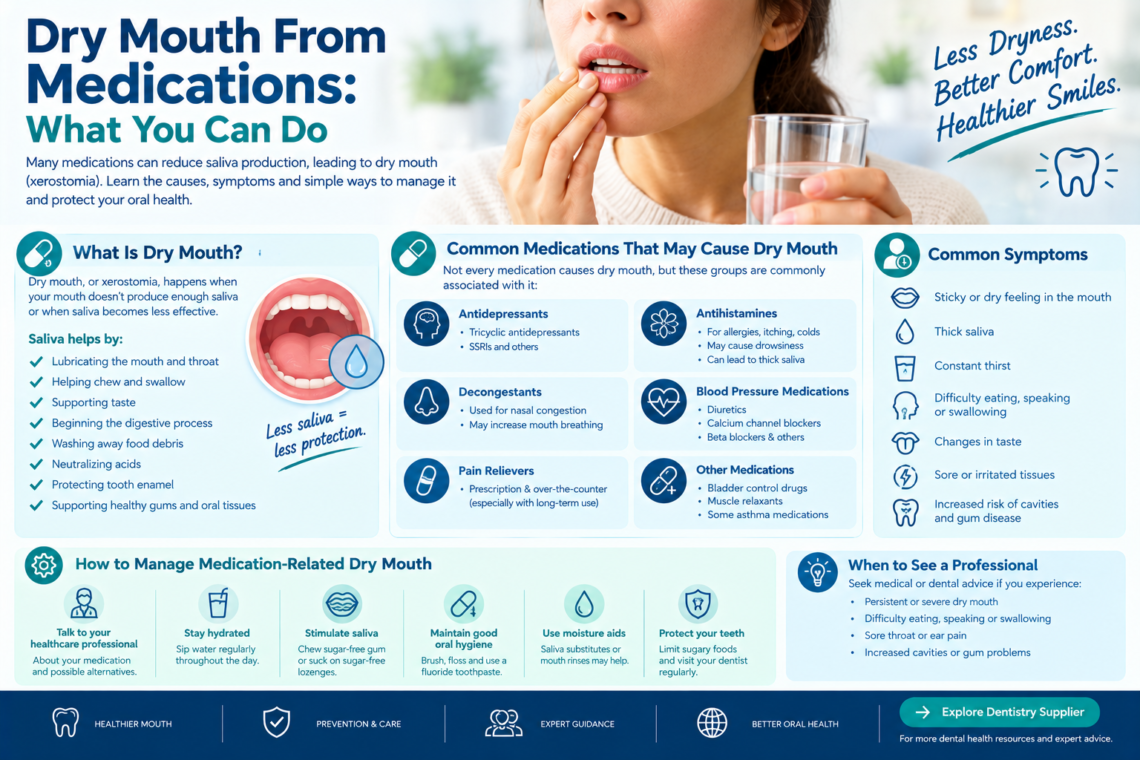
Dry mouth occurs when the mouth does not produce enough saliva or when saliva becomes less effective at keeping oral tissues moist. The medical term is xerostomia.
Saliva is more than water. It contains minerals, enzymes, proteins, and antimicrobial components that support several essential functions, including:
- Lubricating the mouth and throat
- Helping chew and swallow food
- Supporting taste
- Beginning the digestive process
- Washing away food debris
- Neutralizing acids produced by oral bacteria
- Protecting tooth enamel
- Supporting healthy gums and oral tissues
When saliva production decreases, the mouth loses some of its natural protection. The National Institute of Dental and Craniofacial Research explains that hundreds of medications can reduce saliva production, including medicines used for high blood pressure, depression, and bladder-control problems.
For a deeper explanation of saliva’s protective functions, read The Important Role of Saliva in Dental Health.
Why Do Medications Cause Dry Mouth?
Some medications affect the salivary glands or interfere with the nerve signals that stimulate saliva production. Others may contribute indirectly by causing dehydration, changing fluid balance, or encouraging mouth breathing.
Many medication-related cases involve drugs with anticholinergic effects. These medicines block certain nerve signals involved in saliva production. However, dry mouth can occur with several other medication categories as well.
The severity varies from person to person. One individual may experience only mild dryness, while another may develop significant difficulty eating, speaking, sleeping, or wearing dentures.
The risk may also increase when someone:
- Takes several medications at the same time
- Uses higher medication doses
- Is older and has multiple health conditions
- Takes more than one drug that causes dry mouth
- Has an existing salivary-gland condition
- Breathes through the mouth at night
- Does not drink enough fluids
The American Dental Association identifies medication-induced xerostomia as a common cause of reduced salivary function and notes that the risk may increase with multiple medications.
Which Medications Commonly Cause Dry Mouth?
Not every medication in a particular category causes dry mouth, and the risk depends on the specific drug, dosage, and individual response. However, several groups are commonly associated with oral dryness.
1. Antidepressants
Some antidepressants can reduce saliva production. Dry mouth may occur with certain:
- Tricyclic antidepressants
- Selective serotonin reuptake inhibitors
- Other medications used to manage depression or anxiety
Patients should not stop or change antidepressants without discussing alternatives with their prescribing healthcare professional.
2. Antihistamines
Antihistamines are often used for allergies, itching, colds, and other conditions. Some can reduce secretions throughout the body, including saliva.
They may also cause:
- Dry throat
- Drowsiness
- Thick saliva
- Difficulty swallowing dry foods
3. Decongestants
Decongestants used for nasal congestion can contribute to dryness. Some people may also begin breathing through their mouth when their nose is blocked, which can make symptoms worse.
4. Blood Pressure Medications
Certain medications used to manage high blood pressure may contribute to dry mouth. These include some:
- Diuretics
- Calcium channel blockers
- Beta blockers
- Other antihypertensive medicines
Diuretics may contribute to dryness by increasing fluid loss, although the effect varies depending on the medication and the patient.
5. Pain Relievers
Some prescription and over-the-counter pain medications may cause dry mouth, particularly when used regularly or in combination with other medicines.
6. Muscle Relaxants
Muscle relaxants can sometimes reduce saliva production or cause drowsiness that contributes to mouth breathing.
7. Bladder-Control Medications
Some medications for overactive bladder or urinary urgency have anticholinergic effects. These can reduce unwanted bladder contractions but may also decrease saliva production.
8. Anxiety and Sleep Medications
Certain medications used for anxiety, sleep difficulties, or related conditions may cause dry mouth as a side effect.
9. Asthma and Allergy Treatments
Some inhaled medications can contribute to oral dryness or increase the risk of oral irritation. Inhaled corticosteroids may also increase the risk of oral thrush if the mouth is not rinsed after use.
10. Other Medication Categories
Other medicines that may contribute to dry mouth include:
- Antiseizure medications
- Antispasmodics
- Chemotherapy drugs
- Some medications for Parkinson’s disease
- Certain medications used for nausea
- Some decongestant combinations
- Some medications used for cardiovascular conditions
A complete medication review is important because dry mouth may result from one medicine or from the combined effects of several drugs.
Symptoms of Medication-Related Dry Mouth
Dry mouth can feel different from person to person. Common symptoms include:
- A sticky or dry feeling in the mouth
- Thick, stringy, or foamy saliva
- Frequent thirst
- Dry or sore throat
- Cracked lips
- Dry or grooved tongue
- Burning or tingling in the mouth
- Bad breath
- Difficulty chewing or swallowing
- Trouble speaking for long periods
- Altered taste
- Difficulty wearing dentures
- Mouth sores
- Increased tooth sensitivity
- More frequent cavities
Some people notice that symptoms are worse at night or immediately after waking. Saliva production naturally decreases during sleep, and mouth breathing can make nighttime dryness more noticeable.
If you regularly wake up with a dry mouth, you may also find Why Does My Mouth Feel Dry Every Morning? helpful.
Can Medication-Related Dry Mouth Damage Your Teeth?
Yes. Persistent dry mouth can increase the risk of several oral-health problems.
Increased Cavity Risk
Saliva helps dilute acids and wash away food particles. When saliva is reduced, acids and bacteria may remain around the teeth for longer periods.
This can increase the risk of:
- Tooth decay
- Enamel demineralization
- Root cavities
- Tooth sensitivity
- Recurrent decay around fillings and crowns
Gum Problems
Reduced saliva can make it easier for plaque and bacteria to accumulate. Over time, this may contribute to gum inflammation and periodontal disease.
If you notice bleeding during brushing, read Why Do My Gums Bleed When I Brush My Teeth? to learn about common causes and warning signs.
Oral Infections
Dry mouth can increase the risk of oral infections, including candidiasis, commonly called oral thrush. Signs may include white patches, soreness, redness, burning, or changes in taste.
For more information, see Oral Thrush in Adults: Causes, Treatment & Prevention.
Difficulty Eating and Swallowing
Without enough saliva, dry foods such as crackers, bread, rice, and meat may be difficult to chew and swallow. Some people avoid certain foods, which can affect nutrition and quality of life.
What You Can Do About Dry Mouth From Medications
The best solution depends on the medication, the severity of symptoms, and your overall health. The following strategies may help.
1. Do Not Stop Prescribed Medication on Your Own
If you believe a medication is causing dry mouth, speak with your doctor, pharmacist, or prescribing healthcare professional.
Depending on your situation, they may consider:
- Adjusting the dose
- Changing the timing of the medication
- Switching to another medicine
- Reducing the number of medications when clinically appropriate
- Recommending a different formulation
- Treating the dry mouth without changing the medication
Never stop a prescribed medication abruptly unless a qualified healthcare professional instructs you to do so. Some medicines can cause serious withdrawal symptoms or allow an underlying condition to worsen if stopped suddenly.
2. Sip Water Regularly
Keep water nearby and take small, frequent sips throughout the day. Drinking a large amount of water at once may not provide lasting relief, while regular sipping can help keep the mouth more comfortable.
You may also:
- Drink water with meals
- Carry a reusable water bottle
- Use ice chips for temporary relief
- Choose sugar-free beverages
- Add moisture to dry foods with sauces, broth, or yogurt
Water can relieve dryness, but it does not replace saliva’s full protective functions.
3. Chew Sugar-Free Gum
Chewing sugar-free gum can stimulate the salivary glands and encourage natural saliva flow.
Choose gum that:
- Is sugar-free
- Does not irritate your mouth
- May contain xylitol, if you tolerate it
Xylitol may help reduce cavity risk when used in suitable sugar-free products. However, consuming large amounts can cause digestive discomfort, gas, or diarrhea in some people.
Avoid chewing gum if you have jaw pain, jaw locking, or a temporomandibular disorder that worsens with chewing.
4. Try Sugar-Free Lozenges or Hard Candy
Sugar-free lozenges or hard candies may stimulate saliva production. Options flavored with mild mint or other non-irritating ingredients may be helpful.
Avoid regular sugary candies because frequent sugar exposure can increase the risk of tooth decay, especially when saliva is already reduced.
If you experience jaw discomfort while chewing or opening your mouth, consult your dentist before using gum or hard candies frequently.
5. Use an Artificial Saliva Product
Over-the-counter saliva substitutes may provide temporary relief. These products are available in forms such as:
- Oral sprays
- Moisturizing gels
- Rinses
- Lubricating solutions
- Saliva-replacement lozenges
Look for products specifically labeled for dry mouth. Some contain ingredients such as:
- Carboxymethylcellulose
- Hydroxyethyl cellulose
- Glycerin
- Xylitol
- Other moisturizing agents
Artificial saliva does not permanently correct the cause, but it can make speaking, eating, and sleeping more comfortable.
Mayo Clinic notes that saliva substitutes, moisturizing products, and dry-mouth mouthwashes may help relieve symptoms.
6. Choose an Alcohol-Free Mouthwash
Alcohol-containing mouthwashes may worsen dryness or cause burning in sensitive oral tissues. If you have medication-related dry mouth, choose a mouthwash designed for dry-mouth relief and preferably one that is alcohol-free.
Depending on your cavity risk, your dentist may recommend a fluoride mouthwash or another specialized formula.
Mouthwash should supplement—not replace—brushing and cleaning between your teeth. For guidance on choosing and using mouthwash, read Mouthwash: Does It Actually Help? A Dentist’s Honest Assessment.
7. Brush With Fluoride Toothpaste
Because dry mouth increases cavity risk, fluoride becomes especially important.
Brush your teeth:
- At least twice daily
- Using fluoride toothpaste
- With a soft-bristled toothbrush
- For approximately two minutes each time
Avoid brushing too aggressively because dry oral tissues may be more vulnerable to irritation.
Your dentist may recommend prescription-strength fluoride toothpaste, fluoride gel, or custom fluoride trays if you have a high risk of tooth decay.
8. Clean Between Your Teeth Daily
Use floss, interdental brushes, or another dentist-recommended cleaning method to remove plaque from areas a toothbrush cannot reach.
This is especially important when saliva is reduced because plaque and food debris may remain in the mouth longer.
If your gums bleed persistently or become swollen, arrange a dental examination rather than assuming dryness is the only cause.
9. Limit Caffeine and Alcohol
Caffeine may worsen the sensation of dryness for some people, while alcohol can contribute to dehydration and irritate oral tissues.
Consider limiting:
- Coffee
- Strong tea
- Energy drinks
- Alcoholic beverages
- Alcohol-containing mouthwashes
If you drink caffeinated beverages, balance them with water and observe whether your symptoms improve when intake is reduced.
10. Avoid Tobacco Products
Smoking and chewing tobacco can worsen dry mouth, irritate oral tissues, and increase the risk of gum disease, tooth loss, and oral cancer.
Stopping tobacco use is one of the most beneficial steps you can take for your oral and general health.
Foods and Drinks to Choose When Your Mouth Is Dry
Some foods are easier to eat when saliva production is low.
Helpful options may include:
- Yogurt
- Soft fruits with high water content
- Soups and broths
- Scrambled eggs
- Oatmeal
- Soft-cooked vegetables
- Smoothies without excessive added sugar
- Moist fish or tender meats
- Mashed vegetables
- Sugar-free frozen treats
Foods to limit may include:
- Sticky sweets
- Sugary drinks
- Highly acidic beverages
- Very spicy foods
- Salty foods that cause irritation
- Dry crackers
- Hard bread
- Tough meats
- Excessively crunchy foods
Acidic and sugary foods can be especially problematic because dry mouth reduces the mouth’s ability to neutralize acids and clear food debris.
When Should You See a Dentist?
Schedule a dental appointment if dry mouth:
- Continues for more than a few weeks
- Began after starting a new medication
- Makes eating or swallowing difficult
- Causes frequent cavities
- Leads to mouth sores or burning
- Causes persistent bad breath
- Makes dentures uncomfortable
- Is accompanied by tooth sensitivity
- Causes recurrent oral infections
- Interferes with sleep or speaking
Your dentist may examine your teeth, gums, tongue, and oral tissues for signs of decay, inflammation, infection, or tissue irritation. They may also recommend preventive fluoride treatment, saliva substitutes, or more frequent dental visits.
How Is Medication-Related Dry Mouth Diagnosed?
Diagnosis usually begins with a discussion of symptoms and medical history.
Your healthcare professional or dentist may ask:
- When did the dryness begin?
- Did it start after a new medication?
- Is the dryness constant or occasional?
- Which prescription and over-the-counter medicines do you take?
- Do you use vitamins, supplements, or herbal products?
- Do you breathe through your mouth at night?
- Do you have difficulty eating or swallowing?
- Have you noticed cavities, sores, or oral infections?
A dentist or doctor may inspect the mouth and, when necessary, recommend tests to measure saliva production or investigate other possible causes.
Medication is a common cause, but dry mouth can also be associated with dehydration, diabetes, Sjögren’s disease, radiation therapy, nerve damage, and other conditions. Therefore, it is important not to assume that every case is caused by medication.
Can Dry Mouth From Medication Go Away?
In some cases, dry mouth improves when:
- The medication is discontinued under medical supervision
- The dosage is adjusted
- The patient switches to another medication
- The body adapts to the medicine
- Another contributing factor is treated
- Hydration and oral-care habits improve
However, some people experience persistent symptoms for as long as they use the medication. The goal is to manage the dryness while continuing necessary treatment safely.
Do not change medication timing or dosage without professional advice. Although some medication adjustments may reduce dry mouth, they are not appropriate for every drug or patient.
Frequently Asked Questions
What medications cause dry mouth most often?
Common categories include antidepressants, antihistamines, decongestants, blood pressure medications, diuretics, muscle relaxants, pain medications, bladder-control drugs, and some anxiety or sleep medications.
Should I stop taking medication if it causes dry mouth?
No. Do not stop or change prescribed medication without speaking with your doctor or pharmacist. A healthcare professional may recommend a dosage adjustment, an alternative medicine, or a treatment to manage the dryness.
What is the fastest way to relieve medication-related dry mouth?
Small sips of water, ice chips, sugar-free gum, sugar-free lozenges, and saliva-substitute products may provide temporary relief. Long-term management should also include medication review and preventive dental care.
Does drinking more water cure dry mouth?
Water can relieve the sensation of dryness, but it may not correct reduced saliva production. Medication-related dry mouth often requires additional measures, such as saliva substitutes, sugar-free gum, fluoride protection, and professional evaluation.
Can dry mouth cause tooth sensitivity?
Yes. Reduced saliva can increase the risk of enamel damage, cavities, exposed root surfaces, and tooth sensitivity. If sensitivity persists, a dentist should identify the underlying cause. You can also read Sensitive Teeth: Causes, Treatments, and When to See a Dentist.
Conclusion
Dry mouth from medications is common, but it should not be ignored when symptoms persist. Reduced saliva can affect comfort, eating, speaking, sleep, and the long-term health of your teeth and gums.
The most important first step is to discuss the suspected medication side effect with your doctor or pharmacist. Never stop a prescribed medicine without professional guidance. In the meantime, regular water intake, sugar-free gum, saliva substitutes, alcohol-free mouthwash, fluoride toothpaste, daily interdental cleaning, and routine dental visits can help reduce discomfort and protect your oral health.
If dry mouth is persistent, severe, or accompanied by cavities, mouth sores, difficulty swallowing, or recurrent infections, arrange an evaluation with a dentist or healthcare professional. Identifying the cause early can help prevent avoidable complications.
CTA
Learning how medications affect saliva and oral health can help you take preventive action before dryness leads to more serious dental problems. Explore more evidence-informed guides about saliva, oral hygiene, dental treatments, and preventive care at Dentistry Supplier.