Introduction
Infection control in dentistry is essential for protecting patients, dentists, hygienists, dental assistants, and other healthcare workers from potentially harmful microorganisms. Dental procedures can involve saliva, blood, respiratory secretions, contaminated instruments, aerosols, and frequently touched clinical surfaces. Without appropriate infection prevention procedures, these factors can contribute to cross-contamination.
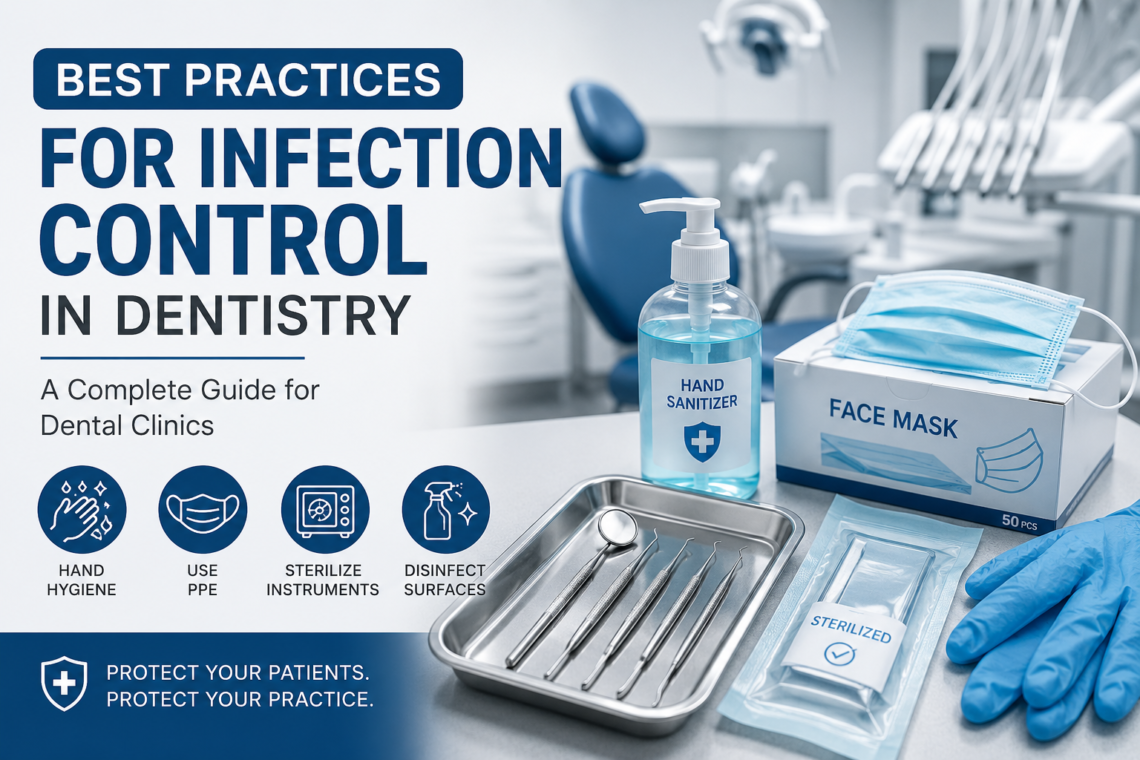
Effective infection control is not limited to sterilizing instruments. It involves a complete system that includes hand hygiene, personal protective equipment, safe injection practices, sharps safety, instrument processing, environmental cleaning, dental unit waterline maintenance, respiratory hygiene, staff education, and regular monitoring.
This complete guide explains the best practices for infection control in dentistry, including daily protocols, instrument sterilization, PPE, surface disinfection, waterline maintenance, common mistakes, and practical steps for building a safer dental clinic.
What Is Infection Control in Dentistry?
Infection control in dentistry refers to the policies, procedures, equipment, and practices used to prevent or reduce the transmission of infectious microorganisms during dental treatment.
The goal is to protect:
- Patients
- Dentists
- Dental hygienists
- Dental assistants
- Laboratory personnel
- Cleaning and support staff
- Visitors
Dental infection prevention is based largely on Standard Precautions, which should be applied to patient care regardless of whether a patient is known to have an infection. CDC guidance includes hand hygiene, PPE, respiratory hygiene, sharps safety, safe injection practices, sterile instruments, and clean and disinfected environmental surfaces.
Standard Precautions in Dental Clinics
Standard Precautions provide the foundation for infection control in dentistry.
The major components include:
- Hand hygiene
- Personal protective equipment
- Respiratory hygiene and cough etiquette
- Sharps safety
- Safe injection practices
- Sterilization of instruments and devices
- Cleaning and disinfection of environmental surfaces
These practices should be incorporated into routine patient care rather than being used only when a patient is known to have an infection.
1. Practice Proper Hand Hygiene
Hand hygiene is one of the simplest and most important infection-prevention practices in a dental clinic.
Dental professionals should perform hand hygiene:
- Before treating a patient
- Before performing procedures
- After patient contact
- After contact with potentially contaminated materials
- After removing gloves
- Whenever hands become visibly contaminated
A clinic should provide easily accessible handwashing facilities and appropriate hand-hygiene products.
2. Use Appropriate Personal Protective Equipment
Personal protective equipment creates a barrier between dental professionals and potentially infectious materials.
Depending on the procedure and expected exposure, PPE may include:
- Gloves
- Surgical masks
- Respirators when indicated
- Protective eyewear
- Face shields
- Protective gowns
- Clinical clothing
PPE should be selected according to the procedure and level of anticipated exposure.
Disposable items should be replaced appropriately between patients, while reusable protective equipment should be cleaned and disinfected according to manufacturer instructions.
3. Sterilize Reusable Dental Instruments
Instrument processing is a critical part of infection control in dentistry.
Reusable instruments should go through the appropriate cleaning, packaging, sterilization, and storage process before they are used on another patient.
The general workflow includes:
Transport → Cleaning → Inspection → Packaging → Sterilization → Monitoring → Storage
Cleaning is particularly important because organic material can interfere with effective sterilization.
For a detailed explanation of autoclave procedures, see Dental Instrument Sterilization: Autoclave Guidelines Explained.
4. Monitor Sterilization Cycles
Simply placing instruments inside an autoclave does not provide sufficient assurance that every sterilization cycle has worked correctly.
Sterilization monitoring can include:
- Mechanical monitoring
- Chemical indicators
- Biological indicators
Mechanical monitoring evaluates physical cycle parameters such as time, temperature, and pressure.
5. Clean and Disinfect Clinical Surfaces
Dental treatment rooms contain numerous surfaces that may become contaminated during treatment.
Frequently touched surfaces include:
- Dental chair controls
- Light handles
- Countertops
- Instrument trays
- X-ray controls
- Computer keyboards
- Door handles
- Drawer handles
- Delivery-unit controls
Clean and disinfect surfaces according to the appropriate product instructions and clinic protocols.
When a surface is difficult to clean between patients, appropriate protective barriers can help reduce contamination.
6. Maintain Dental Unit Waterlines
Dental unit waterlines require appropriate maintenance because microbial contamination and biofilm can develop inside waterline tubing.
Dental infection-control guidance has long included dental unit waterlines, biofilm, and water quality as important areas of infection prevention.
A waterline maintenance program should follow:
- Dental unit manufacturer instructions
- Waterline treatment product instructions
- Applicable local regulations
- Current infection-control guidance
Avoid improvising chemical concentrations or treatment schedules.
7. Follow Safe Injection Practices
Injection safety is another essential component of infection control in dentistry.
Dental professionals should:
- Use a new sterile needle for each patient.
- Use sterile syringes.
- Follow aseptic technique.
- Never reuse disposable needles.
- Never reuse single-use devices when prohibited.
- Store medications appropriately.
- Dispose of sharps immediately after use.
Safe injection practices protect both patients and dental healthcare personnel.
8. Practice Proper Sharps Safety
Dental clinics routinely use sharp instruments, needles, burs, and other devices.
Sharp injuries can expose healthcare workers to bloodborne pathogens.
Good sharps safety includes:
- Avoiding unnecessary manipulation of needles.
- Using appropriate safety devices when applicable.
- Disposing of sharps immediately after use.
- Using approved puncture-resistant sharps containers.
- Keeping sharps containers accessible.
- Never placing loose needles or sharp instruments in ordinary waste.
Staff should also know what to do immediately after an accidental sharp injury.
9. Use Proper Dental Handpiece Infection Control
Dental handpieces require special attention because they can become contaminated during treatment.
Proper handpiece maintenance is important for both infection prevention and equipment performance.
For more information, read Dental Handpiece Maintenance: The Complete Guide for Long-Lasting Performance.
10. Manage Dental Aerosols and Droplets
Some dental procedures generate aerosols and droplets.
Aerosol management should be considered as part of the overall infection-control strategy.
Depending on the procedure, dental practices may use:
- High-volume evacuation
- Appropriate patient positioning
- Rubber dams when clinically appropriate
- Proper ventilation
- Appropriate respiratory protection
- Environmental cleaning
Aerosol-control measures should complement rather than replace Standard Precautions.
11. Clean and Process Dental Equipment Correctly
Dental equipment should be maintained according to manufacturer instructions and infection-control requirements.
This may include:
- Dental chairs
- Delivery systems
- Suction systems
- X-ray equipment
- Dental lights
- Handpieces
- Curing lights
- Ultrasonic equipment
- Sterilizers
Equipment that is difficult to clean or improperly maintained can create additional contamination risks.
For a broader maintenance routine, see Dental Equipment Maintenance Checklist.
Daily Dental Infection Control Checklist
A daily checklist can help staff perform essential infection-control tasks consistently.
Before the First Patient
- Perform hand hygiene.
- Check PPE supplies.
- Prepare clean treatment areas.
- Verify sterilized instrument packs.
- Check sterilization records.
- Inspect sterilization equipment.
- Flush or treat dental unit waterlines according to the applicable protocol.
- Prepare appropriate surface barriers.
Between Patients
- Remove and dispose of used disposable items.
- Perform hand hygiene.
- Replace gloves and other disposable PPE as appropriate.
- Clean and disinfect clinical contact surfaces.
- Process contaminated instruments.
- Replace barriers.
- Prepare a new sterile instrument set.
At the End of the Day
- Process remaining instruments.
- Clean and disinfect treatment areas.
- Complete waterline procedures according to manufacturer instructions.
- Clean suction systems as recommended.
- Check sterilization equipment.
- Dispose of clinical waste appropriately.
- Complete required documentation.
Common Infection Control Mistakes to Avoid
Even established dental clinics can make mistakes when infection-control procedures are not consistently monitored.
Skipping Hand Hygiene
Wearing gloves doesn’t eliminate the need for proper hand hygiene.
Improper Instrument Processing
Instruments should not move directly from use to storage. Appropriate cleaning and sterilization procedures must be followed.
Ignoring Sterilization Monitoring
A sterilizer should be monitored using appropriate physical, chemical, and biological methods rather than relying only on the machine’s cycle display.
Reusing Single-Use Items
Items designed for single use should not be reused when doing so creates an infection risk or violates manufacturer instructions or applicable requirements.
Poor Surface Disinfection
Frequently touched surfaces can be overlooked when staff focus only on visibly contaminated areas.
Neglecting Waterlines
Dental unit waterline maintenance should be part of the clinic’s established infection-prevention program.
Inadequate Staff Training
A written policy is ineffective if team members don’t understand how or when to apply it.
How to Build an Effective Infection Control Program
A strong dental infection-control program should be organized rather than dependent on individual staff members remembering every task.
Step 1: Create Written Procedures
Document procedures for:
- Hand hygiene
- PPE
- Instrument processing
- Sterilization
- Surface disinfection
- Waterlines
- Waste disposal
- Sharps injuries
- Exposure incidents
Step 2: Assign Responsibilities
Clearly identify who is responsible for each task.
Step 3: Maintain Adequate Supplies
Keep sufficient stocks of:
- Gloves
- Masks
- Protective eyewear
- Disinfectants
- Sterilization pouches
- Chemical indicators
- Cleaning supplies
- Sharps containers
Step 4: Maintain Records
Document:
- Sterilization cycles
- Biological monitoring
- Equipment maintenance
- Staff training
- Infection-control audits
- Corrective actions
Step 5: Conduct Regular Audits
Regular observation and assessment can identify gaps before they become serious problems. CDC’s dental infection-prevention checklist specifically supports systematic assessment of infection-prevention practices and staff compliance.
Infection Control and Dental Instrument Longevity
Proper infection control doesn’t only protect patients; it can also support the working life of reusable instruments.
However, instruments should still be inspected regularly for:
- Corrosion
- Cracks
- Distortion
- Dull working ends
- Loose joints
- Damaged surfaces
- Poor functionality
For guidance on replacement decisions, read How Long Do Dental Instruments Last Before Replacement?.
Infection Control vs Sterilization: What’s the Difference?
These terms are related but aren’t interchangeable.
Infection control is the broader system used to prevent infection transmission.
Sterilization is one specific component of infection control that eliminates viable microorganisms from appropriately processed instruments.
Other infection-control measures include:
- Hand hygiene
- PPE
- Environmental cleaning
- Sharps safety
- Safe injection practices
- Waterline management
- Waste management
- Staff training
Therefore, an effective dental clinic needs both proper sterilization and a comprehensive infection-control program.
How Often Should Dental Instruments Be Sterilized?
Reusable dental instruments that require sterilization should be appropriately cleaned and sterilized before reuse according to their classification, intended use, manufacturer instructions, and applicable infection-control guidance.
Critical and heat-tolerant semicritical instruments generally require appropriate heat sterilization when possible.
The specific processing method should always follow the instrument manufacturer’s instructions and current professional guidance.
For more information about different dental instruments and their clinical purposes, read Common Dental Instruments and Uses: A Complete Guide.
Frequently Asked Questions
What is the most important part of infection control in dentistry?
There isn’t one single measure that replaces all others. Effective infection control in dentistry requires a combination of Standard Precautions, including hand hygiene, PPE, safe instrument processing, sterilization, environmental cleaning, sharps safety, and staff training.
How often should dental instruments be sterilized?
Reusable instruments requiring sterilization should be properly cleaned and sterilized before they are reused on another patient. Processing must follow the instrument manufacturer’s instructions and applicable infection-control requirements.
Why is hand hygiene important in dentistry?
Hand hygiene helps reduce the transfer of microorganisms between dental professionals, patients, instruments, and clinical environments.
What PPE is commonly used in dental clinics?
Depending on the procedure, PPE can include gloves, masks or respirators, protective eyewear, face shields, and protective clothing.
How should dental instruments be sterilized?
Reusable instruments should first undergo appropriate cleaning and preparation before being packaged and sterilized using an approved method suitable for the instrument. Sterilization should also be monitored using appropriate indicators.
Conclusion
Effective infection control in dentistry requires much more than simply sterilizing instruments. It is a comprehensive approach that combines hand hygiene, PPE, instrument processing, sterilization monitoring, environmental cleaning, safe injections, sharps safety, waterline maintenance, staff education, and regular program evaluation.
A dental clinic should establish written procedures, assign responsibilities, maintain adequate supplies, document important activities, and regularly evaluate compliance. These measures create a more consistent approach to infection prevention and help protect both patients and dental healthcare professionals.
Sterilization should remain a central part of the program, but it should work alongside every other infection-control measure rather than being treated as a standalone solution. CDC guidance emphasizes this broader approach through Standard Precautions and ongoing evaluation of dental infection-prevention practices.
CTA
Maintaining a safe dental practice starts with reliable equipment, quality instruments, and proper infection-control supplies.
Whether you’re setting up a new dental clinic, upgrading existing equipment, or looking for dependable dental instruments, explore Detistry Supplier for dental solutions designed to support professional clinical environments.