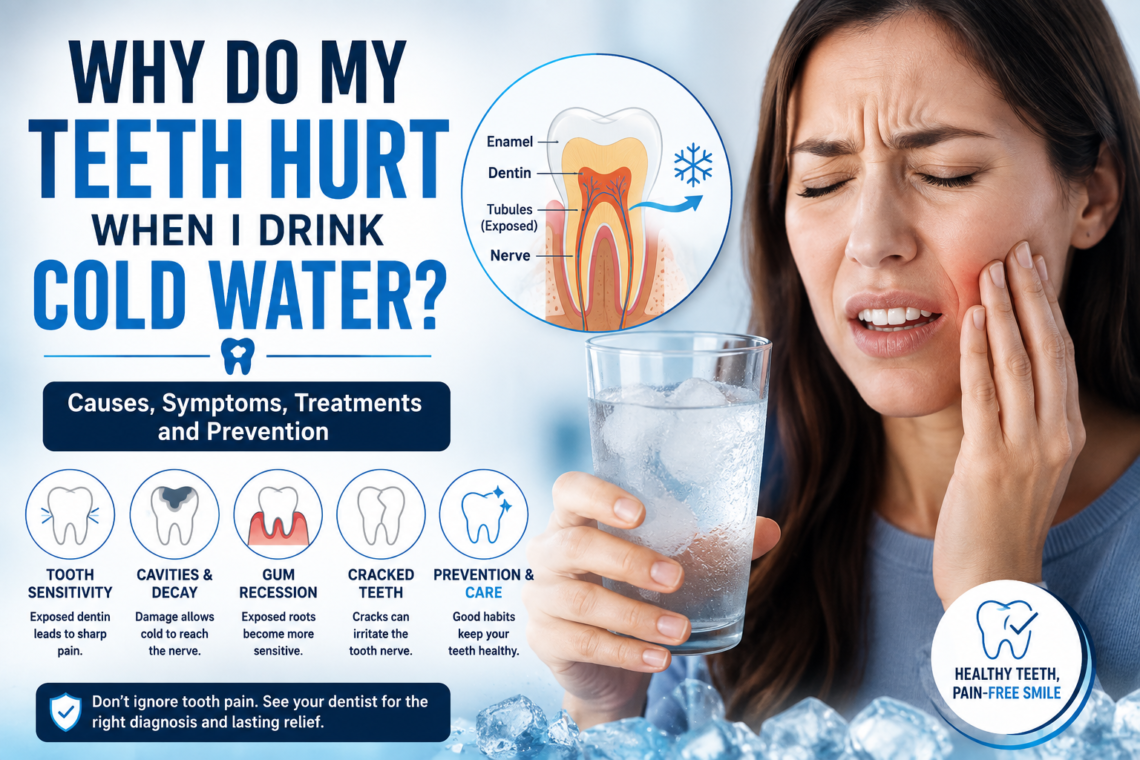
Have you ever taken a sip of ice-cold water and felt a sudden, sharp pain shoot through one or more of your teeth? If so, you’re not alone. Tooth sensitivity to cold is one of the most common dental complaints and can range from a mild twinge to intense discomfort that interferes with everyday activities. If you’ve been asking, “Why do my teeth hurt when I drink cold water?” the answer often lies in dentin hypersensitivity. This condition develops when the protective enamel wears away or the gums recede, exposing the dentin beneath.
Tiny channels within the dentin allow cold temperatures to stimulate the nerve inside the tooth, resulting in brief, sharp pain. However, tooth sensitivity isn’t always caused by exposed dentin. Cavities, cracked teeth, worn fillings, gum disease, teeth grinding, recent dental procedures, or an infected tooth nerve can also cause pain when consuming cold foods or drinks.
Identifying the exact cause is essential because treatment varies depending on the underlying problem. Maintaining healthy teeth starts with understanding the instruments and techniques used during dental care.
How Cold Water Triggers Tooth Pain
Each tooth has several protective layers.
- Enamel protects the crown of the tooth.
- Cementum covers the root.
- Dentin lies beneath these protective layers.
- Dental pulp contains nerves and blood vessels.
When enamel becomes thinner or the gums recede, the dentin becomes exposed. Because dentin contains thousands of microscopic tubules connected to the tooth’s nerve, cold temperatures can trigger a sudden pain response. Read our guide on best practices for infection control in dentistry to see how proper infection control supports long-term oral health.
The sensation usually lasts only a few seconds, but if the pain lingers, throbs, or occurs without a trigger, it may indicate a deeper problem such as pulp inflammation or infection.
Common Causes of Tooth Pain When Drinking Cold Water
If you’ve been wondering, “Why do my teeth hurt when I drink cold water?”, you’re not alone. Cold sensitivity can develop gradually or appear suddenly, depending on the underlying cause. While dentin hypersensitivity is the most common reason, several other dental conditions can trigger pain when your teeth come into contact with cold beverages.
Let’s look at the most common causes and how they affect your teeth.
1. Dentin Hypersensitivity (The Most Common Cause)
The leading cause of tooth pain from cold water is dentin hypersensitivity. Your tooth enamel normally protects the dentin beneath it. When enamel wears away or gums recede, the dentin becomes exposed.
Dentin contains thousands of microscopic tubules that connect directly to the nerve inside your tooth. Cold temperatures stimulate these tubules, causing a short, sharp pain.
Common Symptoms
- Sharp pain when drinking cold water
- Sensitivity to ice cream or cold foods
- Pain while breathing in cold air
- Discomfort that lasts a few seconds
- Pain affecting one or multiple teeth
2. Tooth Decay (Cavities)
Cavities don’t always cause constant pain. In their early stages, they often become noticeable only when exposed to:
- Cold drinks
- Hot beverages
- Sweet foods
- Sugary drinks
As decay progresses deeper into the tooth, sensitivity usually becomes more frequent and intense.
Other Signs of Cavities
- Toothache
- Visible holes
- Brown or black spots
- Food getting trapped
- Bad breath
Early treatment with a dental filling can often prevent more extensive procedures.
3. Gum Recession
Healthy gums protect the tooth roots. When gums recede, the roots become exposed. Unlike the crown of the tooth, the root isn’t protected by enamel, making it much more sensitive to temperature changes.
Causes of Gum Recession
- Gum disease
- Aggressive brushing
- Teeth grinding
- Aging
- Tobacco use
If you’ve experienced bleeding gums along with sensitivity, read our article Why do my gums bleed when I brush my teeth to learn how gum disease can affect both your gums and tooth roots.
4. Cracked or Fractured Teeth
Tiny cracks in a tooth may be invisible to the naked eye. When cold water enters the crack, it can irritate the nerve, causing sudden pain.
Common Causes
- Biting hard foods
- Sports injuries
- Teeth grinding
- Large fillings
- Trauma
Pain from a cracked tooth may come and go, making diagnosis challenging without a professional examination.
5. Worn or Damaged Fillings
Dental fillings don’t last forever.
Over time they can:
- Wear down
- Crack
- Leak
- Separate from the tooth
This allows temperature changes to reach the sensitive inner layers of the tooth. Fortunately, replacing an old filling often resolves the sensitivity.
6. Teeth Grinding (Bruxism)
Many people grind or clench their teeth while sleeping without realizing it.
Over time, this habit can:
- Wear away enamel
- Create tiny cracks
- Increase tooth sensitivity
- Cause jaw pain
- Lead to headaches
If your dentist suspects bruxism, they may recommend a custom night guard.Interested in how dentists select reliable clinical equipment? Explore our guide on how to choose dental equipment.
7. Recent Dental Treatment
It’s common to experience temporary sensitivity after:
- Teeth whitening
- Dental fillings
- Crown placement
- Professional cleaning
- Orthodontic treatment
This sensitivity usually improves within a few days or weeks as the tooth heals.If pain becomes worse instead of better, contact your dentist.Regular preventive care also depends on properly maintained dental equipment. Learn how dental clinics keep instruments functioning safely in our dental-equipment-maintenance-checklist.
8. Worn Tooth Enamel
Enamel can wear down gradually over time.
Common causes include:
- Acidic foods and drinks
- Acid reflux (GERD)
- Frequent consumption of soda or sports drinks
- Brushing immediately after acidic meals
- Teeth grinding
Because enamel cannot regenerate, preventing further erosion is essential.
Risk Factors
You’re more likely to experience tooth sensitivity if you:
- Brush aggressively
- Use a hard-bristled toothbrush
- Consume acidic drinks frequently
- Grind your teeth
- Have untreated gum disease
- Smoke
- Have cavities
- Skip regular dental checkups
- Have aging dental restorations
When Is Tooth Sensitivity an Emergency?
Seek immediate dental care if your cold sensitivity is accompanied by:
- Severe swelling
- Fever
- Facial swelling
- Difficulty swallowing
- Persistent throbbing pain
- A broken tooth with significant pain
- Pus around the tooth
These symptoms may indicate a serious infection requiring urgent treatment.
How to Treat and Prevent Tooth Sensitivity
If your teeth hurt when you drink cold water, the good news is that most cases can be treated once the underlying cause is identified. The right treatment depends on whether your sensitivity is caused by enamel wear, gum recession, tooth decay, a cracked tooth, or another dental condition.
A professional dental examination is the best way to determine the cause and recommend the most effective treatment.
How Dentists Diagnose Tooth Sensitivity
When you visit your dentist for cold-sensitive teeth, they’ll perform a thorough examination to identify the source of the pain.
A dental evaluation may include:
- Reviewing your medical and dental history
- Asking when the sensitivity started and what triggers it
- Examining your teeth and gums
- Checking for cavities, cracks, or worn fillings
- Testing the affected tooth with cold or gentle pressure
- Taking dental X-rays if decay, infection, or bone loss is suspected
By identifying the exact cause, your dentist can recommend treatment that targets the problem instead of simply masking the symptoms.
Professional Treatments for Cold-Sensitive Teeth
The best treatment depends on what’s causing your sensitivity.
1. Desensitizing Toothpaste
If you have dentin hypersensitivity, your dentist may recommend a desensitizing toothpaste.
These products work by helping block the tiny channels (dentinal tubules) that carry sensations to the tooth’s nerve. Most people notice improvement after several weeks of consistent use.
2. Fluoride Treatments
Professional fluoride applications can strengthen weakened enamel and reduce tooth sensitivity.
Fluoride varnishes and gels are commonly recommended for patients experiencing mild to moderate sensitivity.
3. Dental Fillings
If a cavity or worn filling is causing sensitivity, replacing the damaged area with a new filling often eliminates the discomfort while preventing further decay.
4. Dental Crowns
For teeth with significant wear, fractures, or large restorations, a dental crown may be recommended to protect the tooth and restore function.
5. Gum Disease Treatment
If gum recession or periodontal disease is exposing the tooth roots, treatment may include:
- Professional dental cleaning
- Scaling and root planing
- Improved home oral hygiene
- Periodontal maintenance visits
If you’re experiencing bleeding gums along with tooth sensitivity, don’t ignore it. Read our article Why do my gums bleed when I brush my teeth to learn about the early signs of gum disease and how prompt treatment can help protect your teeth and gums.
6. Root Canal Treatment
If sensitivity is caused by irreversible pulp damage or infection, your dentist may recommend root canal therapy to remove the infected tissue and preserve the tooth.Not sure whether a damaged tooth can be saved? Our guide on root canal vs tooth extraction explains the advantages, disadvantages, and situations where each treatment is appropriate.
Home Remedies That May Help
While home care won’t fix cavities or cracked teeth, these strategies can help reduce sensitivity caused by exposed dentin or mild enamel wear.
Use a Soft-Bristled Toothbrush
A soft toothbrush cleans effectively while minimizing irritation to your gums and enamel.
Brush Gently
Avoid scrubbing your teeth with excessive force. Gentle circular motions are more effective and less damaging.
Avoid Acidic Foods and Drinks
Limit frequent consumption of:
- Soft drinks
- Citrus juices
- Sports drinks
- Vinegar-based foods
- Sour candies
Acids weaken enamel and increase sensitivity.
Wait Before Brushing After Acidic Foods
After consuming acidic foods or drinks, wait about 30 minutes before brushing. This gives your saliva time to neutralize acids and helps reduce enamel wear.
Wear a Night Guard if You Grind Your Teeth
If you clench or grind your teeth while sleeping, a custom-made night guard can protect your enamel and reduce sensitivity.
Stay Hydrated
Drinking plenty of water supports saliva production, which helps protect enamel and wash away food particles and bacteria.
Maintaining dental care also depends on reliable instruments and maintenance. Learn more in our dental equipment maintenance checklist , where we discuss why equipment upkeep is essential for safe and effective treatment.
Best Practices for Long-Term Oral Health
Follow these habits to reduce your risk of tooth sensitivity:
- Brush gently using the correct technique.
- Floss or clean between your teeth every day.
- Use fluoride toothpaste consistently.
- Eat a balanced diet that’s low in added sugars and acidic beverages.
- Wear protective gear during contact sports.
- Address teeth grinding early.
- Schedule routine dental examinations and cleanings.
- Treat cavities and cracked teeth promptly.
Frequently Asked Questions (FAQs)
1. Why do my teeth hurt when I drink cold water?
The most common cause is dentin hypersensitivity, where worn enamel or receding gums expose the dentin beneath the tooth. Other causes include cavities, cracked teeth, gum disease, worn fillings, and tooth infections.
2. Is tooth sensitivity to cold normal?
Occasional mild sensitivity may occur, but healthy teeth should not experience persistent pain when exposed to cold drinks. If sensitivity continues or worsens, schedule a dental examination.
3. Can a cavity cause pain when drinking cold water?
Yes. As a cavity progresses deeper into the tooth, cold temperatures can stimulate the inner layers, causing sharp or lingering pain.
4. Will sensitive toothpaste stop the pain?
Desensitizing toothpaste can help reduce sensitivity caused by exposed dentin, but it won’t treat underlying problems such as cavities, cracked teeth, or infections. If symptoms persist, consult your dentist.
5. Can gum disease make my teeth sensitive?
Yes. Gum disease can lead to gum recession, exposing the tooth roots and increasing sensitivity to cold, heat, and sweet foods. If you’re experiencing bleeding gums, read Why do my gums bleed when I brush my teeth to understand the early warning signs of gum disease.
Conclusion
If you’ve been asking, “Why do my teeth hurt when I drink cold water?”, the answer may be as simple as exposed dentin—or it could point to a more serious issue such as tooth decay, gum disease, or a cracked tooth. Understanding the cause is the first step toward finding the right treatment and preventing future discomfort.
Many cases of tooth sensitivity improve with better oral hygiene, desensitizing products, and professional dental care. However, persistent or severe sensitivity should never be ignored, as early intervention can prevent more complex and costly dental procedures.
By maintaining healthy daily habits, attending regular dental checkups, and addressing problems promptly, you can protect your teeth, reduce sensitivity, and enjoy your favorite foods and drinks without pain.
Call to Action
Looking for reliable information about dental burs, dental instruments, equipment, and maintenance?
Explore Dentistry Supplier for informative dental resources covering instrument selection, clinical applications, equipment maintenance, manufacturing, and other topics relevant to dental professionals and buyers.