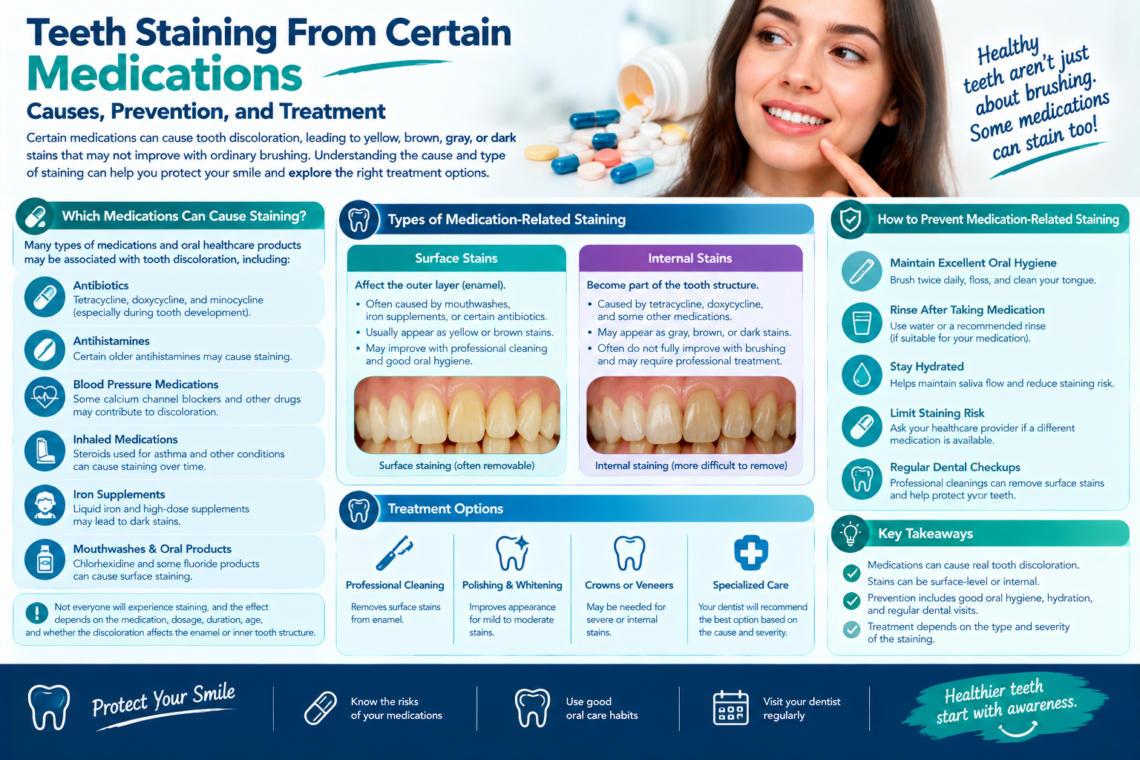
Teeth staining from certain medications can cause yellow, brown, gray, or dark discoloration that may not improve with ordinary brushing. While many people associate tooth stains with coffee, tea, tobacco, or poor oral hygiene, certain medicines and oral healthcare products can also change tooth color.
Medication-related tooth discoloration may occur in different ways. Some substances create surface stains that can often be reduced through professional cleaning. Others may become incorporated into developing tooth structures and cause deeper, long-lasting discoloration.
The effect depends on the medication, dosage, duration of use, age when the medicine was taken, and whether the discoloration affects the outer enamel or the inner tooth structure. This guide explains which medications may be associated with tooth staining, how to recognize the difference between surface and internal discoloration, and what treatment options may be available.
Can Certain Medications Cause Teeth Staining?
Yes. Certain medications and medicinal ingredients can contribute to tooth discoloration. However, not all medication-related stains develop in the same way.
Medication-associated discoloration generally falls into two categories:
- Extrinsic staining: Discoloration develops on the outer surface of the tooth or within plaque and the acquired pellicle. It may be reduced through professional cleaning or polishing.
- Intrinsic discoloration: Color changes occur within the enamel or dentin. These stains may be more difficult to remove and may require professional whitening, bonding, veneers, or another restorative treatment.
Which Medications Can Cause Tooth Discoloration?
The following medications or medicinal products have been associated with tooth discoloration. The level of risk varies, and an association does not mean that every person taking the medication will develop stains.
1. Tetracycline Antibiotics
Tetracycline is one of the best-known medications associated with intrinsic tooth discoloration.
When tetracycline is taken while teeth are developing, the drug can bind with calcium and become incorporated into mineralizing dental tissues. Over time, this may create yellow, gray, brown, or gray-brown discoloration.
2. Minocycline
Minocycline is a tetracycline-related antibiotic commonly used for certain bacterial infections and, in some cases, acne.
3. Doxycycline
Doxycycline requires a more careful explanation because its relationship with tooth staining differs from older tetracycline antibiotics.
4. Iron Supplements and Liquid Iron Medicines
Liquid iron supplements may contribute to dark or brown surface staining, particularly when the liquid repeatedly contacts the teeth.
Iron-related discoloration is generally considered an extrinsic stain when it occurs on the tooth surface. It may be more noticeable when oral hygiene is inadequate or when the liquid medicine is held in the mouth before swallowing.
5. Chlorhexidine Mouthwash
Chlorhexidine is an antimicrobial ingredient prescribed or recommended in certain dental and medical situations. It may be used for managing specific gum conditions, reducing oral bacteria, or supporting short-term oral care.
Although chlorhexidine is not usually considered a systemic medication in the same way as an antibiotic tablet, it is an important medicinal oral product associated with tooth staining.
6. Cetylpyridinium Chloride
Cetylpyridinium chloride, sometimes abbreviated as CPC, is an antiseptic ingredient used in certain mouthwashes and oral rinses.
In some people, CPC-containing products may contribute to yellow-brown or brown surface staining. The staining may be influenced by the interaction between the ingredient, plaque, and colored compounds from foods or beverages.
7. Stannous Fluoride
Stannous fluoride is used in some toothpastes and oral-care products because of its benefits for cavity prevention, sensitivity management, and gum health.
Some stannous fluoride formulations may cause surface staining in certain users. This does not mean stannous fluoride is unsafe or unsuitable. Its benefits can be important, and staining risk may vary according to the formulation, oral environment, and individual response.
8. Certain Antihistamines and Blood Pressure Medications
Some antihistamines and medications used to manage high blood pressure have been associated with tooth discoloration. However, these medications may also contribute indirectly to oral changes by reducing saliva flow.
9. Certain Psychiatric Medications
Some psychiatric medications may be associated with oral side effects such as dry mouth, changes in saliva, altered eating habits, or oral hygiene difficulties. Certain medications have also been reported in connection with tooth discoloration.
The relationship is not always direct. For example, dry mouth can reduce the natural cleansing and buffering action of saliva, potentially increasing plaque retention and the risk of decay.
10. Cancer Treatments
Chemotherapy and radiation therapy involving the head and neck can affect oral tissues and may contribute to changes in tooth color or dental development, depending on the patient’s age, treatment type, and timing.
Medication-Related Surface Stains vs. Internal Discoloration
Understanding the type of stain is important because treatment depends on where the discoloration occurs.
| Feature | Surface or extrinsic stain | Internal or intrinsic discoloration |
| Location | Outer tooth surface or plaque | Enamel or dentin |
| Common appearance | Yellow, brown, or dark deposits | Gray, yellow, brown, or banded color changes |
| Possible causes | Chlorhexidine, iron liquids, CPC, food, tobacco | Tetracycline during tooth development, minocycline, trauma, fluorosis |
| Professional cleaning | Often helpful | Usually limited |
| Whitening response | Often better | May be limited or variable |
| Possible treatment | Cleaning, polishing, prevention | Whitening, bonding, veneers, crowns, depending on severity |
How Can You Tell if Medication Is Causing Tooth Staining?
Medication may be a possible cause when:
- Discoloration begins after starting a medicine.
- Several teeth develop similar staining.
- The stain appears without a major change in diet or tobacco use.
- The discoloration is linked to a liquid supplement or medicated mouthwash.
- The color change follows long-term use of a known staining-associated medication.
- The patient has a history of tetracycline exposure during tooth development.
- The discoloration affects the teeth rather than only plaque deposits.
However, timing alone does not prove that a medication caused the stain. Tooth discoloration can also result from:
- Coffee, tea, cola, or dark foods
- Tobacco use
- Poor oral hygiene
- Dental decay
- Fluorosis
- Dental trauma
- Root canal treatment
- Aging
- Metal restorations
- Enamel defects
- Gum disease
A dentist may review the medication history, examine the color and distribution of the stain, assess the tooth surfaces, and take dental X-rays when necessary. A single tooth that suddenly turns gray or dark should be evaluated because trauma, pulp damage, or decay may be involved.
Can Medication-Related Teeth Stains Be Removed?
In some cases, yes. The appropriate treatment depends on whether the stain is extrinsic or intrinsic.
1. Professional Dental Cleaning
Professional cleaning is often the first treatment for surface staining caused by:
- Iron-containing liquids
- Chlorhexidine
- Cetylpyridinium chloride
- Tobacco
- Tea and coffee
- Plaque and calculus
A dental professional may use scaling, polishing, or other appropriate methods to remove deposits. Cleaning cannot usually eliminate discoloration that is embedded deep inside the tooth.
2. Professional Teeth Whitening
Professional whitening may help with some medication-related discoloration, especially when the stain responds to bleaching agents.
Whitening commonly uses hydrogen peroxide or carbamide peroxide. These agents work by breaking down colored compounds within the tooth. However, results vary considerably with intrinsic stains.
3. Dental Bonding
Dental bonding uses tooth-colored composite resin to cover discoloration. It may be considered when:
- The stain is localized.
- Whitening is ineffective or insufficient.
- The tooth has a suitable structure for bonding.
- The patient wants a less invasive cosmetic option.
Bonding may require maintenance or replacement over time, particularly in areas exposed to biting forces or staining foods.
4. Porcelain Veneers
Porcelain veneers are thin ceramic coverings bonded to the front surfaces of teeth. They may be considered for persistent intrinsic discoloration that cannot be adequately improved with whitening.
Veneers can provide a more uniform appearance, but they require careful planning and are not suitable for every patient. Depending on the case, tooth preparation may be required, and veneers may eventually need replacement.
5. Dental Crowns
Crowns may be appropriate when a discolored tooth is also:
- Structurally weakened
- Cracked
- Heavily restored
- Severely decayed
- Treated with a root canal
- Unsuitable for simpler cosmetic treatment
A crown covers the tooth and can restore both function and appearance. It should not normally be selected solely for mild cosmetic staining when more conservative options are available.
For related information, read How Long Do Dental Crowns Last?.
What Should You Do if a Medication Is Causing Tooth Staining?
If you suspect a medication is changing your tooth color, follow these steps:
Step 1: Do not stop the medication independently
Some medications are essential for managing infections, chronic conditions, or serious health problems. Stopping them without medical advice may create significant risks.
Step 2: Record when the discoloration began
Note:
- The medication name
- The dosage
- How long you have taken it
- Whether it is a tablet, capsule, liquid, or mouthwash
- When the color change first appeared
- Whether the discoloration affects one tooth or many
Step 3: Review other possible causes
Consider recent changes in:
- Coffee or tea consumption
- Tobacco use
- Oral hygiene
- Mouthwash
- Toothpaste
- Supplements
- Diet
- Dental treatment
- Injury or trauma
Step 4: Schedule a dental examination
A dentist can determine whether the discoloration is a surface stain, internal color change, decay, trauma-related issue, or another condition.
Step 5: Discuss the medication with your prescriber
Your doctor may determine whether the medication is necessary, whether an alternative is appropriate, or whether no change is needed. Any medication decision should be based on the overall medical benefit and risk—not appearance alone.
How to Prevent or Reduce Medication-Related Surface Staining
Not all medication-related discoloration can be prevented, particularly intrinsic staining that occurs during tooth development. However, several habits may reduce surface staining and protect oral health.
Maintain daily oral hygiene
Brush twice daily with fluoride toothpaste and clean between the teeth regularly. Plaque can trap pigments and make surface staining more noticeable.
Rinse after suitable liquid medicines
If the product instructions and healthcare professionals permit it, rinse with water after taking a liquid supplement or medicinal rinse. Do not dilute, rinse away, or alter a medicine in a way that conflicts with its instructions.
Avoid holding liquid medication in the mouth
Swallow liquid medicines as directed rather than allowing them to remain against the teeth longer than necessary.
Use a straw when appropriate
A straw may reduce contact between certain liquids and the front teeth, but it should only be used when appropriate for the product and safe for the patient.
Attend regular dental appointments
Routine examinations and professional cleanings can identify early staining, plaque buildup, gum problems, and tooth decay.
Manage dry mouth
If a medication causes dry mouth, ask a healthcare professional or dentist about appropriate management. Saliva helps cleanse the mouth, buffer acids, and support enamel protection.
Avoid abrasive home remedies
Do not use lemon juice, baking soda mixtures, charcoal powders, or harsh abrasive products to remove medication stains. These approaches may irritate the gums or wear down enamel.
When Should You See a Dentist?
Arrange a dental appointment if:
- Tooth discoloration persists after brushing.
- Several teeth become stained without an obvious explanation.
- One tooth suddenly turns gray, black, or pink.
- Discoloration is accompanied by pain or sensitivity.
- You notice holes, rough areas, or broken enamel.
- The gums bleed, swell, or become painful.
- You have a history of tetracycline exposure during childhood.
- You are concerned about staining from a prescribed medication.
- A medicated mouthwash causes persistent brown or yellow deposits.
Frequently Asked Questions
Which medications are most commonly associated with tooth staining?
Tetracycline antibiotics are among the best-known causes of intrinsic tooth discoloration during tooth development. Other substances associated with staining include minocycline, liquid iron preparations, chlorhexidine, cetylpyridinium chloride, and some stannous fluoride formulations.
Can antibiotics permanently stain teeth?
Some antibiotics, especially tetracycline, can cause long-lasting or permanent intrinsic discoloration when taken during tooth development. The risk depends on the specific drug, timing, dosage, and duration.
Does doxycycline always stain teeth?
No. Doxycycline does not automatically cause tooth staining. Evidence suggests that short courses in children do not carry the same intrinsic-staining risk traditionally associated with older tetracycline formulations. Individual cases and other types of discoloration should still be evaluated professionally.
Can minocyclines turn teeth gray?
Minocycline has been associated with blue-gray, gray, green-gray, or black pigmentation. It may affect adult teeth in some cases, particularly with long-term use, but not everyone taking minocycline develops discoloration.
Can iron supplements stain teeth?
Yes. Liquid iron supplements may cause brown or dark surface staining, especially when the liquid repeatedly contacts the teeth. Professional cleaning may help remove this type of discoloration.
Does chlorhexidine mouthwash stain teeth?
Chlorhexidine may cause yellow-brown or brown surface staining, particularly with prolonged use. The stain can often be reduced through professional cleaning, but the mouthwash should only be used according to professional instructions.
Conclusion
Teeth staining from certain medications can occur through surface deposits, changes in saliva and plaque, or deeper alterations within the tooth structure. Tetracycline is strongly associated with intrinsic staining during tooth development, while minocycline, liquid iron supplements, chlorhexidine, cetylpyridinium chloride, and some stannous fluoride products may be linked to other forms of discoloration.
The most important step is identifying the cause before choosing treatment. Professional cleaning may improve surface stains, while intrinsic discoloration may require whitening, bonding, veneers, or crowns depending on its severity and location.
If you suspect a medication is affecting your teeth, do not stop treatment independently. Instead, consult your dentist for an examination and speak with your prescribing healthcare professional about the medication’s benefits, risks, and possible alternatives.
CTA
Maintaining oral health involves understanding how medications, dental products, and daily habits can affect the teeth and gums. Explore Dentistry Supplier for more educational resources about dental health, oral care, dental instruments, and treatment-related topics.