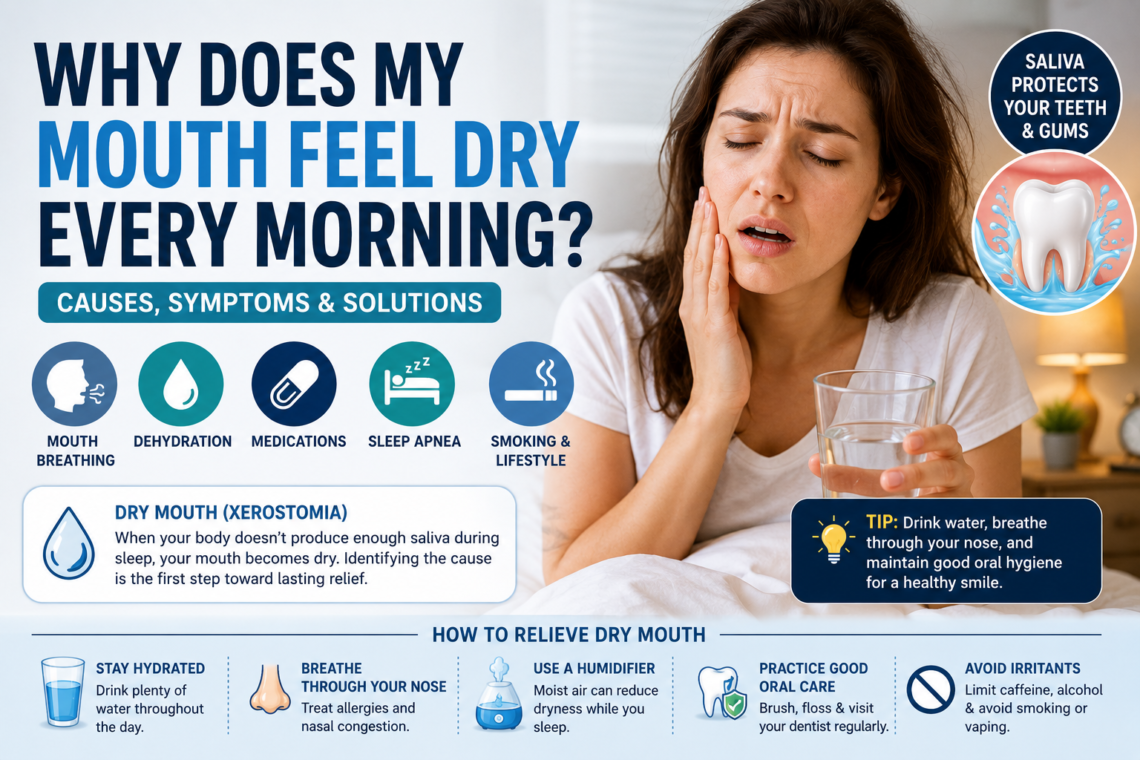
Do you wake up every morning feeling like Why Does My Mouth Feel Dry Every Morning?, sticky, or unusually thirsty? If so, you’re not alone. Morning dry mouth, medically known as xerostomia, is a common condition that affects people of all ages. While occasional dryness after a poor night’s sleep or dehydration may not be a cause for concern, waking up with a dry mouth every day could signal an underlying issue that deserves attention.
Saliva plays a vital role in maintaining oral health. It helps wash away food particles, neutralize harmful acids, control bacteria, aid digestion, and protect your teeth from decay. When your body doesn’t produce enough saliva during sleep, your mouth becomes dry, creating an environment where bacteria can thrive and increasing the risk of cavities, bad breath, gum disease, and oral infections.
There are many possible reasons why your mouth feels dry every morning. The most common include dehydration, mouth breathing, snoring, certain medications, smoking, sleep apnea, and medical conditions such as diabetes or Sjögren’s syndrome. Identifying the underlying cause is the first step toward finding the right treatment and preventing long-term oral health problems.
What Is Dry Mouth (Xerostomia)?
Dry mouth, also called xerostomia, occurs when your salivary glands don’t produce enough saliva to keep your mouth properly lubricated.
Everyone experiences a temporary dry mouth occasionally—for example, after exercising, sleeping with their mouth open, or becoming dehydrated. However, if you wake up with a dry mouth every morning, it’s important to determine what’s causing it.
A dry mouth is more than just an uncomfortable feeling. Without adequate saliva, your mouth loses one of its most important protective mechanisms, making it easier for bacteria to grow and damage your teeth and gums.
Why Does Your Mouth Feel Drier in the Morning?
Even in healthy individuals, saliva production naturally decreases during sleep. This reduction is completely normal and explains why many people wake up with a slightly dry mouth.
However, if saliva production becomes too low, or if you’re breathing through your mouth throughout the night, the dryness can become much more noticeable.
Several factors can make morning dry mouth worse, including:
- Sleeping with your mouth open
- Snoring
- Nasal congestion
- Dehydration
- Certain medications
- Smoking or vaping
- Alcohol consumption before bed
- Medical conditions that affect saliva production
Understanding which of these factors applies to you is the first step toward finding lasting relief.Maintaining a healthy mouth also depends on proper infection prevention during dental care. Discover how modern clinics protect patients by following best practices for infection control in dentistry, including effective sterilization and safety protocols.
Why Is Saliva So Important?
Many people don’t realize just how essential saliva is for maintaining a healthy mouth.
Saliva helps to:
- Wash away food particles
- Neutralize harmful acids
- Reduce bacterial growth
- Protect tooth enamel
- Lubricate oral tissues
- Aid swallowing and digestion
- Support clear speech
- Reduce the risk of cavities and gum disease
When saliva levels decrease, these protective functions are reduced, making your teeth and gums more vulnerable to disease. A healthy saliva flow helps protect your teeth from decay. Learn about the Role of Saliva in our guide on role of saliva in dental health.
Common Causes of Dry Mouth Every Morning
If you wake up with a dry mouth every day, the cause is often more than simply “not drinking enough water.” Several lifestyle habits, medications, sleep disorders, and medical conditions can reduce saliva production or cause excessive mouth breathing during sleep.
Let’s explore the most common reasons why your mouth feels dry every morning.
1. Mouth Breathing While Sleeping
One of the most common causes of morning dry mouth is sleeping with your mouth open.
Normally, breathing through your nose helps retain moisture inside your mouth. However, if you breathe through your mouth all night, saliva evaporates more quickly, leaving your mouth feeling dry when you wake up.
Common Reasons for Mouth Breathing
- Nasal congestion
- Seasonal allergies
- Deviated nasal septum
- Enlarged tonsils
- Chronic sinus infections
- Habitual mouth breathing
Signs You May Be a Mouth Breather
- Dry mouth every morning
- Chapped lips
- Sore throat after waking
- Bad breath
- Snoring
2. Dehydration
Your body needs enough water to produce saliva.
Even mild dehydration can reduce saliva flow during the night.
Common Causes of Dehydration
- Not drinking enough water
- Heavy exercise
- Hot weather
- Fever
- Vomiting or diarrhea
- Excessive caffeine intake
- Alcohol consumption
Signs of Dehydration
- Dry lips
- Headache
- Dark urine
- Fatigue
- Dizziness
- Increased thirst
3. Medications
Hundreds of prescription and over-the-counter medications list dry mouth as a possible side effect.
Some of the most common include:
- Antihistamines
- Antidepressants
- Blood pressure medications
- Diuretics
- Muscle relaxants
- Anxiety medications
- Sleeping pills
- Certain pain medications
Never stop taking prescribed medication without consulting your healthcare provider. If dry mouth is affecting your quality of life, ask whether alternative options are available.
4. Snoring and Sleep Apnea
People who snore or have obstructive sleep apnea (OSA) often breathe through their mouths while sleeping.
This prolonged airflow dries the oral tissues, leading to:
- Dry mouth
- Sore throat
- Morning headaches
- Poor sleep quality
- Daytime fatigue
If your dry mouth is accompanied by loud snoring, pauses in breathing, or excessive daytime sleepiness, discuss these symptoms with your healthcare provider.
5. Smoking and Vaping
Smoking and vaping can reduce saliva production and irritate the tissues inside your mouth.
People who smoke are also at greater risk of:
- Gum disease
- Tooth discoloration
- Bad breath
- Delayed healing
- Oral cancer
Quitting tobacco products can improve both saliva production and overall oral health.If smoking has contributed to gum problems, don’t ignore early symptoms such as bleeding gums. Learn more in our guide why-do-my-gums-bleed-when-i-brush-my-teeth?
6. Diabetes
Persistent dry mouth can sometimes be associated with diabetes, particularly when blood sugar levels remain elevated.
Common symptoms include:
- Increased thirst
- Frequent urination
- Fatigue
- Blurred vision
- Slow wound healing
If dry mouth is accompanied by these symptoms, seek medical evaluation.
7. Sjögren’s Syndrome
Sjögren’s syndrome is an autoimmune condition in which the immune system attacks the glands responsible for producing saliva and tears.
Common symptoms include:
- Persistent dry mouth
- Dry eyes
- Difficulty swallowing
- Tooth decay
- Fatigue
- Joint pain
Although relatively uncommon, Sjögren’s syndrome is an important cause of chronic xerostomia.
8. Aging
As people age, dry mouth becomes more common.
This isn’t necessarily caused by aging itself but rather by:
- Increased medication use
- Chronic medical conditions
- Reduced saliva production in some individuals
Older adults should have regular dental examinations because dry mouth increases the risk of cavities and gum disease.
9. Alcohol and Caffeine
Both alcohol and excessive caffeine can contribute to dehydration and worsen morning dry mouth.
Try to:
- Limit alcohol before bedtime.
- Drink water alongside caffeinated beverages.
- Stay hydrated throughout the day.
10. Stress and Anxiety
Stress doesn’t directly reduce saliva production in everyone, but it can contribute to:
- Mouth breathing
- Teeth grinding
- Poor sleep quality
- Dry mouth sensations
Managing stress through healthy sleep habits and relaxation techniques may help improve symptoms.
Warning Signs That Need Professional Attention
Schedule an appointment with your dentist or physician if you experience:
- Dry mouth lasting more than two weeks
- Difficulty swallowing
- Trouble speaking
- Frequent cavities
- White patches inside the mouth
- Persistent bad breath
- Bleeding gums
- Loose teeth
- Dry eyes along with dry mouth
- Extreme thirst or frequent urination
How Is Morning Dry Mouth Diagnosed?
If you experience dry mouth every morning for more than a few weeks, it’s important to determine the underlying cause rather than simply treating the symptom.
Your dentist or healthcare provider will begin by reviewing your medical history, current medications, lifestyle habits, and symptoms. They may also perform an oral examination to assess your saliva production and look for signs of tooth decay, gum disease, or oral infections.
A Dental Evaluation May Include:
- Reviewing your symptoms and health history
- Examining your teeth, gums, tongue, and oral tissues
- Checking for cavities caused by reduced saliva
- Looking for signs of gum disease
- Evaluating saliva production
- Reviewing prescription and over-the-counter medications
- Taking dental X-rays if tooth decay is suspected
If your dentist believes a medical condition is contributing to dry mouth, they may refer you to your primary care physician or another specialist for further testing.A healthy saliva flow helps protect your teeth from decay. Learn about the Role of Saliva in our guide on role-of-saliva-in-dental-health.
Professional Treatments for Dry Mouth
Treatment depends on the underlying cause. Once identified, your dentist or healthcare provider may recommend one or more of the following options.
1. Treat the Underlying Medical Condition
If dry mouth is caused by conditions such as diabetes, sleep apnea, allergies, or Sjögren’s syndrome, managing that condition often improves saliva production.
Examples include:
- Better blood sugar control for diabetes
- Allergy treatment to improve nasal breathing
- CPAP therapy for sleep apnea
- Medical treatment for autoimmune disorders
2. Medication Review
If a medication is causing dry mouth, your healthcare provider may:
- Adjust the dosage
- Change the timing of the medication
- Recommend an alternative medicine (when appropriate)
Never stop or change prescription medications without medical advice.
3. Saliva Substitutes and Oral Moisturizers
For people with persistent xerostomia, dentists may recommend:
- Artificial saliva sprays
- Oral moisturizing gels
- Saliva substitute rinses
- Mouth moisturizers designed for overnight use
These products help lubricate oral tissues and improve comfort, although they do not increase natural saliva production.A healthy saliva flow helps protect your teeth from decay.
4. Fluoride Treatments
Because dry mouth increases the risk of cavities, professional fluoride treatments can help strengthen enamel and reduce tooth decay.
Your dentist may also recommend:
- Prescription-strength fluoride toothpaste
- Fluoride mouth rinses
- More frequent preventive dental visits
Dry mouth can make teeth more sensitive by reducing saliva’s protective effects. If you also experience pain when drinking cold beverages, read why do my teeth hurt when i drink cold water? to learn about the causes and treatment of tooth sensitivity.
Home Remedies That Can Help
Many people can improve mild morning dry mouth with simple lifestyle changes.
Drink More Water
Staying hydrated throughout the day is one of the easiest ways to support healthy saliva production.
Tips:
- Drink water regularly.
- Keep a glass of water by your bedside.
- Sip water after waking if your mouth feels dry.
Avoid Alcohol Before Bed
Alcohol can contribute to dehydration and worsen dry mouth overnight.
Reducing alcohol intake—especially in the evening—may improve symptoms.
Limit Caffeine
Coffee, tea, and energy drinks can contribute to dehydration in some people.
If you consume caffeinated beverages, balance them with plenty of water.
Use a Humidifier
Running a humidifier while you sleep adds moisture to the air, which may reduce mouth and throat dryness—particularly in dry climates or during winter.
Chew Sugar-Free Gum
Chewing sugar-free gum or sucking on sugar-free lozenges during the day can stimulate saliva production.
Choose products sweetened with xylitol, which may also help reduce the risk of cavities.
Practice Good Oral Hygiene
Daily oral care becomes even more important when saliva production is reduced.
Brush twice daily using fluoride toothpaste.
Floss once a day.
Visit your dentist regularly.
Good oral hygiene helps reduce the risk of gum disease, which can become more severe in people with chronic dry mouth.
Best Practices for a Healthy, Moist Mouth
To reduce dry mouth and protect your oral health:
- Stay well hydrated.
- Maintain excellent oral hygiene.
- Avoid tobacco products.
- Manage allergies and nasal congestion.
- Follow your healthcare provider’s advice about medications.
- Treat sleep apnea or chronic snoring if present.
- Visit your dentist regularly for preventive care.
- Address persistent dry mouth early before complications develop.
A healthy saliva flow helps protect your teeth from decay.
Frequently Asked Questions (FAQs)
1. Why does my mouth feel dry every morning?
The most common reasons include mouth breathing during sleep, dehydration, medication side effects, snoring, sleep apnea, smoking, and reduced saliva production. Some medical conditions, such as diabetes or Sjögren’s syndrome, can also contribute.
2. Is it normal to wake up with a dry mouth occasionally?
Yes. Saliva production naturally decreases while you sleep, so mild dryness in the morning can be normal. However, persistent dry mouth every day should be evaluated to determine the underlying cause.
3. Can dehydration cause morning dry mouth?
Yes. Not drinking enough water during the day is one of the most common causes of temporary dry mouth. Increasing your fluid intake may help reduce symptoms.
4. Which medications commonly cause dry mouth?
Many medications can reduce saliva production, including antihistamines, antidepressants, blood pressure medications, muscle relaxants, diuretics, and some pain medications. Never stop taking a prescribed medication without consulting your healthcare provider.
5. Can dry mouth damage my teeth?
Yes. Saliva helps protect tooth enamel by neutralizing acids and washing away food particles. Without enough saliva, your risk of cavities, gum disease, and tooth sensitivity increases.
Conclusion
If you’ve been wondering, “Why does my mouth feel dry every morning?”, the answer could range from a simple habit—such as sleeping with your mouth open—to an underlying medical condition that requires attention.
Because saliva is essential for protecting your teeth and gums, persistent dry mouth should never be ignored. By identifying the cause early, staying hydrated, maintaining excellent oral hygiene, and seeking professional advice when needed, you can reduce discomfort and lower your risk of tooth decay, gum disease, and other oral health complications.
If your symptoms continue despite lifestyle changes, don’t delay seeking care. A dentist or healthcare provider can determine the underlying cause and recommend the most effective treatment to help you wake up with a healthier, more comfortable mouth.
Call to Action
Don’t Ignore Persistent Morning Dry Mouth Explore Dentistry Supplier
Occasional dryness after a poor night’s sleep may not be a concern, but persistent dry mouth every morning deserves professional attention. Early evaluation can help identify the cause, relieve uncomfortable symptoms, and protect your long-term oral health.