Introduction
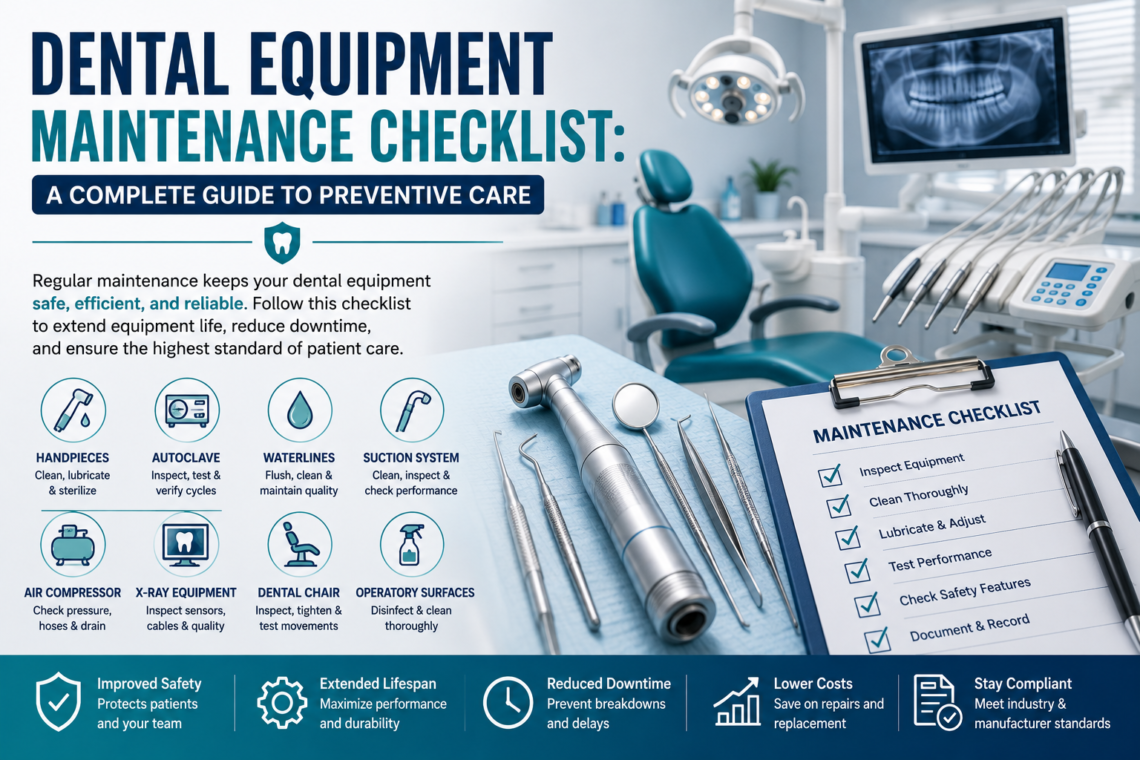
Every piece of equipment in a dental clinic plays a critical role in delivering safe, efficient, and high-quality patient care. From dental chairs and handpieces to sterilizers and digital imaging systems, these investments require routine maintenance to perform reliably and meet infection control standards. Without a structured dental equipment maintenance checklist, minor issues such as worn seals, clogged waterlines, or poorly lubricated handpieces can quickly become expensive repairs or unexpected equipment failures.
Preventive maintenance not only extends the lifespan of equipment but also reduces downtime, improves clinical efficiency, and supports compliance with manufacturer recommendations and safety guidelines. Organizations such as the American Dental Association emphasize regular safety checks and maintenance to protect both patients and dental teams.
Why a Dental Equipment Maintenance Checklist Is Important
A structured maintenance checklist helps ensure that every critical piece of equipment is inspected, cleaned, tested, and serviced at the appropriate intervals. Instead of waiting for equipment to fail, preventive maintenance allows dental practices to identify small issues before they become costly problems.
Benefits of Regular Maintenance
- Improves patient safety
- Extends equipment lifespan
- Reduces unexpected breakdowns
- Maintains treatment efficiency
- Supports infection control protocols
- Helps meet regulatory and manufacturer requirements
- Lowers long-term repair and replacement costs
- Protects your investment in dental technology
Handpiece Maintenance Checklist
High-speed and low-speed handpieces operate at extremely high speeds and require proper care after every use.
Daily Tasks
- Clean external surfaces.
- Flush internal waterlines.
- Lubricate according to manufacturer recommendations.
- Sterilize before reuse.
- Inspect burs for wear or damage.
- Check for unusual noise or vibration.
- Verify water spray is functioning properly.
For more detailed guidance, see Dental Handpiece Maintenance: The Complete Guide for Long-Lasting Performance.
Autoclave Maintenance Checklist
Sterilization equipment is essential for infection prevention and patient safety.
Daily Tasks
- Clean the chamber.
- Drain and replace water if recommended.
- Inspect door seals.
- Check sterilization indicators.
- Verify cycle completion.
- Remove debris from trays.
- Record sterilization cycles in the maintenance log.
For additional information, read Dental Instrument Sterilization: Autoclave Guidelines Explained.
Dental Unit Waterline Maintenance
Dental unit waterlines can develop biofilm if not properly maintained.
Daily Checklist
- Flush waterlines at the start of the day.
- Flush between patients according to clinic protocols.
- Flush at the end of the day.
- Check water quality.
- Use approved waterline treatment products.
- Inspect tubing for leaks.
Maintaining clean water lines helps reduce microbial contamination and supports infection control.
Suction and Evacuation System Maintenance
A properly functioning suction system improves visibility and helps remove saliva, blood, and debris during procedures.
Air Compressor Inspection
Compressed air powers many dental devices.
Daily Inspection
- Check operating pressure.
- Listen for unusual noises.
- Inspect hoses.
- Drain moisture if required.
- Verify adequate airflow.
Digital X-Ray Equipment
Digital imaging systems require routine inspection to maintain image quality.
Daily Tasks
- Clean sensor holders.
- Inspect cables.
- Verify image quality.
- Clean monitor screens.
- Check software functionality.
- Store sensors safely.
Operatory Surface Cleaning
Every treatment room should be thoroughly disinfected throughout the day.
Daily Cleaning Checklist
- Dental chair
- Delivery unit
- Light handles
- Instrument trays
- Countertops
- Keyboard covers
- X-ray control panels
- Drawer handles
- Door handles
- Computer mouse
Daily Maintenance Checklist Table Common Daily Maintenance Mistakes
- Skipping waterline flushing.
- Forgetting to lubricate handpieces.
- Using incorrect cleaning chemicals.
- Ignoring small leaks or unusual noises.
- Failing to document completed maintenance.
- Delaying minor repairs until equipment fails.
Weekly Dental Equipment Maintenance Checklist
Weekly maintenance focuses on deeper cleaning, performance testing, and early detection of potential issues.
Dental Chair
- Inspect hydraulic and electrical components for visible leaks or damage.
- Tighten loose screws, armrests, and accessories.
- Clean hard-to-reach areas around the chair base.
- Test all chair positions and movements.
Handpieces
- Inspect bearings for excessive noise or vibration.
- Check water spray patterns.
- Verify chuck mechanism performance.
- Replace worn burs.
Suction System
- Deep clean evacuation lines using an approved cleaning solution.
- Inspect hoses and connectors.
- Clean filters and traps.
- Verify suction performance.
Sterilization Equipment
- Inspect trays and racks.
- Clean external air vents.
- Check the door gasket condition.
- Review sterilization cycle records for irregularities.
Quarterly Maintenance Checklist
Quarterly maintenance generally involves more detailed inspections and equipment calibration.
Recommended Tasks
✔ Professional inspection of dental chairs.
✔ Calibrate digital X-ray systems.
✔ Inspect LED operating lights.
✔ Service air compressors.
✔ Inspect vacuum pumps.
✔ Verify equipment software updates.
✔ Test backup power systems.
✔ Review infection-control procedures.
Annual Maintenance Checklist
Annual servicing should be performed by qualified technicians or authorized service providers whenever recommended by the manufacturer.
Annual Preventive Maintenance
- Complete professional equipment inspection.
- Replace worn bearings.
- Inspect electrical systems.
- Calibrate imaging equipment.
- Service compressors and vacuum systems.
- Verify autoclave performance with biological monitoring.
- Replace aging tubing and seals.
- Review equipment warranties.
- Update maintenance records.
- Evaluate equipment replacement needs.
For guidance on when equipment or instruments may need replacement, see How Long Do Dental Instruments Last Before Replacement?.
Signs Your Dental Equipment Needs Professional Service
Even with routine maintenance, equipment may eventually require professional attention.
Watch for these warning signs:
- Unusual noises or vibrations
- Reduced suction performance
- Slow chair movement
- Frequent system errors
- Water leaks
- Inconsistent sterilization cycles
- Poor image quality from digital X-ray systems
- Excessive handpiece heat
- Repeated equipment shutdowns
Ignoring these signs can result in more extensive repairs and costly downtime.
Best Practices for Dental Equipment Maintenance
Following best practices helps maximize equipment performance and longevity.
Recommended Practices
- Follow the manufacturer’s maintenance schedule.
- Use only approved cleaning and lubricating products.
- Train all staff on proper equipment handling.
- Keep detailed maintenance records.
- Schedule preventive servicing before equipment failure occurs.
- Replace worn parts promptly.
- Maintain a clean and organized sterilization area.
- Perform regular safety inspections.
Common Maintenance Mistakes to Avoid
Avoid these common errors that can shorten equipment lifespan:
- Skipping preventive maintenance.
- Using incompatible cleaning chemicals.
- Overlooking minor leaks or unusual sounds.
- Ignoring manufacturer maintenance recommendations.
- Failing to document maintenance activities.
- Delaying professional servicing.
- Allowing untrained staff to perform complex repairs.
For broader purchasing mistakes that can affect long-term equipment performance, read Common Mistakes Clinics Make When Buying Dental Instruments.
Pros and Cons of Preventive Dental Equipment Maintenance
| Pros | Cons |
|---|---|
| Extends equipment lifespan | Requires dedicated staff time |
| Reduces unexpected breakdowns | Preventive servicing has ongoing costs |
| Improves patient safety | Staff training is necessary |
| Supports infection control | Maintenance schedules must be consistently followed |
| Reduces long-term repair expenses | Some repairs require specialized technicians |
| Helps maintain manufacturer warranties | Equipment may require temporary downtime during servicing |
| Improves clinic efficiency | Documentation adds administrative work |
Myths vs. Facts About Dental Equipment Maintenance
| Myth | Fact |
|---|---|
| Equipment only needs attention when it breaks. | Routine preventive maintenance helps prevent failures before they occur. |
| Cleaning is enough to maintain equipment. | Cleaning is only one part of maintenance; inspection, lubrication, calibration, and servicing are equally important. |
| Every piece of equipment follows the same maintenance schedule. | Maintenance intervals vary depending on the equipment type and manufacturer recommendations. |
| Maintenance records are optional. | Proper documentation supports regulatory compliance, warranty claims, and preventive maintenance planning. |
| Preventive maintenance is expensive. | Regular maintenance usually costs much less than major repairs or equipment replacement. |
Equipment Replacement Checklist
Even with proper maintenance, equipment eventually reaches the end of its service life.
Consider replacement if you notice:
- Frequent breakdowns
- Increasing repair costs
- Difficulty obtaining replacement parts
- Reduced performance or reliability
- Failure to meet current safety standards
- Outdated technology affecting workflow
- Manufacturer support has ended
Replacing aging equipment at the right time can improve efficiency, reduce maintenance expenses, and enhance patient care.
Frequently Asked Questions (FAQs)
1. What is a dental equipment maintenance checklist?
A dental equipment maintenance checklist is a structured schedule of inspection, cleaning, lubrication, calibration, and servicing tasks that helps keep dental equipment operating safely and efficiently.
2. Why is preventive maintenance important for dental equipment?
Preventive maintenance reduces equipment failures, extends service life, improves patient safety, minimizes repair costs, and supports consistent clinical performance.
3. How often should dental equipment be maintained?
Maintenance frequency depends on the equipment and manufacturer recommendations. Daily cleaning, weekly inspections, monthly preventive checks, quarterly servicing, and annual professional maintenance are common best practices.
4. Which dental equipment requires daily maintenance?
Equipment commonly maintained every day includes dental chairs, handpieces, autoclaves, suction systems, dental unit waterlines, digital X-ray sensors, and operatory surfaces.
5. What should be included in a maintenance log?
A maintenance log should record the date, equipment name, maintenance performed, responsible staff member, identified issues, corrective actions, and the next scheduled service date.
Conclusion
Implementing a comprehensive dental equipment maintenance checklist is one of the most effective ways to ensure the safety, reliability, and longevity of your dental equipment. From daily cleaning and inspections to annual professional servicing, each maintenance task plays a vital role in reducing downtime, preventing costly repairs, and maintaining high standards of patient care.
By establishing clear maintenance schedules, documenting every service activity, and training staff on proper equipment care, dental practices can improve operational efficiency while protecting valuable investments. A proactive maintenance strategy not only supports regulatory compliance but also helps create a more productive, dependable, and patient-focused clinical environment.
Call to Action
Keeping your dental equipment in peak condition starts with using high-quality products backed by dependable service and support.
Whether you’re equipping a new practice, replacing aging equipment, or developing a preventive maintenance program, our team can help you find reliable dental chairs, sterilization equipment, handpieces, imaging systems, and clinical instruments designed for long-term performance.