Walking down the oral care aisle can be overwhelming. With shelves filled with traditional manual toothbrushes, oscillating electric models, and advanced sonic toothbrushes, it’s natural to wonder: Which toothbrush actually cleans your teeth better?
The good news is that both manual and electric toothbrushes can effectively remove plaque and maintain healthy teeth and gums when used correctly. However, research suggests that certain electric toothbrushes may provide additional benefits for some people, particularly those with braces, limited hand mobility, or difficulty maintaining proper brushing technique.
Choosing the right toothbrush isn’t simply about buying the most expensive option. Your brushing habits, gum health, dental history, and personal preferences all play an important role in achieving excellent oral hygiene.
In this comprehensive guide, we’ll compare manual vs electric toothbrushes based on scientific evidence, discuss their advantages and disadvantages, explain who benefits most from each type, and help you decide which option best suits your needs.
Why Choosing the Right Toothbrush Matters
Brushing is your first line of defense against:
- Dental plaque
- Tooth decay
- Gum disease
- Bad breath
- Tartar buildup
An effective toothbrush helps remove plaque before it hardens into tartar and contributes to oral health problems.
However, even the best toothbrush cannot compensate for poor brushing technique or inconsistent oral hygiene.
What Is a Manual Toothbrush?
A manual toothbrush is the traditional toothbrush most people have used for years.
It consists of:
- A handle
- A toothbrush head
- Soft, medium, or hard bristles
Dentists generally recommend soft-bristled manual toothbrushes because they clean effectively while minimizing the risk of enamel wear and gum damage.
Advantages of Manual Toothbrushes
- Affordable
- Widely available
- Lightweight
- No batteries or charging required
- Easy to travel with
- Available in many sizes and designs
When used with proper technique for two minutes, a manual toothbrush can provide excellent plaque removal.
What Is an Electric Toothbrush?
An electric toothbrush uses a powered motor to move the brush head automatically.
Common types include:
- Oscillating-rotating toothbrushes
- Sonic toothbrushes
- Ultrasonic toothbrushes
These rapid brush movements help remove plaque while requiring less manual movement from the user.
Many modern electric toothbrushes also include features such as:
- Two-minute timers
- Pressure sensors
- Multiple cleaning modes
- Bluetooth tracking
- Rechargeable batteries
These features can encourage better brushing habits for some users. Healthy brushing habits are essential for preventing gum disease. If you notice bleeding while brushing, read our guide Why Do My Gums Bleed When I Brush My Teeth? to understand the causes and learn how to protect your gums.
Does the Type of Toothbrush Affect Tooth Sensitivity?
The toothbrush itself isn’t usually the cause of tooth sensitivity. However, brushing too aggressively—especially with hard bristles—can wear away enamel and contribute to gum recession over time.
Whether you choose a manual or electric toothbrush:
- Use a soft-bristled brush.
- Avoid excessive pressure.
- Brush gently using proper technique.
Many electric toothbrushes include pressure sensors that alert you if you’re brushing too hard, helping reduce the risk of enamel wear.
If you’ve noticed discomfort while drinking cold beverages, brushing technique may be one contributing factor. Learn more in Why Do My Teeth Hurt When I Drink Cold Water?, where we explain common causes of tooth sensitivity and available treatment options.
What Does the Research Say?
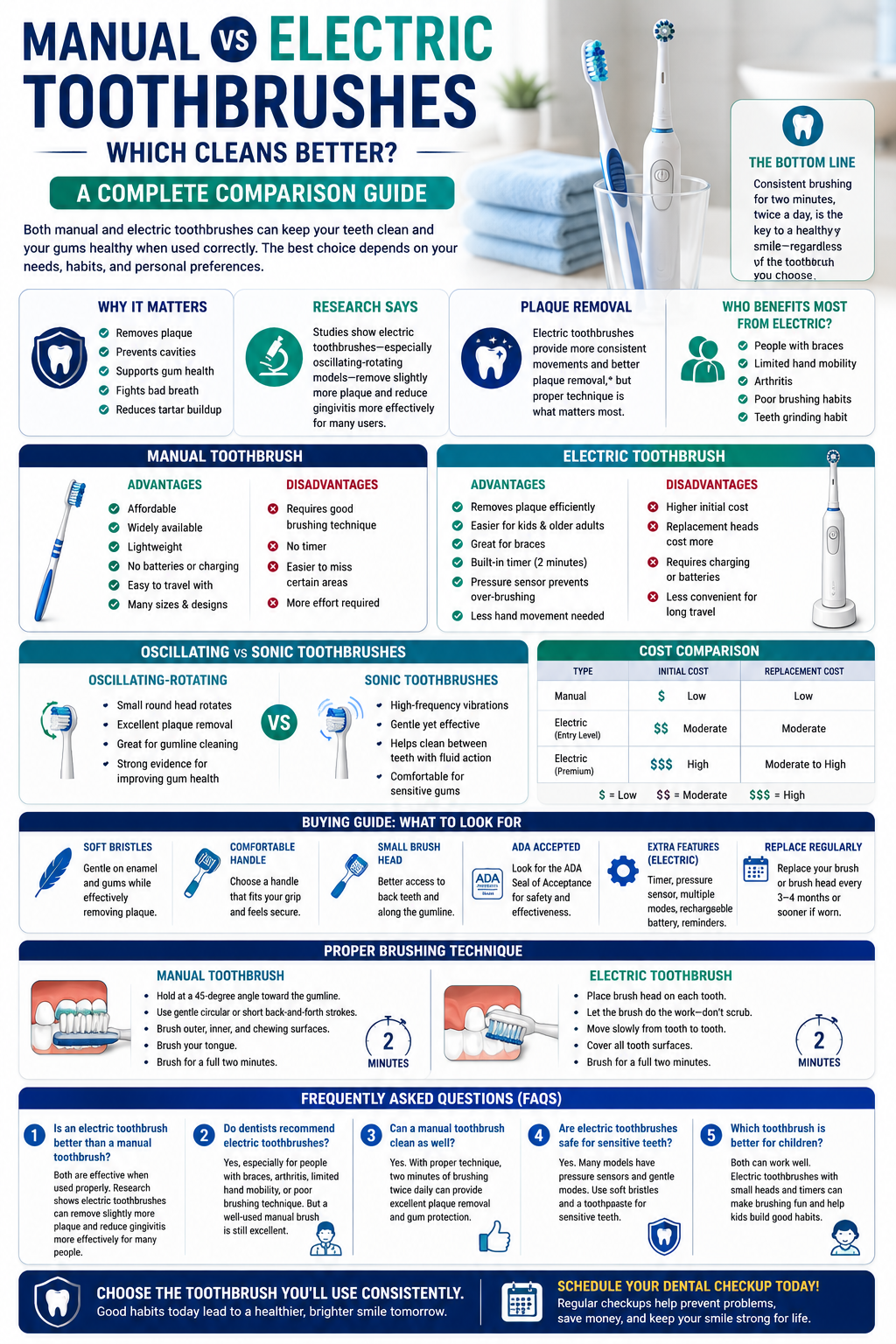
Both manual and electric toothbrushes are effective when used correctly. However, multiple clinical studies and systematic reviews have found that powered toothbrushes—particularly oscillating-rotating models—generally remove slightly more plaque and reduce gingivitis more effectively than manual toothbrushes.
It’s important to remember that the difference is often influenced by how well a person brushes. A manual toothbrush used with excellent technique can outperform an electric toothbrush used incorrectly.
Key Findings from Research
- Electric toothbrushes generally remove more plaque over time.
- Oscillating-rotating toothbrushes have the strongest evidence for improving gum health.
- Sonic toothbrushes are also effective and comfortable for many users.
- Manual toothbrushes remain an excellent choice when used properly for two minutes twice daily.
Plaque Removal Comparison
Dental plaque is a sticky film of bacteria that constantly forms on your teeth.
If it isn’t removed effectively, it can lead to:
- Tooth decay
- Gingivitis
- Gum disease
- Bad breath
- Tartar buildup
Manual Toothbrush
A manual toothbrush can remove plaque effectively when you:
- Brush for two minutes
- Use proper technique
- Reach every tooth surface
- Replace the toothbrush regularly
Electric Toothbrush
Electric toothbrushes make hundreds or even thousands of brush movements every minute.
Advantages include:
- More consistent brushing
- Better cleaning around the gumline
- Easier access to back teeth
- Less dependence on brushing technique
Many users also find that built-in timers help them brush for the recommended amount of time.
Which Toothbrush Is Better for Gum Health?
Healthy gums are just as important as healthy teeth.
Removing plaque from the gumline helps prevent:
- Gingivitis
- Bleeding gums
- Gum recession
- Periodontal disease
Research suggests that powered toothbrushes may reduce gingivitis slightly more effectively because they maintain consistent brushing motions.
However, aggressive brushing with either toothbrush can damage gum tissue. If your gums bleed during brushing, it could be a sign of gingivitis rather than brushing too hard.
Manual Toothbrush Pros and Cons
Advantages
- Affordable
- Available almost everywhere
- Lightweight
- No charging required
- Ideal for travel
- Easy to replace
Disadvantages
- Requires good brushing technique
- No timer
- Easier to miss certain areas
- More effort required
Electric Toothbrush Pros and Cons
Advantages
- Removes plaque efficiently
- Easier for children and older adults
- Helpful for people with braces
- Built-in timer encourages proper brushing time
- Pressure sensors help prevent aggressive brushing
- Less hand movement required
Disadvantages
- Higher initial cost
- Replacement brush heads cost more
- Requires charging or batteries
- Less convenient for extended travel
Oscillating vs Sonic Toothbrushes
Not all electric toothbrushes work the same way.
Oscillating-Rotating Toothbrushes
These brushes use small rotating brush heads that move back and forth rapidly.
Best for:
- Plaque removal
- Gumline cleaning
- Everyday oral hygiene
Sonic Toothbrushes
Sonic toothbrushes vibrate at very high frequencies.
Benefits include:
- Gentle cleaning
- Comfortable for sensitive gums
- Effective cleaning between teeth using fluid movement
Both technologies are effective, and choosing between them often comes down to personal preference and comfort.
Which Toothbrush Is Better for Sensitive Teeth?
People with tooth sensitivity often worry that brushing will make the discomfort worse.
In reality, the most important factors are:
- Soft bristles
- Gentle pressure
- Proper brushing technique
Many electric toothbrushes include pressure sensors that help prevent over-brushing.
Cost Comparison
| Feature | Manual | Electric |
| Initial Cost | Low | Higher |
| Replacement Cost | Low | Brush heads purchased periodically |
| Charging Needed | No | Yes (for rechargeable models) |
| Long-Term Value | Excellent | Good, depending on usage |
While electric toothbrushes cost more initially, many users consider the additional features and convenience worthwhile.
Who Should Choose a Manual Toothbrush?
A manual toothbrush is an excellent choice if you:
- Have good brushing technique
- Brush consistently for two minutes
- Prefer a simple oral care routine
- Travel frequently
- Want a budget-friendly option
Who Should Choose an Electric Toothbrush?
An electric toothbrush may be especially beneficial if you:
- Have braces
- Have limited hand mobility
- Have arthritis
- Tend to brush too hard
- Frequently miss areas while brushing
- Want extra guidance through timers and pressure sensors
Whether you use a manual or electric toothbrush, maintaining saliva flow is important for protecting your teeth. Learn more in Why Does My Mouth Feel Dry Every Morning?, where we explain how dry mouth affects oral health.
Buying Guide: What to Look for in a Toothbrush
Whether you choose a manual or electric toothbrush, look for these features:
Soft Bristles
Soft bristles effectively remove plaque while protecting your enamel and gums.
Comfortable Handle
Choose a handle that provides a secure, comfortable grip.
Small Brush Head
A smaller brush head makes it easier to reach:
- Back molars
- Along the gumline
- Tight spaces between teeth
ADA Acceptance
Look for toothbrushes that carry the ADA Seal of Acceptance, indicating they have been evaluated for safety and effectiveness.
Extra Features (Electric Toothbrushes)
Some electric toothbrushes include:
- Two-minute timer
- Pressure sensor
- Multiple brushing modes
- Rechargeable battery
- Brush head replacement reminders
Choose features that you’ll actually use rather than paying for unnecessary extras.
Proper Brushing Technique
Whether you’re using a manual or electric toothbrush:
Manual Toothbrush
- Hold the brush at approximately a 45-degree angle toward the gumline.
- Use gentle circular or short back-and-forth strokes.
- Brush the outer, inner, and chewing surfaces of every tooth.
- Brush your tongue.
- Continue for two minutes.
Electric Toothbrush
- Place the brush head against each tooth.
- Let the toothbrush do the work—avoid scrubbing.
- Slowly guide the brush from tooth to tooth.
- Cover all tooth surfaces.
- Brush for the full two minutes.
Is an Electric Toothbrush Worth the Money?
For many people, the answer is yes, particularly if the extra features help improve brushing habits.
An electric toothbrush may be worth the investment if you:
- Frequently miss areas while brushing
- Have braces
- Have arthritis or reduced hand mobility
- Tend to brush too hard
- Want reminders and timers to improve consistency
If you already brush thoroughly with a manual toothbrush, you may not notice a dramatic difference in oral health outcomes.
Dentist Recommendations
Most dentists agree on several important points:
- Brush twice daily.
- Brush for two minutes.
- Use fluoride toothpaste.
- Replace toothbrushes every three to four months.
- Floss every day.
- Schedule regular dental checkups.
Whether you use a manual or electric toothbrush, consistency and proper technique remain the foundation of good oral health.
Frequently Asked Questions (FAQs)
1. Is an electric toothbrush better than a manual toothbrush?
Both are effective when used properly. However, research suggests that electric toothbrushes—especially oscillating-rotating models—can remove slightly more plaque and reduce gingivitis more effectively for many users.
2. Do dentists recommend electric toothbrushes?
Many dentists recommend electric toothbrushes for people with braces, arthritis, limited hand mobility, or difficulty maintaining proper brushing technique. However, they also emphasize that a manual toothbrush used correctly is an excellent option.
3. Can a manual toothbrush clean as well as an electric toothbrush?
Yes. A manual toothbrush can clean just as effectively when you use proper brushing technique, brush for the recommended two minutes, and reach all tooth surfaces.
4. Are electric toothbrushes safe for sensitive teeth?
Yes. Many electric toothbrushes include pressure sensors and sensitive cleaning modes that can help reduce excessive brushing force. Pairing them with a soft-bristled brush head and a toothpaste designed for sensitive teeth may improve comfort.
5. Which toothbrush is better for children?
Both manual and electric toothbrushes can be suitable for children. Electric toothbrushes with small brush heads and built-in timers may encourage proper brushing habits, but supervision and technique remain important.
Conclusion
The debate over manual vs electric toothbrushes often comes down to personal preference, lifestyle, and brushing habits rather than one option being universally superior.
If you have excellent brushing technique, a manual toothbrush can keep your teeth and gums healthy. If you struggle with brushing consistency, have braces, limited hand mobility, or simply appreciate features like timers and pressure sensors, an electric toothbrush may offer additional benefits.
Regardless of your choice, maintaining a consistent oral hygiene routine is what matters most. Brush twice daily with fluoride toothpaste, floss every day, replace your toothbrush regularly, and schedule routine dental checkups. These habits will do more for your oral health than any single toothbrush alone.
Call to Action
Choose the Toothbrush You’ll Use Consistently
Whether you prefer a manual or electric toothbrush, your daily habits have the greatest impact on your oral health. Focus on brushing gently for two minutes, flossing every day, and visiting your dentist regularly for preventive care.
If you’re unsure which toothbrush is right for your specific needs—whether you have braces, sensitive teeth, gum disease, or limited hand mobility—talk to your dentist. A personalized recommendation can help you maintain a healthier smile for years to come.