Quick Answer
Teeth grinding, or bruxism, affects an estimated 10–15% of adults and up to 30% of children. Most cases occur during sleep and go undiagnosed until a dentist notices worn enamel, fractured teeth, or jaw muscle enlargement. Chronic grinding destroys tooth structure, triggers headaches, damages jaw joints, and can lead to tooth loss. Treatment ranges from custom night guards that protect teeth to stress management, bite adjustment, and in severe cases, Botox injections into jaw muscles. The key is recognizing signs early before irreversible damage accumulates.
What This Article Covers
-
Why most people do not know they grind their teeth
-
Physical signs dentists look for
-
Root causes beyond stress
-
Treatment options ranked by effectiveness
-
Long-term consequences of untreated bruxism
-
When to seek professional evaluation
Why Bruxism Often Goes Undiagnosed
Sleep bruxism happens unconsciously. Unless a sleep partner complains about grinding noises, you may have no idea it is occurring. Daytime clenching is more noticeable but often dismissed as a habit rather than a medical condition.
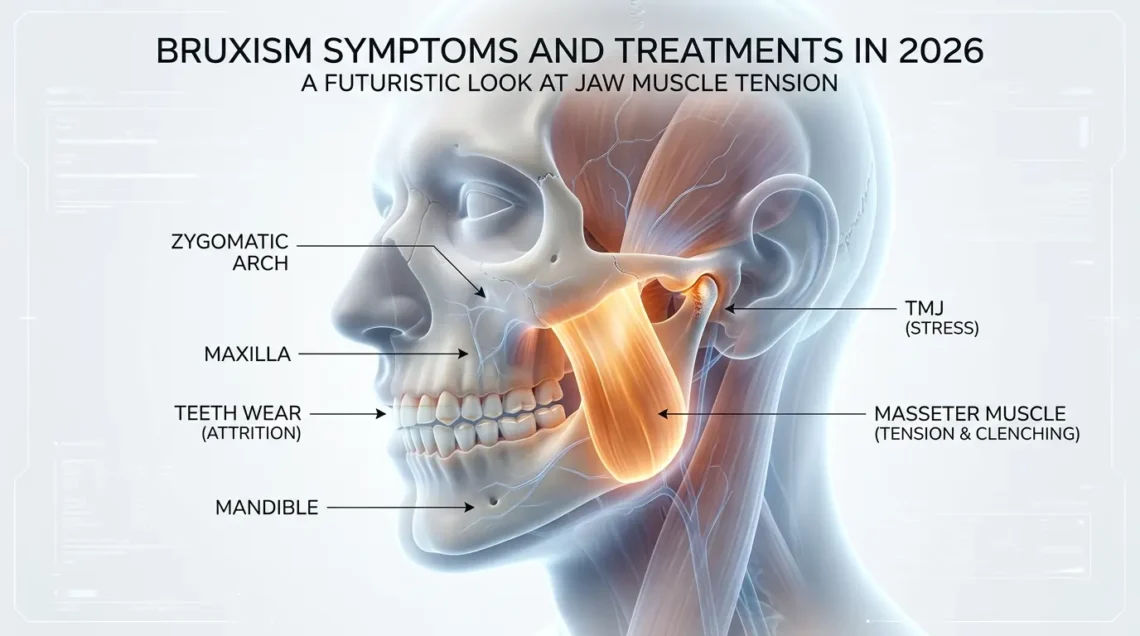
Many patients first learn about their grinding during routine dental examinations. Dentists spot patterns that patients cannot feel or see themselves. Worn chewing surfaces, microfractures in enamel, flattened cusps, and gum recession at the necks of teeth all tell a story of repetitive excessive force.
By the time symptoms like jaw pain or headaches become prominent, significant damage may already exist. Early detection through dental visits prevents the progressive destruction that makes bruxism expensive and debilitating.
Dr. Chan: “I have patients who come in for a cleaning and leave with a night guard prescription they never expected. Their teeth are ground down to nubs, but they feel fine. Then I show them photographs of what their teeth looked like five years ago, and they understand. Bruxism is silent until it isn’t.”
Physical Signs Your Dentist Looks For
Tooth Damage
-
Flat chewing surfaces where pointed cusps have worn smooth
-
Microfractures and craze lines in enamel that catch light
-
Chipped or fractured edges on anterior teeth or restorations
-
Exposed dentin appearing as yellowish bands where enamel has thinned
-
Failed restorations like crowns or fillings that break under excessive force
-
Tooth mobility in severe cases where periodontal ligaments stretch
Jaw and Muscle Changes
-
Masseter muscle hypertrophy — enlarged jaw muscles visible as squared facial contours
-
Temporalis tenderness — sore temples when pressed
-
Limited mouth opening upon waking, improving after warm compresses
-
Clicking, popping, or locking of the temporomandibular joint (TMJ)
-
Morning jaw fatigue or soreness that eases through the day
Other Indicators
-
Partner reports grinding noises during sleep, often loud enough to disturb sleep
-
Frequent headaches upon waking, localized to temples or behind eyes
-
Ear pain without ear infection, referred from jaw muscles
-
Neck and shoulder tension from chronic clenching posture
-
Cheek biting or scalloped tongue edges from pressure against teeth
Root Causes Beyond Stress
Stress and anxiety are common triggers but not the whole story. Understanding all contributing factors helps target treatment effectively.
Sleep disorders significantly correlate with bruxism. Obstructive sleep apnea causes arousal responses that include jaw muscle activation. Treating sleep apnea with CPAP or oral appliances often reduces grinding frequency. If you snore, gasp during sleep, or wake unrefreshed, a sleep study may reveal the underlying driver.
Malocclusion and bite discrepancies create instability that the jaw attempts to resolve through grinding. High spots on restorations, missing teeth, or natural misalignment trigger reflexive clenching as the neuromuscular system seeks comfortable jaw position.
Medications can induce or worsen bruxism. Selective serotonin reuptake inhibitors (SSRIs) for depression and anxiety are frequent culprits. Stimulants, including ADHD medications and recreational drugs like cocaine and ecstasy, increase muscle activity. Discuss medication side effects with your prescribing physician if grinding began after starting a new drug.
Neurological conditions including Parkinson’s disease, Huntington’s disease, and brain injuries sometimes present with bruxism as a symptom.
Lifestyle factors compound the problem. Caffeine and alcohol consumption, particularly in the evening, increase arousal and muscle tone during sleep. Smoking reduces sleep quality and alters muscle activity patterns.
Genetic predisposition plays a role. Bruxism runs in families, suggesting inherited traits in jaw structure, muscle physiology, or stress response.
Treatment Options Ranked by Effectiveness
Custom Night Guard (Occlusal Splint)
The gold standard for protecting teeth from grinding damage. Your dentist takes impressions and fabricates a hard or dual-laminate appliance that covers either upper or lower teeth. It distributes forces evenly, prevents tooth-to-tooth contact, and reduces muscle activity intensity.
Types:
-
Hard acrylic splints — most durable, best for severe grinders, longest lifespan (3–5 years)
-
Dual-laminate splints — hard exterior, soft interior; balance comfort and durability (2–4 years)
-
Soft vinyl guards — most comfortable, least durable, suitable for mild cases (6–18 months)
Cost: $300–$800 depending on material and laboratory quality. Over-the-counter boil-and-bite guards cost $20–$50 but fit poorly, cause gum irritation, and may alter bite with prolonged use. Custom guards are worth the investment.
Limitations: Night guards protect teeth but do not stop grinding. They are management, not cure. Some patients grind through or destroy even hard splints.
Stress Management and Behavioral Therapy
Since stress triggers many cases, addressing underlying anxiety reduces grinding frequency and intensity.
Cognitive behavioral therapy helps identify and modify stress responses. Biofeedback devices worn at night emit sounds or vibrations when muscle activity exceeds thresholds, training awareness and reduction over time.
Relaxation techniques before bed — progressive muscle relaxation, meditation, breathing exercises — lower arousal levels. Consistent sleep schedules improve sleep architecture and reduce bruxism episodes.
Physical therapy for jaw muscles teaches stretching, massage, and posture correction that reduces chronic tension.
Bite Adjustment and Orthodontics
When malocclusion drives bruxism, selective grinding of high spots (occlusal equilibration) or orthodontic correction creates stable jaw positions that reduce reflexive clenching. This requires precise analysis and should not be attempted without thorough diagnostic workup.
Medication
Muscle relaxants like cyclobenzaprine taken before bed reduce muscle tone temporarily. They are not suitable for long-term use due to dependence and side effects.
Botulinum toxin (Botox) injections into masseter muscles reduce grinding force by partially paralyzing the muscle. Effects last 3–6 months. This is increasingly popular for severe bruxism unresponsive to other treatments, though it is off-label for this use and requires experienced providers.
Medication changes may help when SSRIs or stimulants trigger grinding. Never discontinue prescribed medications without consulting your physician. Alternative medications within the same class sometimes reduce side effects.
Treatment of Underlying Sleep Apnea
For patients with concurrent sleep apnea, mandibular advancement devices or CPAP therapy often reduce bruxism significantly. Addressing the primary sleep disorder resolves the secondary grinding in many cases.
Long-Term Consequences of Untreated Bruxism
Ignoring bruxism does not make it disappear. The damage compounds silently until intervention becomes complex and expensive.
Tooth destruction progresses from enamel wear to dentin exposure, then to pulp involvement requiring root canal, and finally to structural failure necessitating crown, extraction, or implant. Severe grinders can wear teeth down to gumline within years.
TMJ disorders develop as excessive force damages the joint disc and surrounding structures. Chronic pain, limited opening, and joint degeneration may require surgical intervention.
Facial pain and headache become chronic conditions affecting quality of life, sleep, and work productivity.
Sleep disruption from grinding noises and arousal responses impairs restorative sleep, contributing to daytime fatigue, cognitive impairment, and mood disturbances.
Failed restorations require repeated replacement. Crowns, veneers, and fillings break under forces they were not designed to withstand. Dental work in bruxers has significantly shorter lifespan without protective measures.
When to Seek Professional Evaluation
Schedule a dental appointment if you experience any of the following:
-
Partner reports grinding noises during your sleep
-
Morning jaw soreness, fatigue, or limited opening
-
Frequent headaches upon waking
-
Noticed flattening or chipping of teeth
-
New or worsening tooth sensitivity
-
Clicking, popping, or pain in jaw joints
-
Recent dental work that has broken or loosened
-
Scalloped tongue edges or cheek biting
Your dentist will examine wear patterns, assess muscle tenderness, evaluate TMJ function, and discuss sleep quality and stress levels. They may recommend a night guard, refer for sleep study, or coordinate with your physician for medication review.
The Bottom Line
Bruxism is common, destructive, and frequently silent. Most sufferers do not know they grind until a dentist reveals the evidence. The good news is that effective protection exists. Custom night guards prevent the progressive tooth destruction that makes bruxism devastating. Addressing underlying causes — stress, sleep disorders, bite problems, medications — reduces grinding frequency and improves overall health.
Do not wait for pain or visible damage. If you suspect grinding, or if someone has told you that you grind in your sleep, schedule a dental evaluation. The cost of a night guard is trivial compared to the cost of rebuilding worn, fractured, and lost teeth. Your future self will thank you for protecting what you have now.
Sources
-
American Academy of Sleep Medicine. “Sleep Bruxism: Diagnostic Criteria and Treatment Guidelines.” AASM Clinical Practice Guideline, 2025.
-
Chan A. “Bruxism-Related Tooth Wear in General Practice: Prevalence, Detection, and Management Outcomes.” General Dentistry, 2025;73(2):156-162.
-
Lobbezoo F, et al. “Bruxism: A Qualitative Systematic Review of the Literature.” Journal of Orofacial Pain, 2024;38(4):289-301.
-
American Dental Association. “Occlusal Guards and Bruxism Management: Evidence-Based Recommendations.” JADA, 2025;156(3):198-207.
-
Guarda-Nardini L, et al. “Botulinum Toxin for Bruxism: Systematic Review of Efficacy and Safety.” Toxins, 2024;16(5):312-325.