Quick Answer
Gum disease affects nearly half of American adults over 30, yet most cases are preventable and early-stage disease is reversible. Gingivitis, the earliest stage, causes red, swollen gums that bleed when brushing. Left untreated, it progresses to periodontitis, which destroys the bone and tissue supporting your teeth. The warning signs are visible if you know what to watch for, and professional treatment combined with disciplined home care can halt or even reverse damage in early stages.
What This Article Covers
-
The difference between gingivitis and periodontitis
-
Early warning signs you should never ignore
-
How gum disease progresses through stages
-
Professional treatments available in 2026
-
Home care that actually prevents progression
-
The mouth-body connection: why gum health matters beyond your teeth
Gingivitis vs. Periodontitis: Know the Difference
These terms are not interchangeable. Understanding the distinction determines whether your condition is reversible or merely manageable.
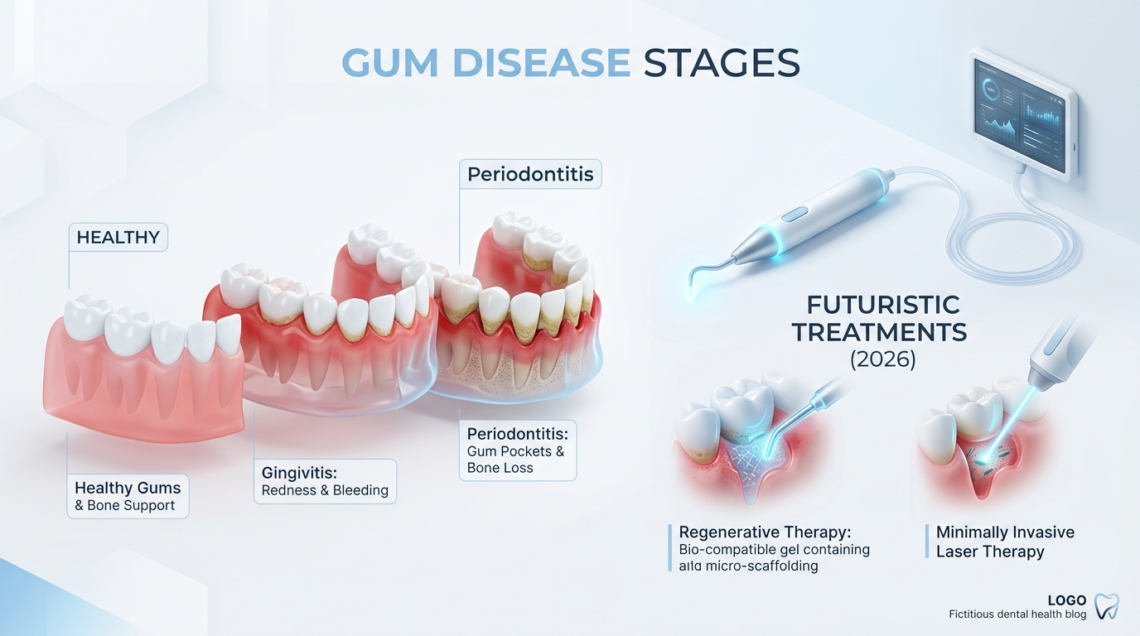
Gingivitis is inflammation confined to the gum tissue. Bacterial plaque accumulates along the gumline, triggering an immune response. Gums become red, puffy, and prone to bleeding. Crucially, no permanent tissue or bone damage has occurred at this stage. Remove the plaque, eliminate the inflammation, and the gums return to health. Gingivitis is entirely reversible with proper care.
Periodontitis begins when inflammation penetrates deeper, destroying the periodontal ligament and alveolar bone that anchor teeth in place. Pockets form between gum and tooth, trapping bacteria in spaces impossible to clean with brushing alone. Bone loss is permanent. Teeth loosen as their foundation erodes. Periodontitis is not reversible, though it can be arrested and managed with ongoing treatment.
Dr. Chan: “I see patients who have had bleeding gums for years and assume it’s normal. It’s not. Bleeding is your body’s alarm system. The tragedy is that gingivitis gives you a warning window—sometimes years—to act before irreversible damage begins. Periodontitis steals that window.”
Early Warning Signs You Should Never Ignore
Gum disease often progresses silently, but early indicators are present if you pay attention.
Bleeding during brushing or flossing is the most common and most dismissed sign. Healthy gums do not bleed from gentle cleaning. If you see pink in the sink, something is wrong.
Persistent bad breath or bad taste that mouthwash cannot mask suggests bacterial overgrowth below the gumline where rinses cannot reach.
Red, swollen, or tender gums indicate active inflammation. Healthy gum tissue is pale pink, firm, and stippled like orange peel.
Receding gums that make teeth appear longer expose root surfaces and create sensitivity to temperature and touch.
Loose or shifting teeth signal advanced bone loss. Teeth should not move when pressed.
Changes in your bite or the way partial dentures fit suggest underlying structural changes from bone destruction.
Pus between teeth and gums indicates active infection requiring immediate professional attention.
How Gum Disease Progresses
Understanding the stages helps you recognize where you stand and what treatment is necessary.
Stage 1: Gingivitis
Plaque accumulates at the gumline. Bacteria release toxins that irritate gum tissue. The immune system responds with inflammation. Gums bleed, swell, and redden. No bone loss has occurred. Treatment is straightforward: professional cleaning and improved home care. Reversal is complete with consistent effort.
Stage 2: Early Periodontitis
Inflammation extends below the gumline. The periodontal ligament begins breaking down. Bone loss is minimal—typically one to two millimeters measured from the cementoenamel junction. Pockets deepen to four to five millimeters. Treatment requires scaling and root planing (deep cleaning) to remove calculus and bacterial toxins from root surfaces.
Stage 3: Moderate Periodontitis
Bone loss becomes significant and visible on X-rays. Pockets reach six to seven millimeters. Teeth may shift slightly. Gums recede noticeably. Bacteria colonize deeper pockets beyond reach of routine cleaning. Treatment includes deep cleaning, possible localized antibiotics, and more frequent maintenance visits every three to four months.
Stage 4: Advanced Periodontitis
Severe bone loss—often 50% or more of tooth support. Pockets exceed seven millimeters. Teeth loosen, drift, or abscess. Chewing becomes painful. Complex surgical intervention may be necessary to save teeth, or extraction becomes unavoidable. Even with aggressive treatment, some teeth cannot be salvaged.
Professional Treatments in 2026
Scaling and Root Planing
The cornerstone of periodontal therapy. Your hygienist or dentist uses ultrasonic instruments and hand scalers to remove calculus and bacterial biofilm from tooth surfaces above and below the gumline. Root planing smooths root surfaces to discourage bacterial reattachment.
What to expect: Local anesthesia numbs the area. Treatment spans one to four visits depending on severity. Mild soreness and sensitivity follow for several days. Gums heal and tighten over two to four weeks.
Cost: $200–$400 per quadrant. Full mouth treatment runs $800–$1,600. Often covered partially by dental insurance.
Localized Antibiotic Therapy
Antimicrobial gels, chips, or microspheres placed directly into periodontal pockets after deep cleaning. Arestin (minocycline) and PerioChip (chlorhexidine) are common options. These target bacteria in sites that remain problematic after mechanical cleaning.
When used: As adjunct to scaling and root planing, not replacement. Best for localized persistent pockets rather than generalized disease.
Periodontal Surgery
Flap surgery lifts gum tissue to expose roots and bone for thorough cleaning. The tissue is then sutured back in place, sometimes repositioned to reduce pocket depth.
Bone grafting replaces destroyed bone with synthetic material, donated bone, or your own bone. Membranes may guide tissue regeneration.
Soft tissue grafts cover exposed roots using palate tissue or donor material, reducing sensitivity and improving appearance.
Guided tissue regeneration uses barrier membranes to direct bone and ligament regrowth in specific defects.
Laser-assisted therapy has gained attention, though evidence remains mixed. Some lasers reduce bacteria and remove diseased tissue with less discomfort than traditional surgery. However, they do not replace mechanical debridement and are not superior to conventional therapy in long-term outcomes.
Cost: Surgical periodontal therapy ranges from $500–$3,000 per quadrant depending on complexity and graft materials.
Home Care That Actually Works
Professional treatment without disciplined home care guarantees recurrence. The bacteria return. The inflammation reignites. The cycle repeats.
Brush twice daily for two minutes with a soft-bristled brush. Angle bristles 45 degrees toward the gumline and use gentle circular strokes. Electric brushes with pressure sensors help prevent aggressive brushing that damages gums.
Floss daily by sliding the filament gently beneath the gumline, curving around each tooth in a C-shape, and moving up and down. Flossing removes plaque from interproximal areas where brushes cannot reach.
Interdental brushes clean between teeth more effectively than floss for patients with larger spaces, bridges, or periodontal pockets. Match the brush size to the space—too small is ineffective, too large damages tissue.
Water flossers reduce gingival inflammation and remove food debris, but they do not replace mechanical plaque removal. Use as adjunct, not substitute.
Antimicrobial mouthwash containing chlorhexidine or essential oils reduces bacterial load. Chlorhexidine requires prescription and can stain teeth with prolonged use. Essential oil rinses like Listerine are over-the-counter alternatives with modest evidence.
Quit smoking. Tobacco use is the single greatest risk factor for periodontal disease progression. Smokers develop deeper pockets, more bone loss, and poorer treatment response than non-smokers. Vaping is not a safe alternative—nicotine and other chemicals impair gum healing.
The Mouth-Body Connection
Gum disease is not merely a dental problem. Chronic periodontal inflammation releases bacteria and inflammatory mediators into the bloodstream, contributing to systemic conditions.
Cardiovascular disease. Periodontal bacteria have been found in arterial plaques. Inflammation from gum disease may accelerate atherosclerosis. Patients with periodontitis face higher risk of heart attack and stroke.
Diabetes. The relationship is bidirectional. Poorly controlled diabetes worsens gum disease. Active gum disease makes blood sugar control more difficult. Treating periodontitis improves glycemic control in diabetic patients.
Pregnancy complications. Periodontal disease correlates with preterm birth and low birth weight. Hormonal changes during pregnancy also increase gingival inflammation, making home care even more critical.
Respiratory infections. Aspiration of oral bacteria into the lungs contributes to pneumonia, particularly in elderly and hospitalized patients.
Rheumatoid arthritis. Shared inflammatory pathways suggest periodontal disease may exacerbate joint inflammation.
Dr. Chan: “I have patients who finally took their gum disease seriously only after their cardiologist or endocrinologist told them to. Your gums are not isolated from the rest of your body. Inflammation anywhere is inflammation everywhere.”
Prevention: The Only Real Cure
Once bone is lost, it does not regenerate fully even with grafting. Prevention is vastly superior to treatment.
Professional cleanings every six months remove calculus before it triggers inflammation. Patients with a history of periodontitis need maintenance every three to four months.
Consistent daily plaque removal is non-negotiable. Two minutes of brushing, one minute of interdental cleaning, every single day.
Dietary awareness. Limit sugar and refined carbohydrates that feed plaque bacteria. Ensure adequate vitamin C and calcium intake for gum and bone health.
Stress management. Chronic stress impairs immune function and increases inflammatory markers, worsening periodontal response to bacterial challenge.
Regular self-examination. Look for bleeding, swelling, recession, or changes in tooth position. Early detection enables early intervention.
The Bottom Line
Gum disease is common, progressive, and largely preventable. Gingivitis gives you a warning—heed it. Periodontitis takes your warning away and starts taking your teeth. The treatments work when paired with consistent home care, but nothing replaces prevention.
If your gums bleed when you brush, if your breath persistently offends, if your teeth feel loose or look longer, schedule a dental examination. These are not cosmetic concerns. They are signals that your body’s foundation is under attack, and the damage becomes harder to repair with every month of delay.
Sources
-
American Academy of Periodontology. “Gum Disease Information: Classification and Treatment Guidelines.” AAP Clinical Guidelines, 2025.
-
Chan A. “Periodontal Maintenance Outcomes in General Practice: A 10-Year Retrospective Analysis.” General Dentistry, 2025;73(6):498-504.
-
Eke PI, et al. “Periodontitis in US Adults: National Health and Nutrition Examination Survey 2021–2024.” Journal of Dental Research, 2025;104(3):312-320.
-
American Dental Association. “Oral-Systemic Health Connections: Evidence-Based Clinical Recommendations.” JADA, 2025;156(8):567-578.
-
Chapple ILC, et al. “Periodontal Health and Global Public Health.” Periodontology 2000, 2024;96(2):245-260.