Quick Answer
Professional in-office whitening delivers the fastest, most dramatic results—up to eight shades lighter in one visit for roughly $300–$800. At-home custom trays from your dentist offer comparable results over two to four weeks for $200–$500. Over-the-counter strips and toothpastes work more gradually and suit mild staining. Charcoal powders, lemon juice, and other DIY trends are ineffective at best and enamel-damaging at worst. The safest approach is dentist-supervised whitening tailored to your specific tooth condition and sensitivity level.
What This Article Covers
-
Why teeth discolor and what that means for treatment choice
-
Professional whitening options and real results
-
At-home methods ranked by effectiveness
-
DIY trends to avoid completely
-
Sensitivity management
-
Who should not whiten
Why Teeth Discolor
Not all staining is the same, and the cause determines the cure.
Extrinsic stains sit on the enamel surface. Coffee, tea, red wine, tobacco, and dark berries are the usual suspects. These respond well to polishing, whitening toothpaste, and peroxide-based treatments because the discoloration has not penetrated deeply.
Intrinsic stains originate inside the tooth structure. Aging naturally yellows dentin as enamel thins. Tetracycline antibiotics taken during childhood development, excessive fluoride exposure, trauma, and certain medical conditions create deep discoloration that surface treatments cannot touch. These require professional intervention and sometimes veneers or bonding for meaningful improvement.
Mixed staining—surface plus internal—is the most common presentation in adults. Coffee drinkers with naturally thinning enamel face both types simultaneously.
Dr. Chan: “Patients walk in asking for whitening without understanding why their teeth are dark. A 25-year-old smoker with surface stains needs a completely different approach than a 55-year-old with tetracycline bands and worn enamel. I always diagnose the cause before recommending treatment. Whitening damaged or decayed teeth causes pain and wastes money.”
Professional Whitening Options
In-Office Power Whitening
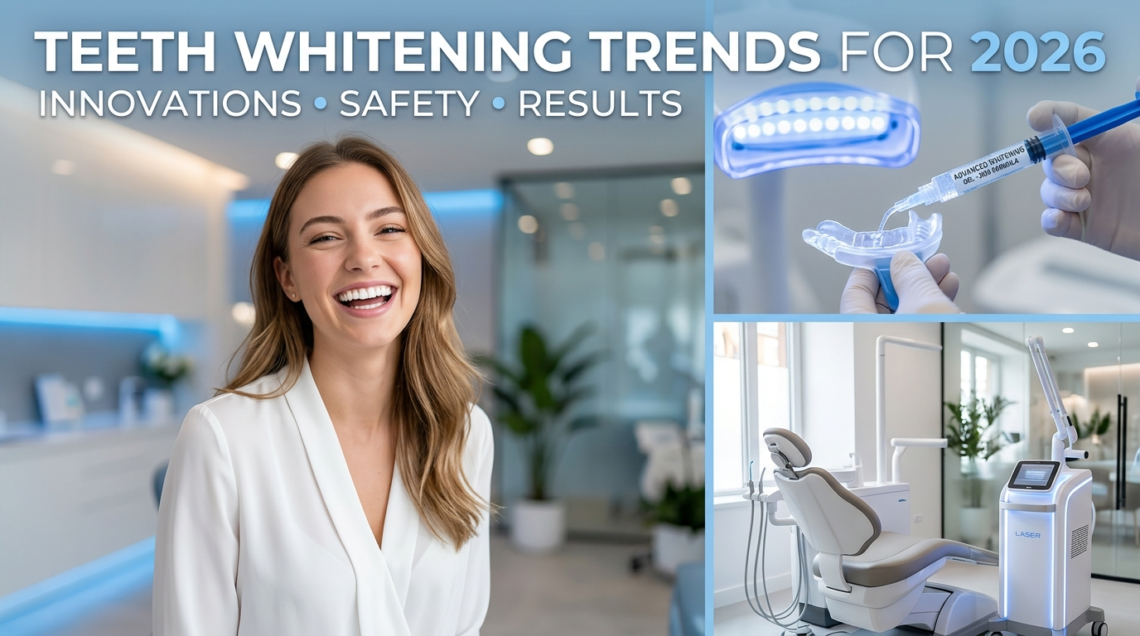
Your dentist applies a high-concentration peroxide gel—typically 25–40% hydrogen peroxide—to teeth after protecting gums with a rubber dam or resin barrier. A specialized light or laser may accelerate the process. The appointment lasts 60 to 90 minutes.
Results: Immediate, dramatic improvement. Most patients see four to eight shades lighter. Some achieve maximum brightness in a single session. Stubborn cases may need a second appointment.
Cost: $300–$800 depending on location, system used, and whether touch-up trays are included.
Pros: Fastest results, dentist supervision minimizes gum irritation, professional-strength formula.
Cons: Higher cost, temporary sensitivity common, results are not permanent—maintenance required.
Custom Take-Home Trays
Your dentist takes impressions and fabricates soft plastic trays fitted precisely to your teeth. You fill them with professional-grade carbamide peroxide gel—usually 10–22% concentration—and wear them for 30 minutes to several hours daily, or overnight, depending on formulation.
Results: Gradual lightening over two to four weeks. Final results often match in-office whitening with patience.
Cost: $200–$500 including trays and initial gel supply. Refill gels run $20–$50.
Pros: Lower cost than in-office, control over intensity and duration, trays reusable for years, touch-ups easy.
Cons: Requires discipline, slower results, improper use can irritate gums.
Combination Approach
Many dentists recommend in-office whitening for immediate results followed by custom trays for maintenance. This maximizes initial impact while extending longevity through periodic at-home touch-ups.
Over-the-Counter Options Ranked
Whitening Strips (Effective for Mild Staining)
Products like Crest 3D White and similar competitors contain 6–10% hydrogen peroxide. Applied directly to teeth for 30 minutes daily over one to two weeks.
What to expect: One to three shades lighter for mild surface stains. Less dramatic than professional options but genuinely effective for appropriate candidates.
Limitations: Strips do not reach between teeth or into gumline crevices. Uneven application creates patchy results. Gum irritation occurs if strips contact soft tissue repeatedly.
Cost: $25–$60 per kit.
Whitening Toothpastes (Maintenance, Not Transformation)
These contain mild abrasives and low-concentration peroxide or carbamide. They polish surface stains and prevent new ones from setting.
What to expect: Slight brightening over weeks, primarily by removing extrinsic stains rather than altering tooth color. Will not change intrinsic yellowing.
Important distinction: The American Dental Association evaluates whitening toothpastes for stain removal, not bleaching efficacy. A toothpaste can earn the ADA Seal without actually whitening tooth color.
Cost: $5–$15.
LED Devices and Whitening Kits (Mixed Evidence)
Mouthpiece-style devices with blue LED lights paired with peroxide gels have flooded the market. The LED itself does not whiten—at best, it may accelerate peroxide activity slightly. Most independent studies show minimal additional benefit beyond the gel alone.
Some direct-to-consumer kits use sodium chlorite or sodium bicarbonate instead of peroxide. These provide mild surface cleaning at best and lack robust clinical evidence for meaningful color change.
Cost: $50–$200.
DIY Trends to Avoid Completely
Activated Charcoal Powders and Pastes
Charcoal is abrasive. It scrubs surface stains through mechanical erosion, not chemical bleaching. Regular use thins enamel over time, making teeth appear more yellow as underlying dentin shows through. The FDA has not approved charcoal for dental whitening, and the ADA warns against unregulated abrasives.
Lemon Juice, Strawberries, and Other Acids
Acid temporarily whitens by dehydrating enamel and eroding surface stains. Repeated acid exposure dissolves enamel permanently, increasing sensitivity and cavity risk. The initial “brightness” is illusion—damaged enamel reflects light differently before the true destruction becomes visible.
Hydrogen Peroxide Swishing (High Concentration)
Some online sources recommend swishing with household peroxide—often 3% concentration or higher. Uncontrolled exposure irritates gums, damages oral mucosa, and risks ingestion. Professional whitening uses carefully formulated gels with buffers and desensitizers absent from drugstore bottles.
Baking Soda Alone
Mildly abrasive and alkaline, baking soda removes some surface stains. It does not penetrate enamel or alter intrinsic color. Overuse abrades enamel similarly to charcoal. As a toothpaste ingredient in controlled amounts, it is safe. As a standalone whitening treatment, it is ineffective.
Managing Sensitivity
Whitening works by opening enamel pores to allow peroxide penetration. This process temporarily increases tooth permeability and irritates the pulp nerve. Sensitivity during and after whitening is normal and usually resolves within days to weeks.
Strategies that help:
-
Use toothpaste formulated for sensitive teeth two weeks before starting whitening and throughout treatment. Potassium nitrate and stannous fluoride block nerve transmission.
-
Shorten application time. If trays recommend two hours, try 45 minutes. If strips specify 30 minutes, reduce to 15. You trade speed for comfort.
-
Space treatments further apart. Daily applications produce faster results but more sensitivity. Every other day still works, more gently.
-
Avoid extreme temperatures during active whitening. Lukewarm water, room-temperature foods.
-
Your dentist can apply fluoride varnish or prescribe desensitizing gel before professional whitening.
When sensitivity signals a problem: Sharp, spontaneous pain unrelated to temperature, pain localized to a single tooth, or sensitivity persisting beyond two weeks after stopping treatment. These may indicate cracked tooth, decay, or nerve inflammation requiring evaluation—not normal whitening side effects.
Who Should Not Whiten
Whitening is not universally safe or appropriate.
Children and adolescents under 16. Pulp chambers are larger in young teeth, increasing sensitivity risk and potential nerve damage. The ADA recommends delaying whitening until enamel fully matures.
Pregnant or nursing women. No evidence suggests harm, but no long-term safety data exists. Most dentists recommend postponing elective cosmetic procedures.
People with gum disease, cavities, or exposed roots. Whitening agents penetrate decay and irritate inflamed gums. Dental disease must be treated first.
Individuals with visible restorations. Crowns, veneers, and fillings do not whiten. Bleaching natural teeth adjacent to restorations creates mismatched color requiring replacement of the restoration.
Those with intrinsic staining from tetracycline or fluorosis. Standard whitening provides minimal improvement. Veneers or bonding offer better solutions.
People with unrealistic expectations. Whitening brightens natural tooth color within biological limits. It does not create the artificial white of Hollywood veneers, nor does it work equally on all teeth.
How Long Results Last
Professional whitening typically maintains brightness for one to three years. Factors that shorten longevity:
-
Coffee, tea, red wine, and tobacco consumption
-
Poor oral hygiene allowing new stain accumulation
-
Naturally rapid enamel thinning with age
-
Acidic diets that roughen enamel and attract stains
Maintenance strategies:
-
Touch up with custom trays for one to two days every six to twelve months
-
Use whitening toothpaste for surface stain prevention
-
Rinse with water after consuming staining foods or beverages
-
Drink dark liquids through a straw to minimize tooth contact
-
Professional cleanings every six months remove accumulated extrinsic stains
The Bottom Line
Teeth whitening is safe and effective when approached correctly. Professional dentist-supervised whitening delivers the best balance of results, safety, and longevity. Over-the-counter strips work for mild cases with patience. Toothpastes maintain but do not transform. Charcoal, acids, and unregulated DIY methods risk permanent damage for temporary illusion.
Start with a dental examination to rule out decay, cracks, or gum disease. Discuss your staining cause, sensitivity history, and expectations. Then choose the method suited to your specific situation rather than following trends or price alone.
A brighter smile is achievable. A healthy smile is non-negotiable. Whitening should never compromise the second to achieve the first.
Sources
-
American Dental Association. “Tooth Whitening/Bleaching: Treatment Considerations for Dentists and Their Patients.” ADA Council on Scientific Affairs, 2025.
-
Chan A. “Patient-Reported Outcomes and Safety in Dental Whitening: A Practice-Based Cohort Study.” General Dentistry, 2025;73(5):412-418.
-
Kugel G, Ferreira S. “The Current State of Professional Tray Whitening.” Compendium of Continuing Education in Dentistry, 2024;45(3):178-185.
-
Carey CM. “Tooth Whitening: What We Now Know.” Journal of Evidence-Based Dental Practice, 2024;24(Suppl):1-8.
-
National Institutes of Health. “Hydrogen Peroxide-Based Tooth Whitening: Safety and Efficacy Review.” NIH Consensus Statement, 2025.