Quick Answer
Tooth sensitivity affects roughly 1 in 8 adults and usually signals exposed dentin, worn enamel, or gum recession. Most cases respond to desensitizing toothpaste within two to four weeks. Persistent sensitivity, pain lasting more than 30 seconds after hot or cold exposure, or sensitivity localized to a single tooth warrants prompt dental evaluation—it may indicate decay, cracked tooth, or nerve inflammation requiring treatment.
What This Article Covers
-
Why teeth become sensitive
-
Common triggers and what they reveal
-
Home treatments that actually work
-
Professional interventions for stubborn cases
-
Red flags that mean something serious
-
Prevention strategies for long-term relief
Why Teeth Become Sensitive
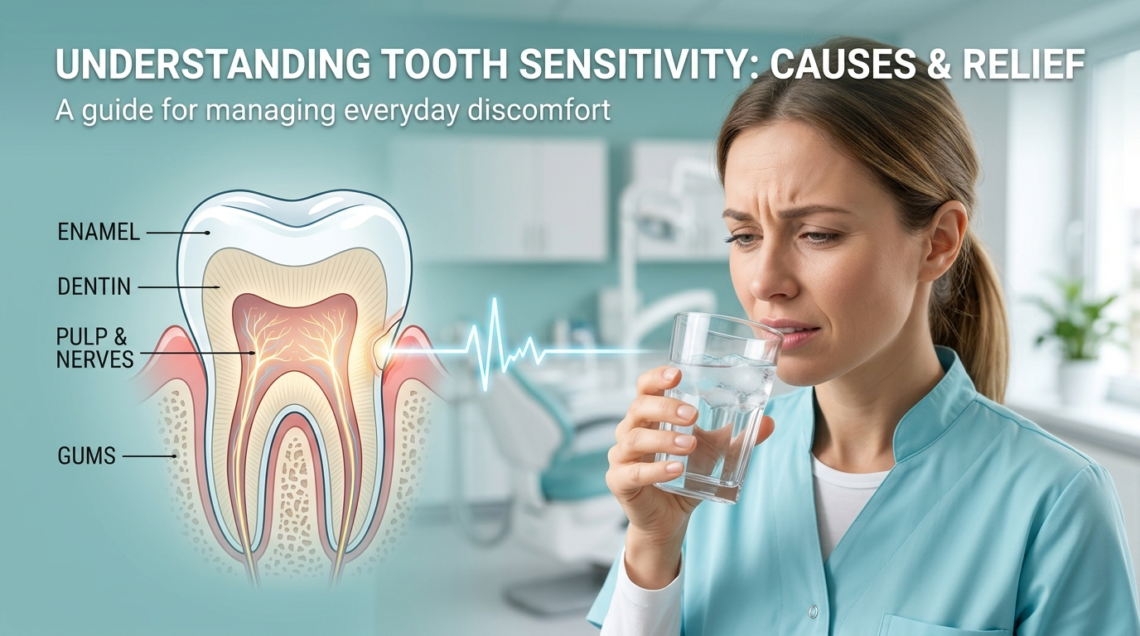
Healthy teeth have protective layers. Enamel shields the crown. Cementum covers the root beneath the gumline. Beneath both lies dentin—a porous yellowish layer containing microscopic tubules that lead directly to the tooth’s nerve center, the pulp.
When enamel thins or gums recede, dentin tubules become exposed. External stimuli—temperature, pressure, acidity—travel through these tubules and trigger nerve pain. The sharper and more sudden the pain, the closer the stimulus is to the nerve.
Sensitivity ranges from mild discomfort to sharp shooting pain. Distinguishing between manageable sensitivity and warning signs of deeper problems is essential.
Common Causes in 2026
Enamel erosion tops the list. Acidic diets, frequent soda or energy drink consumption, citrus fruits, and gastric reflux dissolve enamel gradually. Erosion differs from mechanical wear because it creates smooth, glossy enamel surfaces rather than notched or flattened areas.
Aggressive brushing causes gum recession and enamel abrasion. Hard-bristled brushes, excessive pressure, and horizontal scrubbing motion wear away gum tissue and tooth structure at the gumline. This creates characteristic wedge-shaped defects called abfraction lesions.
Gum recession exposes root surfaces that lack enamel protection. Roots are covered only by thin cementum, which wears away easily. Recession stems from periodontal disease, brushing trauma, or natural aging.
Teeth grinding (bruxism) creates microcracks in enamel and wears down chewing surfaces. Nighttime grinding often goes undiagnosed until a dentist notices wear patterns or a partner mentions the noise.
Recent dental work causes temporary sensitivity. Fillings, crowns, cleanings, and whitening procedures can inflame the pulp or expose dentin. This typically resolves within days to weeks.
Tooth decay near the gumline or between teeth creates sensitivity as bacteria approach the pulp. Unlike generalized sensitivity, decay-related pain is often localized to one tooth and worsens with sweet foods.
Cracked teeth produce sharp pain when biting down or releasing pressure. Cracks may be invisible to the naked eye and require magnification or transillumination to detect.
Dr. Chan: “I see patients who have lived with sensitivity for years, assuming it’s normal or untreatable. In many cases, the cause is identifiable and fixable. The ones who worry me are those who ignore sudden sensitivity in a single tooth—that’s when I start looking for cracks, deep decay, or nerve damage.”
What Your Triggers Reveal
The type of sensitivity you experience points toward different causes.
Cold sensitivity that fades quickly usually indicates exposed dentin or mild recession. This is the most common and most treatable form.
Heat sensitivity is more concerning. Pain triggered by hot coffee or soup that lingers suggests nerve inflammation (pulpitis). Reversible pulpitis may resolve with treatment. Irreversible pulpitis requires root canal.
Sweet sensitivity often signals decay. Bacteria produce acid when fed sugars, and this acid penetrates enamel defects or existing cavities to stimulate dentin nerves.
Pressure or biting sensitivity suggests cracked tooth, loose filling, or high bite point on a recent restoration. The pain typically occurs when releasing bite pressure rather than applying it.
Sensitivity to brushing at the gumline indicates recession, abrasion, or active gum disease exposing root surfaces.
Home Treatments That Work
Desensitizing Toothpaste
Products containing potassium nitrate or stannous fluoride block nerve transmission through dentin tubules. They do not work overnight. Consistent use twice daily for two to four weeks is necessary before judging effectiveness.
How to use for maximum benefit: Apply a pea-sized amount to a soft-bristled brush. Brush gently for two minutes, focusing on gumline areas. After brushing, smear a small additional amount onto sensitive spots with your finger and leave it—do not rinse. This creates a protective layer.
Effective brands in 2026 include Sensodyne Rapid Relief, Colgate Sensitive Pro-Relief, and Crest Gum and Sensitivity. Generic versions with identical active ingredients work equally well.
Fluoride Rinse or Gel
Over-the-counter fluoride rinses strengthen enamel and reduce permeability. Prescription-strength fluoride gels provide higher concentrations for severe cases. Use nightly after brushing, swish for one minute, and avoid eating or drinking for 30 minutes afterward.
Dietary Modifications
Reduce acid exposure. Limit soda, sports drinks, citrus, and vinegar-based foods to mealtimes rather than sipping throughout the day. Rinse with water after acidic consumption. Wait 30 minutes before brushing after acid exposure—brushing immediately spreads acid and abrades softened enamel.
Soft-Bristled Brush and Proper Technique
Switch to a soft or extra-soft brush. Use gentle pressure—imagine brushing a ripe tomato without breaking the skin. Hold the brush at a 45-degree angle to the gumline and use small circular strokes rather than horizontal scrubbing.
Night Guard for Bruxism
If you grind, a custom night guard from your dentist distributes forces and protects enamel. Over-the-counter boil-and-bite guards are better than nothing but can misalign your bite with prolonged use.
Professional Treatments for Stubborn Cases
When home care fails after four to six weeks, dental intervention becomes necessary.
Fluoride varnish applied in-office delivers concentrated fluoride to exposed root surfaces. Quick, painless, and often covered by insurance. Effects last several months.
Bonding or sealants cover exposed dentin or root surfaces with tooth-colored resin. This physically blocks tubules and provides immediate relief. Particularly effective for localized recession or abrasion defects.
Gum grafting addresses severe recession. Tissue is taken from the palate or a donor source and grafted over exposed roots. Recovery takes two weeks, but results are permanent and protect against further recession.
Inlays or onlays repair teeth with significant wear or decay causing sensitivity. More conservative than full crowns.
Root canal becomes necessary when sensitivity stems from irreversible pulp inflammation or infection. The procedure removes the nerve, eliminating sensation from that tooth entirely.
Bite adjustment resolves sensitivity from high spots on recent fillings or crowns. Your dentist marks your bite with articulating paper and selectively grinds tiny amounts of material to distribute forces evenly.
Red Flags: When Sensitivity Means Something Serious
Seek prompt dental evaluation—within 24 to 48 hours—if you experience:
-
Sensitivity localized to a single tooth that is worsening
-
Pain lasting more than 30 seconds after hot or cold exposure
-
Spontaneous pain without any trigger
-
Sensitivity accompanied by swelling, fever, or bad taste
-
Pain when biting that is sharp and specific to one tooth
-
Visible crack, chip, or lost filling
-
Sensitivity after trauma or accident
These symptoms may indicate deep decay, cracked tooth syndrome, abscess, or nerve damage requiring immediate intervention. Delaying treatment risks tooth loss or spread of infection.
Prevention for Long-Term Relief
Preventing sensitivity is easier than treating it once established.
Morning routine: Brush gently with soft brush and desensitizing toothpaste. Floss daily to prevent gum disease and interproximal decay. Use fluoride rinse at night.
Diet awareness: Limit between-meal acidic exposures. Drink water throughout the day. Chew sugar-free gum after meals to stimulate saliva, which neutralizes acid and remineralizes enamel.
Regular dental visits: Professional cleanings remove tartar that contributes to gum disease. Examinations catch early decay, wear patterns, and cracks before they cause symptoms. Most sensitivity-prone patients benefit from four-month recall intervals rather than six.
Manage reflux: If you have GERD or frequent heartburn, consult your physician. Stomach acid is among the most aggressive enamel destroyers. Treating reflux protects your teeth as much as your esophagus.
Break grinding habits: Stress management, sleep hygiene improvements, and night guards reduce bruxism damage.
The Bottom Line
Tooth sensitivity is common but not normal. Most cases stem from exposed dentin due to erosion, recession, or wear—and most respond to consistent home care within weeks. The key is identifying the cause rather than masking symptoms indefinitely.
Persistent, worsening, or localized sensitivity demands professional evaluation. Early intervention prevents minor issues from becoming major ones. Your teeth should not hurt when you enjoy ice cream or hot coffee. If they do, something is wrong—and usually, something can be done.
Sources
-
Canadian Advisory Board on Dentin Hypersensitivity. “Consensus-Based Recommendations for Diagnosis and Management of Dentin Hypersensitivity.” Journal of the Canadian Dental Association, 2024;90:1-12.
-
Chan A. “Dentin Hypersensitivity in General Practice: Prevalence, Causes, and Treatment Outcomes.” General Dentistry, 2025;73(3):245-251.
-
Addy M, West N. “Etiology and Management of Dentin Hypersensitivity: 2025 Update.” Journal of Clinical Periodontology, 2025;52(4):612-623.
-
American Dental Association. “Tooth Sensitivity: Patient Guide and Clinical Recommendations.” JADA, 2025;156(6):412-420.
-
Bartold PM. “Gingival Recession and Root Sensitivity: Evidence-Based Treatment Protocols.” Periodontology 2000, 2024;96(1):178-195.