Quick Answer
TMJ disorder affects an estimated 10 million Americans, causing pain in the jaw joint and surrounding muscles. Most cases are temporary and resolve with conservative care—rest, heat therapy, and jaw exercises. Severe or persistent cases may require mouthguards, physical therapy, or in rare instances, surgery. The condition is rarely dangerous but can significantly impact eating, speaking, and quality of life. Proper diagnosis distinguishes true joint problems from muscle tension, as treatments differ substantially.
What This Article Covers
-
What TMJ actually means versus common misconceptions
-
Symptoms that point to muscle versus joint problems
-
Root causes beyond teeth grinding
-
Conservative treatments that work for most patients
-
When advanced intervention becomes necessary
-
Self-care strategies for daily relief
Understanding the TMJ: Joint Versus Muscle
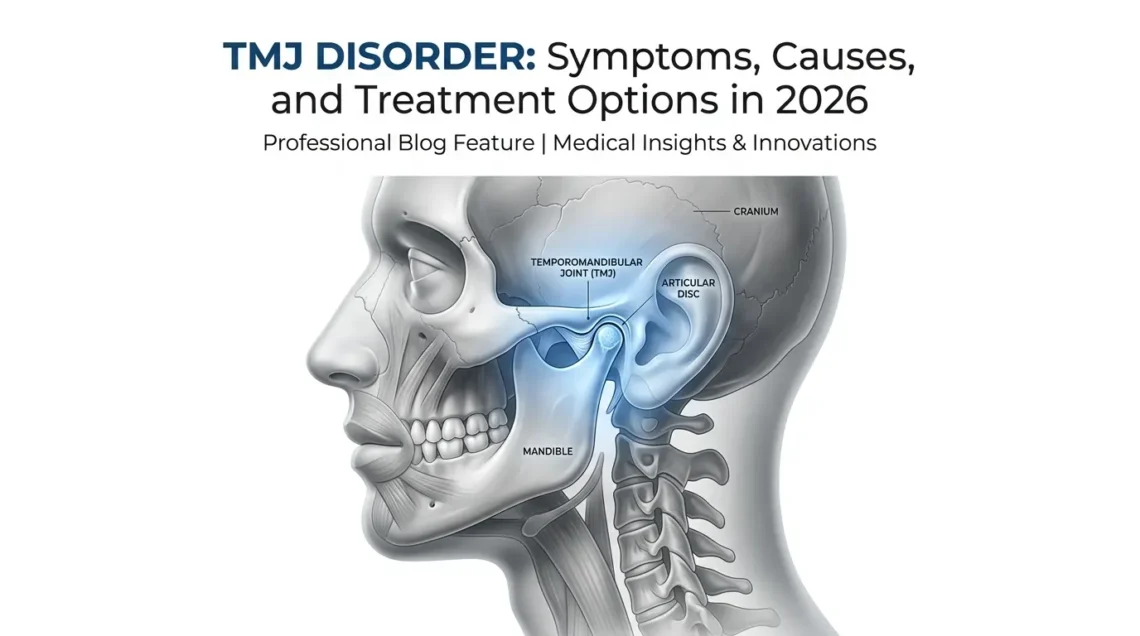
TMJ stands for temporomandibular joint—the hinge connecting your jawbone to your skull, located just in front of each ear. You have two, one on each side. They are among the most complex joints in the body, capable of both hinging and sliding movements essential for chewing, speaking, and swallowing.
TMJ disorder is an umbrella term covering problems with the joint itself, the muscles controlling jaw movement, or both. This distinction matters because muscle problems respond to different treatments than true joint disorders.
Myofascial pain involves muscle tension and spasm around the jaw, face, and neck. It is the most common form of TMJ disorder, often triggered by stress, poor posture, or bruxism. The muscles hurt, but the joint structure remains normal.
Internal derangement involves displacement or damage to the articular disc—the cushion between jawbone and skull. The disc may slip out of position, causing clicking, popping, or locking. This is a true joint problem.
Degenerative joint disease includes arthritis affecting the TMJ, wearing down cartilage and bone over time. It is less common but more difficult to treat.
Dr. Chan: “Patients come in saying they have TMJ. I explain that everyone has TMJ—two of them, in fact. The question is whether those joints are functioning properly. Most of what people call TMJ is actually muscle tension from clenching or stress. True joint disorders are rarer and require different approaches.”
Symptoms: Muscle Versus Joint
Recognizing whether your symptoms point to muscle or joint involvement helps guide appropriate care.
Muscle-Dominant Symptoms
-
Dull, aching pain in the jaw, temple, or cheek that worsens through the day
-
Tenderness when pressing on jaw muscles
-
Pain that improves with rest and heat
-
Headaches, particularly in the morning after nighttime clenching
-
Neck and shoulder tension accompanying jaw discomfort
-
Symptoms that fluctuate with stress levels
Joint-Dominant Symptoms
-
Clicking, popping, or grinding noises when opening or closing
-
Jaw catching or locking in open or closed position
-
Sudden change in bite or jaw alignment
-
Pain directly over the joint in front of the ear
-
Limited opening that does not improve with stretching
-
History of jaw trauma or injury
Symptoms Requiring Prompt Evaluation
-
Inability to open or close the jaw completely
-
Sudden onset after trauma or accident
-
Swelling, redness, or warmth over the joint
-
Fever accompanying jaw pain
-
Numbness or tingling in the face
Root Causes Beyond Teeth Grinding
Bruxism is a frequent contributor but not the only cause. Understanding your specific triggers enables targeted treatment.
Stress and anxiety increase muscle tension throughout the body, including jaw muscles. Many people clench unconsciously during concentration, driving, or sleep without realizing it.
Poor posture—forward head position from desk work or phone use—alters jaw alignment and strains supporting muscles. The jaw compensates for neck and shoulder misalignment.
Trauma from accidents, sports injuries, or dental procedures can damage the joint disc or ligaments. Even minor blows may cause delayed symptoms.
Arthritis including osteoarthritis and rheumatoid arthritis affects the TMJ like any other joint. Inflammatory conditions accelerate disc and cartilage breakdown.
Dental misalignment or missing teeth create unstable jaw positions that strain muscles and joint structures as they seek comfortable resting posture.
Hormonal factors influence TMJ disorder prevalence. Women experience symptoms more frequently than men, particularly during reproductive years, suggesting estrogen’s role in ligament laxity and pain perception.
Genetic predisposition affects joint structure and susceptibility to degenerative changes.
Conservative Treatments That Work for Most
The majority of TMJ disorders respond to simple, non-invasive measures within weeks to months.
Self-Care Strategies
Rest your jaw. Eat soft foods. Avoid chewing gum, tough meats, and hard candies. Cut food into small pieces. Minimize wide yawning and prolonged talking when symptomatic.
Apply heat or cold. Moist heat relaxes muscles and increases blood flow. Cold packs reduce inflammation during acute flare-ups. Use whichever provides more relief, typically 15–20 minutes several times daily.
Practice gentle stretching. Slowly open and close within comfortable limits. Side-to-side movements and gentle protrusion exercises maintain mobility. Never force beyond pain.
Maintain good posture. Keep screens at eye level. Support your lower back. Position your head directly over your shoulders rather than jutting forward.
Manage stress. Meditation, breathing exercises, yoga, and cognitive behavioral therapy reduce muscle tension. Address anxiety and sleep problems that perpetuate clenching.
Professional Interventions
Night guards and splints protect teeth from grinding and reduce muscle activity intensity. Custom-fitted appliances from your dentist outperform over-the-counter options. Some splints reposition the jaw slightly to reduce disc pressure.
Physical therapy teaches specific exercises, manual therapy techniques, and posture correction. Therapists use ultrasound, electrical stimulation, and dry needling for muscle relief.
Medications address symptoms short-term. Non-steroidal anti-inflammatories reduce pain and inflammation. Muscle relaxants help acute spasms. Low-dose tricyclic antidepressants improve sleep and reduce chronic pain perception. These treat symptoms while underlying causes resolve.
Trigger point injections deliver anesthetic or corticosteroid into persistent muscle knots, breaking spasm cycles.
Botulinum toxin injections into masseter and temporalis muscles reduce clenching force. Effects last 3–6 months. This is increasingly common for refractory muscle-dominant cases.
When Advanced Intervention Becomes Necessary
Conservative treatment fails in approximately 10–15% of cases. These situations require specialized care.
Arthrocentesis involves flushing the joint with sterile solution to remove inflammatory byproducts and improve disc mobility. Minimally invasive, performed under local anesthesia.
Arthroscopy uses a small camera and instruments inserted into the joint for diagnosis and treatment. Disc repositioning, scar tissue removal, and joint surface smoothing are possible.
Open joint surgery is rare and reserved for severe structural damage, ankylosis, or failed conservative and arthroscopic treatment. It carries higher risk and longer recovery.
Joint replacement is exceedingly rare, considered only for end-stage destruction with intractable pain and dysfunction.
What to Expect Long-Term
TMJ disorder is typically manageable, not curable. Symptoms often fluctuate with stress, hormonal changes, and life circumstances. The goal is control, not elimination.
Most patients achieve satisfactory function with conservative measures and periodic flare-up management. Those with true joint structural problems may require ongoing monitoring and occasional intervention.
Surgery does not guarantee permanent resolution. Some patients experience symptom recurrence years later. Realistic expectations prevent disappointment and overtreatment.
The Bottom Line
TMJ disorder is common, usually temporary, and rarely dangerous. Most cases stem from muscle tension rather than true joint damage and respond to rest, heat, stress management, and night guards. Persistent or severe symptoms warrant professional evaluation to distinguish muscle from joint problems and guide appropriate treatment.
Avoid aggressive interventions unless conservative measures have failed thoroughly. Surgery and irreversible procedures carry risks that must be justified by clear structural problems and functional impairment.
If your jaw hurts, clicks, or locks, start with the basics. Rest, heat, gentle movement, and stress reduction resolve most cases without drama. Seek professional care if symptoms persist beyond several weeks, worsen, or significantly impair eating and speaking.
Sources
-
American Academy of Orofacial Pain. “Temporomandibular Disorders: Diagnosis and Management Guidelines.” AAOP Clinical Guidelines, 2025.
-
Chan A. “Conservative Management of Myofascial Pain in General Dental Practice: Outcomes and Patient Satisfaction.” General Dentistry, 2025;73(3):267-273.
-
Schiffman E, et al. “Diagnostic Criteria for Temporomandibular Disorders (DC/TMD): 2024 Update and Validation.” Journal of Oral & Facial Pain and Headache, 2024;38(2):89-102.
-
American Dental Association. “Management of Temporomandibular Disorders: Evidence-Based Recommendations.” JADA, 2025;156(6):412-420.
-
List T, et al. “Long-Term Outcomes of Temporomandibular Disorder Treatments: A Systematic Review.” Pain, 2024;165(8):1789-1801.